
Aegean Herb Omelet with Peas, Mint, and Lemon Yogurt
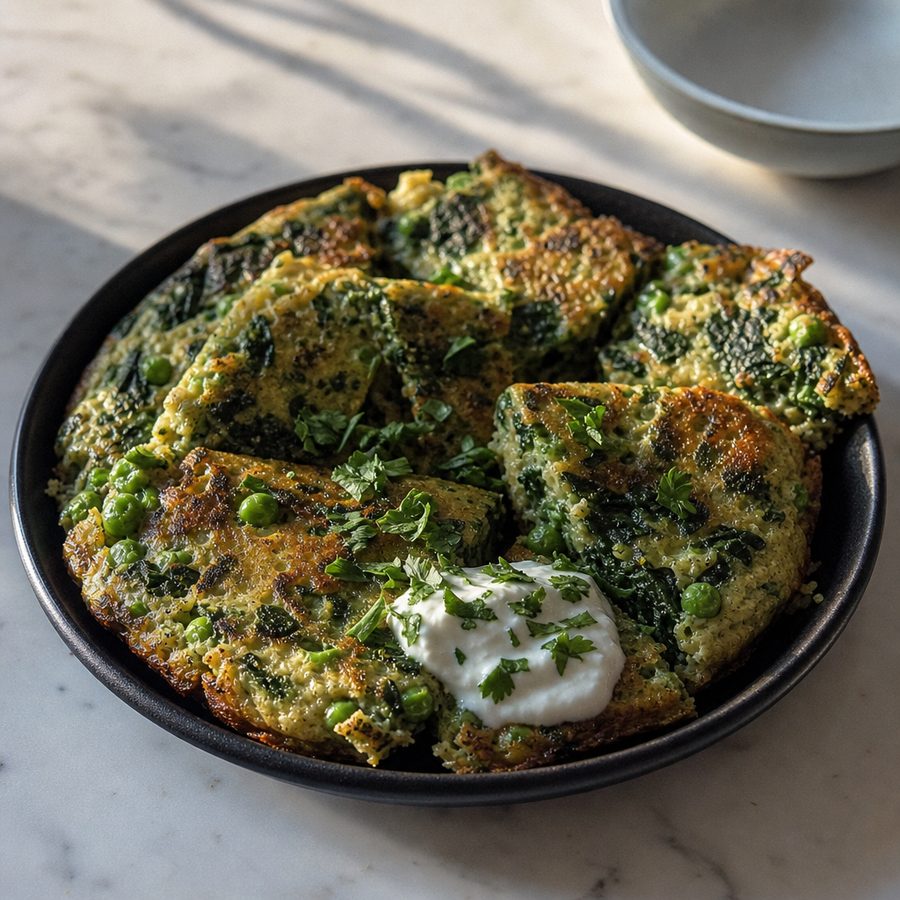
A flat skillet omelet full of green peas, spinach, scallion, and three fresh herbs, browned in olive oil and cut into wedges, with lemon yogurt spooned over.
Why You'll Love This Recipe
Somewhere between an omelet and a frittata, this is what gets made in Greek and Turkish kitchens when the herb bunches in the refrigerator are getting ahead of the household. The proportions are the thing that surprises people: more than a cup of chopped herbs goes into eight eggs, which sounds absurd and is exactly right. Herbs used in that quantity stop being a garnish and become a vegetable, and the omelet comes out green through the middle with a flavor that is grassy, sweet, and a little peppery. I make it in spring when the mint is coming back, and all year with frozen peas.
It is cooked flat and slowly rather than folded, which is the part worth getting right. A wide skillet over medium-low heat, a lid on for most of it, and eight or nine minutes of patience will set the whole thing evenly with a crust on the bottom and a barely firm top. Rushed over high heat, the underside browns hard before the center has any idea what is happening, and you end up flipping something structurally unsound across your stove. If the top is still loose at the end, ninety seconds under the broiler settles it without drying the eggs out.
The lemon yogurt is what makes it breakfast rather than lunch. Cold, tart, and thick, spooned over a warm wedge so it slides down the cut face, it does the same job a squeeze of lemon does on grilled fish, and it keeps a dish with eight eggs in it from sitting heavy. The peas matter for the same reason, since their sweetness lands against the mint and stops the whole wedge tasting of one note. There is enough here to feed four people properly and enough left in most households for someone to eat a cold wedge standing at the counter the next day, which is honestly one of the better ways to eat it.
Ingredients
- 8 large eggs
- 1 2/3 cups plain Greek yogurt
- 2 1/2 cups green peas, thawed if frozen
- 7 oz spinach, thick stems pulled off
- 1 bunch scallions (about 8), sliced thin, white and green parts kept separate
- 2/3 cup chopped flat-leaf parsley
- 1/2 cup chopped fresh dill
- 1/4 cup chopped fresh mint, plus a few torn leaves to finish
- 2 tbsp extra-virgin olive oil
- 1 1/2 tbsp lemon juice
- 1/2 tsp coarsely ground black pepper
- 1/4 tsp fine sea salt
Instructions
- Stir the lemon yogurt: Whisk the yogurt with the lemon juice, a pinch of the salt, and a grind of the black pepper until it is smooth and loose enough to spoon. Set it out on the counter while you cook so it is cool rather than cold when it meets the hot omelet.
- Wilt the spinach and scallion whites: Warm 1 tbsp of the olive oil in a 10-inch nonstick or well-seasoned skillet over medium heat. Add the scallion whites and cook one minute, then add the spinach in handfuls and cook two to three minutes until it has collapsed. Tip it into a sieve and press firmly with a spoon to drive the water out.
- Crush some of the peas: Put the peas in a bowl and press about a third of them with the back of a fork until they split and go pasty. That crushed third spreads pea flavor through the whole omelet, while the whole ones stay round and pop between your teeth.
- Beat the eggs with the herbs: Beat the eggs with the remaining salt until just uniform. Stir in the parsley, dill, chopped mint, scallion greens, the pressed spinach pulled apart into pieces, and all the peas. The mixture should look more green than yellow. Let it sit two minutes so the herbs start to release.
- Cook it flat and slowly: Wipe the skillet, add the remaining 1 tbsp olive oil, and set it over medium-low heat. Pour in the egg mixture, spread it level, and cover. Cook eight to ten minutes without stirring. The edges will pull away from the pan and the center will stop moving when you shake it.
- Set the top and cut it: If any of the surface still looks wet, slide the pan under a hot broiler for sixty to ninety seconds until it is opaque and firm all the way through. Let it rest five minutes off the heat, then loosen the edge with a spatula, slide it onto a board, and cut it into four wedges. Spoon the lemon yogurt over and finish with torn mint.
Variations
- Feta and lemon zest: Crumble a small handful of feta over the surface before the lid goes on, and grate lemon zest over the finished wedges.
- Asparagus in place of peas: Use thinly sliced asparagus, cooked two minutes with the scallion whites, for a version that tastes distinctly of early spring.
- Garlic yogurt: Grate a small clove of garlic into the yogurt along with the lemon for a sharper, more savory spoonful.
- Chard and cilantro: Swap the spinach for chopped chard leaves and half the parsley for cilantro, which pushes the omelet toward the Levant.
- Toasted walnuts: Scatter coarsely chopped toasted walnuts over the yogurt for crunch against the soft eggs.
Storage & Leftovers
This keeps four days in a sealed container in the refrigerator and is one of the few egg dishes that is genuinely good cold. A wedge straight from the refrigerator with a spoonful of the yogurt is how it gets eaten in my house on the second day, and the herb flavor is if anything more pronounced.
To warm it, use a covered skillet over low heat for three or four minutes rather than the microwave, which drives water out of the eggs and leaves the wedge sitting in a puddle. A dry pan is fine since there is enough olive oil in the omelet already to keep it from sticking.
It freezes for up to two months, wrapped in wedges. Thaw overnight in the refrigerator and warm gently in a covered pan. The peas soften a little and the herbs lose some of their edge, so a fresh scatter of dill and a squeeze of lemon over the top is worth doing when it comes back out.
Notes & Tips
- Use far more herbs than feels reasonable: A cup of chopped green is what makes this taste like itself. Half that amount gives you a pleasant plain omelet with flecks in it, which is a different and lesser dish.
- Crush a third of the peas: Whole peas alone stay separate from the eggs. Crushing some of them spreads the sweetness through the whole wedge and helps the herbs cling.
- Keep the scallion whites and greens apart: The whites want a minute in the oil to lose their bite. The greens go in with the eggs, where they stay bright and taste fresh rather than cooked.
- The lid does the work: Covered, the trapped steam sets the top while the bottom browns. Without it you are choosing between a scorched base and a wet surface.
- Rest it before cutting: Five minutes off the heat lets the eggs firm up enough to hold a clean edge. Cut it straight from the burner and the wedges slump and weep.
- Chill the pan question early: A 10-inch nonstick or a well-seasoned cast iron skillet both work, but a stainless pan will hold onto the bottom crust. If stainless is all you have, add an extra teaspoon of oil and give it a full minute to heat before pouring.
Nutrition & Mindful Eating
- The eggs, the peas, and the yogurt divide the work on this plate. The eggs set the whole thing and carry the richness, the peas bring sweetness along with fiber and a surprising amount of plant protein, and the cold yogurt on top adds tang, calcium, and protein of its own.
- Green peas are a legume rather than a green vegetable, which is why a wedge of this eats so much heavier than an omelet usually does. They hold their fiber and their vitamin C well through freezing, so the frozen bag in January is a genuinely good ingredient.
- Spinach cooked down and squeezed dry folds into the eggs in dark ribbons and brings iron and folate with it. Squeezing is what concentrates the flavor as well as the texture, so the spinach tastes like spinach instead of disappearing.
- Dill, parsley, mint, and scallion are used here in the quantity you would normally use for a salad. At that volume they stop being seasoning and start contributing real flavor and color, and parsley in particular carries a good deal of vitamin K.
- Strained yogurt spooned over each warm wedge is the cold, sour note that keeps a rich omelet interesting to the last bite, and it adds protein and calcium at the same time. Stirring the lemon in first thins it just enough to run down the cut face.
- As you eat, take a moment on the first bite to pick out the mint against the dill, and let the omelet cool a little on the fork so you taste the peas rather than just the heat.
Frequently Asked Questions
Can I use dried herbs?
Not for this one. The quantity of herbs here is the recipe, and a cup of chopped fresh dill and parsley cannot be replaced by a spoonful of dried without turning the omelet dusty. If your mint is the only thing missing, a teaspoon of dried mint rubbed between your palms works well, since dried mint is genuinely good.
The bottom burned before the top set. What do I do differently?
Lower the heat and put the lid on. Medium-low is not a suggestion here, because a flat omelet this thick needs the trapped steam to cook the top while the bottom colors slowly. A pan that is too small makes the same problem worse, so use a 10-inch skillet rather than an 8-inch one.
Do I have to squeeze the spinach?
Yes, and firmly. Seven ounces of spinach holds a startling amount of water, and any of it left behind ends up between the eggs and the pan, where it stops the bottom from browning and can make the middle weep when you cut it. Press it in a sieve until no more runs out.
Can I make it in a bigger batch?
Double it in a 12-inch skillet and add about four minutes to the covered cooking time, or bake it instead: pour the doubled mixture into an oiled 9-by-13-inch dish and bake at 350°F for twenty five to thirty minutes until set in the middle.