
Almond-Crusted Salmon with Lemon Asparagus
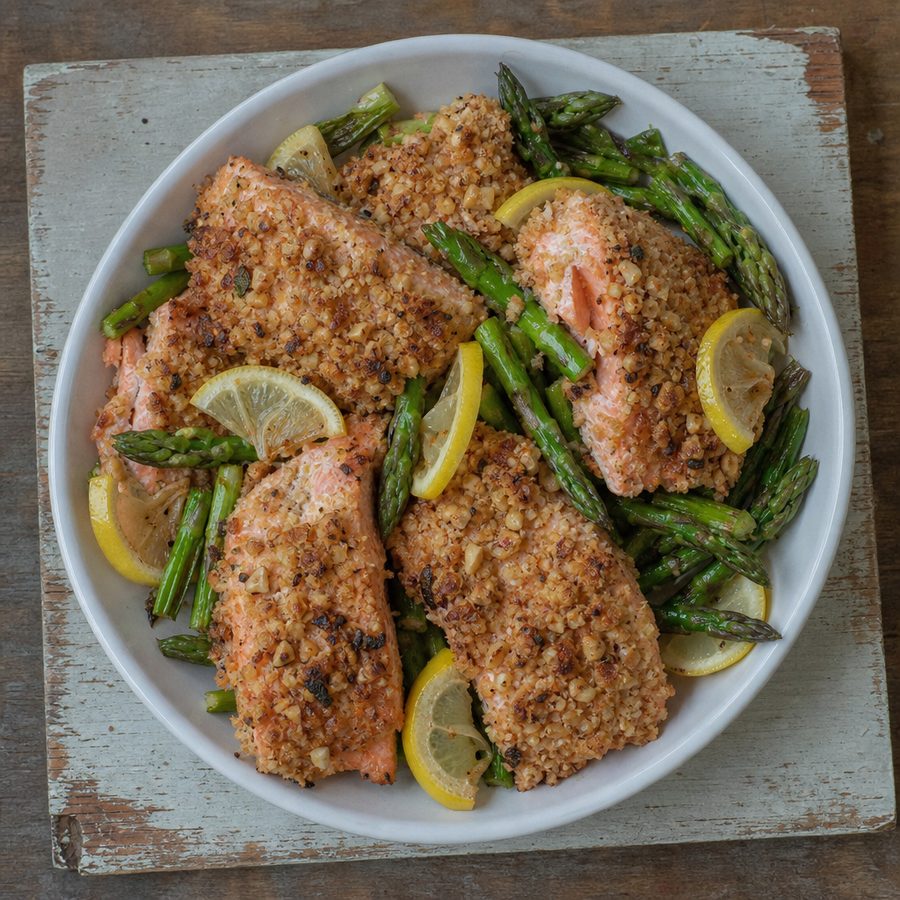
Salmon fillets pressed with a crunchy almond crust and roasted alongside lemony asparagus.
Why You'll Love This Recipe
It eats like something you fussed over, and the whole of it happens on one sheet pan in about half an hour. Fifteen minutes of chopping and pressing at the front, then the oven takes it from there and you are free until it comes out. If people are coming and you have no time to cook for them, this is the one I would point you at.
The Dijon is the part that makes it work. Brushed thin over the fillets, it gives the chopped almonds something to grip so the crust stays put instead of sliding off in the oven, and its sharpness cuts the richness of the fish underneath. At 425°F (220°C) the nuts toast dark gold in the same twelve minutes the salmon needs, which is the only reason a nut crust and a fish this delicate can share a pan.
You get crunch and softness in the same forkful, the craggy toasted top giving way to fish that is still coral in the middle. Between the fat in the salmon and the fat in the almonds, this is a plate that holds you through a long evening, and the asparagus roasting in the drippings beside it means the green part of dinner tastes like the fish rather than like an afterthought. Lemon over the whole pan at the end keeps it from sitting heavy.
Ingredients
- 4 salmon fillets (about 5 oz each)
- 3/4 cup almonds, finely chopped
- 1 lb asparagus, trimmed
- 2 tbsp Dijon mustard
- 3 tbsp olive oil
- juice of 1 lemon
- 3 cloves garlic, minced
- 1/4 cup chopped parsley
Instructions
- Heat the oven and dry the fillets: Heat the oven to 425°F (220°C) and line a large rimmed sheet pan. Pat the salmon fillets dry on both sides and give it a proper 30 seconds, because a wet surface will not hold mustard or almonds and the crust slides off in one piece when you try to serve it.
- Brush with Dijon, then press the almonds on: Brush the tops of the fillets with a thin, even layer of Dijon and press the chopped almonds on firmly with your palm until they set into it. Press rather than sprinkle, so that the nuts embed in the mustard instead of sitting loose on top, and arrange the fillets down one side of the pan.
- Season the asparagus on the other half: Toss the asparagus on the free half of the pan with two tablespoons of the olive oil, the minced garlic, and a pinch of salt, then spread it in a single layer. Drizzle the last tablespoon of oil over the almond crust, since dry chopped nuts scorch before they toast and a film of oil is what gets them to deep gold instead.
- Roast 12 to 15 minutes: Roast for 12 to 15 minutes, until the crust is deep gold and the salmon flakes when you press the thickest part with a fork. Thin tail pieces finish a couple of minutes early, so pull those first if the fillets are uneven rather than leaving the whole pan in for the thickest one.
- Lemon over the hot pan, then serve: Squeeze the lemon over the whole pan while it is still hot, scatter the parsley across it, and serve straight from the pan. The lemon goes on at the end because acid on the crust before roasting would soften the almonds, and hitting the hot pan is what carries it into the asparagus and the drippings rather than leaving it on the surface.
Variations
- Pecans or walnuts: Both chop and toast the same way. Pecans come out sweeter and brown a little faster, walnuts a shade more bitter against the mustard.
- Trout or arctic char: Either takes the crust well and cooks a couple of minutes faster than salmon, so start checking at ten.
- Herbs in the crust: Mix a tablespoon of chopped dill or thyme into the almonds before you press them on.
- Green beans instead of asparagus: They want a few extra minutes, so give them a head start on the pan before the salmon goes in.
- Orange in place of lemon: The juice of half an orange over the hot pan makes it rounder and less sharp, and it likes the almonds.
Storage & Leftovers
Leftovers keep in the refrigerator for up to three days in a sealed container. Store the salmon and the asparagus together, since the lemon and the pan juices go on working overnight, but expect the almond crust to soften once it is covered. It still tastes like the crust, it just no longer crunches.
Reheat gently or not at all. A cold fillet flaked over greens with more lemon is the better lunch, and if you do want it warm, ten minutes in a 300°F oven is kinder than a microwave, which tightens the fish and turns the asparagus limp. Leave it uncovered so the crust firms back up.
I would not freeze this one. Cooked salmon comes back drier than it went in and the almond crust turns to paste. If you want a head start, chop the almonds and stir the garlic into the oil a day early, and the assembly takes five minutes.
Notes & Tips
- Pat the fillets dry: Mustard slides off a wet surface and the crust goes with it. Ten seconds with a paper towel on both sides is the whole difference.
- Chop the almonds by hand: A food processor turns them to meal, which bakes into a paste rather than a craggy top. You want pieces about the size of a grain of rice.
- Press, do not sprinkle: Lay the almonds on and push down with your palm so they set into the mustard. Sprinkled nuts end up on the pan instead of the fish.
- Give the crust its own drizzle of oil: The nuts on top are the driest thing in the oven, and a little fat over them is what gets you gold instead of pale.
- Find the asparagus line by snapping one: Bend a single spear until it breaks, then cut the rest of the bunch to that length. Where it snaps is where the woody part ends.
- Go by the fork, not the clock: Salmon is done when the thickest part flakes under light pressure. A thin fillet can be there at ten minutes and a thick one can want sixteen.
Nutrition & Mindful Eating
- Salmon, almonds, and asparagus share one sheet pan and they help each other along. The fish gives off fat as it roasts, the asparagus sits in it, the almonds toast in the same heat, and the lemon at the end pulls the rich side and the green side of the plate together.
- Salmon carries enough fat through the fillet to stay moist under a crust that needs a hot oven, and that same fat is where its omega-3s and its vitamin D live. It is ready the moment it flakes and not a minute after.
- Chopped almonds pressed onto a thin layer of Dijon toast into a craggy gold top while the fish cooks underneath. The nuts bring vitamin E and a little fiber, and the mustard is what keeps the whole crust gripping the fillet.
- Asparagus goes on whole and comes off with tender stalks and frizzled tips, picking up the garlic and oil around it. It carries folate, and the fiber in those stalks is the kind the bacteria in your gut feed on.
- Garlic softens into the oil under the spears, parsley goes on raw at the end for its grassy edge, and the lemon hitting the hot pan is what keeps a nut crust and an oily fish tasting bright rather than dense.
- As you eat, notice the crunch of the almond crust giving way to the soft fish beneath it and the lemon arriving a beat after each bite, and stay at the table long enough to feel the meal settle.
Frequently Asked Questions
Can I use pecans instead?
Yes, and they make a slightly sweeter crust that browns a little faster, so keep an eye on the pan after the ten minute mark. Walnuts work too. Whatever nut you use, chop it by hand to rice-sized pieces rather than running it through a processor, since nut meal bakes into a paste instead of a crust.
My crust fell off in the oven. What went wrong?
Almost always a wet fillet. Pat the salmon dry on both sides before the mustard goes on, keep the mustard layer thin and even, and press the nuts in with your palm rather than scattering them. If your fillets have skin, roast them skin side down so the crust is not fighting gravity when you move them.
Can I get this ready ahead of time?
You can do everything but the oven. Chop the almonds, stir the garlic into the oil, and trim the asparagus a day early and keep them in the refrigerator. Hold off on the mustard and the crust until you are ready to roast, because the mustard draws moisture out of the fish and the nuts go soft sitting on it.
Does this fit a grain-free or paleo plan?
It does. The almonds are doing the job breadcrumbs usually do, so there is no wheat, no grain, and no dairy anywhere in it. The only label worth reading is the Dijon, since a few brands add wheat or sulfites. Check that the mustard is mustard seed, vinegar, water, and salt and you are set.