
Almond Flour Crispy Chicken Tenders
Crunchy oven-baked chicken tenders breaded in almond flour and parmesan instead of breadcrumbs, the gluten-free version of the classic everyone misses.
Why You'll Love This Recipe
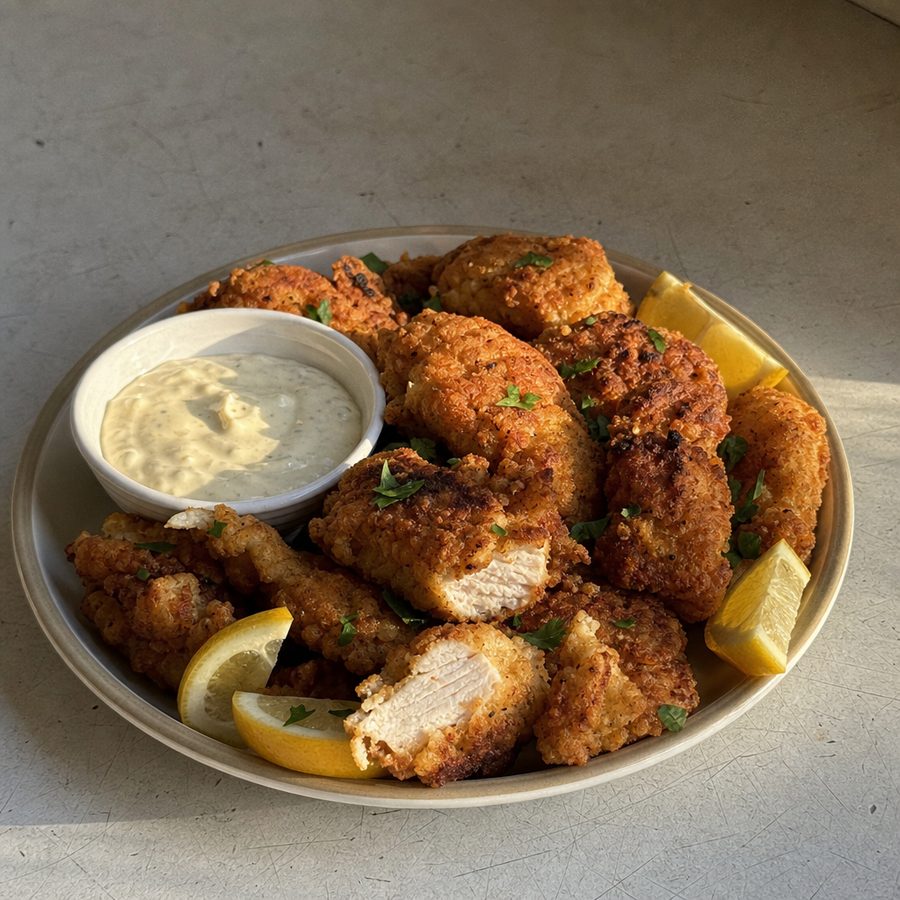
The coating is almond flour and grated parmesan, and the reason it works is that the two go crisp by different routes at the same time. The parmesan browns, because it is cheese and cheese browns, and the ground almonds toast the way nuts do in a dry pan. Between them you get a crust from a 425°F oven that a wheat breading only gets from hot oil. It is not a copy of a fried tender and it is not trying to be. It is drier, nuttier, more savory from the cheese, and it holds its crunch on the plate longer than the fried version does.
The one step nobody wants to hear about is drying the chicken. Pat every strip with paper towel until the surface stops looking glossy, and do it before anything else, because a wet strip cannot hold egg and egg is the only thing holding the crust on. Skip it and the coating slides off in the oven in sheets, and you are left with pale bare meat and a sheet pan of loose toasted crumbs that smell wonderful and are attached to nothing. Thirty seconds of paper towel is the whole difference between a tender with a crust and a tender with a memory of one.
A serving here is mostly chicken breast, which makes these a dinner rather than something you put next to a dinner. That is worth saying because breaded tenders usually are not: the standard version is a thin layer of meat under a thick layer of flour and oil. Here the ratio runs the other way, and the almond flour and parmesan add fat and a little more protein rather than starch. Roast a tray of whatever vegetable is cheap alongside, on the same rack at the same temperature, or serve them the way we do in our Baked Chicken With Butternut Squash.
Ingredients
- 1 1/2 lb boneless skinless chicken breast, cut into strips
- 1 cup almond flour
- 2 large eggs
- 1/2 cup grated parmesan
- 1 tsp paprika
- 1 tsp garlic powder
- 1/2 tsp fine sea salt
- black pepper
- 2 tbsp olive oil
Instructions
- Heat the oven hot, and set a rack in the pan: Heat the oven to 425°F (220°C) and set a wire rack inside a lined sheet pan. The rack is the difference between a tender that is crisp all the way around and one with a soft pale stripe where it sat: air has to reach the underside, or the juices that run out gather beneath the chicken and steam it. If you have no rack, turn them at the halfway mark and expect the bottoms to be a shade softer.
- Dry the chicken, then set up two dishes: Pat the chicken strips completely dry with paper towel first, until the surface is matte rather than glossy. Then beat the eggs in one shallow dish, and in another stir together the almond flour, parmesan, paprika, garlic powder, salt, and a few grinds of pepper. Keep one hand for the egg and one for the dry mixture as you work, or within three strips both of your hands will be wearing thick gloves of batter.
- Press the coating on rather than sprinkling it: Dip each strip in egg, let the excess run off for a second, then lay it in the almond flour mixture and press firmly on both sides. Pressing is the point: sprinkled coating falls off, pressed coating stays. Set them on the rack with a little space between each one, then brush or drizzle the olive oil over the tops. The oil is what browns the crust, and a strip that goes in dry comes out pale and floury however long you bake it.
- Bake until golden and 165°F (74°C): Bake 20 to 22 minutes, turning them once halfway. They are done when the coating is properly golden and an instant-read thermometer pushed into the thickest strip reads 165°F (74°C). Color is not enough on its own with chicken, and thickness varies more in hand-cut strips than people expect, so check the fattest one rather than the one nearest the front.
- Rest: Give them 5 minutes on the rack before serving. The crust firms as it cools and the juices settle back into the meat instead of running out onto the plate.
Variations
- Make it dairy-free: Swap the parmesan for a couple of tablespoons of nutritional yeast. You lose a little browning and keep the savory edge.
- Change the seasoning: Italian herbs, chili powder with cumin, or lemon pepper all work in the coating in place of the paprika and garlic powder.
- Make it spicy: Add cayenne to the coating and serve with hot sauce whisked into Greek yogurt for dipping.
- Use thighs: Boneless thighs cut into strips stay juicier and forgive a few extra minutes in the oven.
- Cook them on the stove: Shallow-fry in a skillet over medium heat, about three minutes a side. Faster, and the crust comes out more even.
Storage & Leftovers
Refrigerate leftovers in an airtight container for up to four days. Lay them out in a single layer if the container allows it, or put parchment between the layers, because stacked tenders press the coating flat and it goes soft wherever they touch.
Reheat in a hot oven or a dry skillet rather than the microwave. Ten minutes at 400°F (200°C) on a rack brings the crust back close to where it started, while a microwave steams it and the almond flour goes soft and a little pasty.
They freeze well for up to two months, and they freeze better cooked than raw. Cool them completely, spread them on a tray to freeze solid, and only then bag them, so they do not weld into one block. Reheat straight from frozen in a hot oven.
Notes & Tips
- Dry the chicken first: Pat the strips with a paper towel before breading. Surface moisture is what makes the coating slide off in the oven.
- Press, do not sprinkle: Push each strip firmly into the almond flour mixture so the coating packs on. A loose dusting will not crisp.
- Use the rack: Air underneath means the bottom crisps instead of steaming in its own juices. It is the difference between good and soggy.
- Do not crowd the pan: Strips need space between them. Packed together they release steam onto each other and the coating goes soft.
- Let the chicken rest: Give the tenders a few minutes out of the oven before serving so the juices settle back into the meat.
- Make it ahead: These reheat best in a hot oven or an air fryer for a few minutes. A microwave softens the coating.
Nutrition & Mindful Eating
- Chicken, almond flour and parmesan work as one coating system here. The egg grips each strip, the almond flour toasts into a craggy shell, and the parmesan browns into the salty edge you taste first, with protein running through all three.
- Chicken breast is the reason these eat like a meal. It is fine-grained and quick-cooking, so it stays juicy in a hot oven, and it carries complete protein along with niacin and vitamin B6.
- Almond flour is ground almonds and nothing else, which is why the crust tastes faintly sweet and nutty as it colors. The almonds bring vitamin E and magnesium along with the crunch.
- Parmesan is aged long enough that a little of it seasons a whole tray. It melts into the almond flour, crisps at the edges, and adds calcium to a coating that is already carrying most of the flavor.
- Olive oil brushed over the top is what takes the coating from pale to golden, and black pepper keeps it from tasting one-note. Protein this dense holds you well past the meal, which is why a few tenders eat like dinner rather than a stop on the way to one.
- As you eat, listen for the crack of the crust and notice how the chicken stays soft underneath it, and leave long enough between tenders to feel when you have had enough.
Frequently Asked Questions
What replaces the breadcrumbs?
A mix of almond flour and grated parmesan. It crisps up in the oven and gives you that breaded crunch without any wheat.
Are these keto or low-carb?
They're very low in carbohydrate since there's no flour or breadcrumb coating: just almond flour, parmesan, and chicken.
How do I keep them crispy?
Bake on a wire rack, brush with oil, and reheat in an oven or air fryer rather than the microwave.
How long does it keep?
Refrigerate leftovers for up to 4 days and reheat in a hot oven or skillet to bring back the texture.