
Asparagus and Egg Spring Skillet
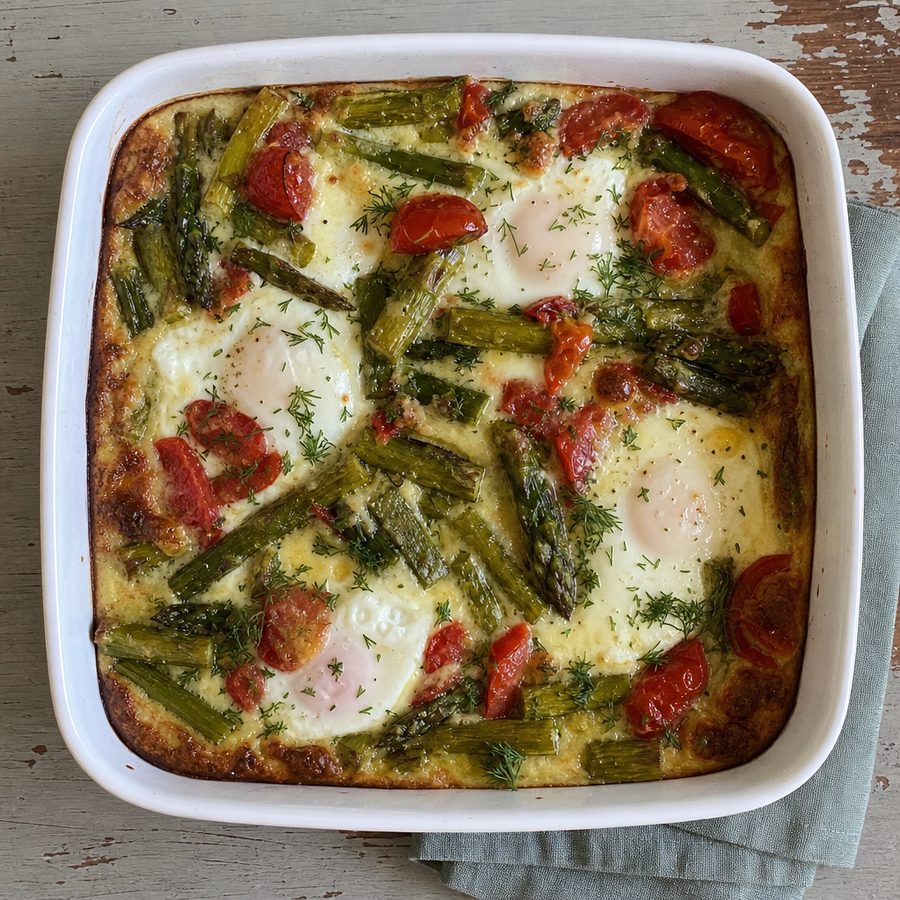
Crisp-tender asparagus and cherry tomatoes topped with baked eggs and dill, a light yet protein-rich dairy-free breakfast that celebrates spring produce.
Why You'll Love This Recipe
This is a breakfast for a weekend morning when you want something that eats like a real meal, and it works just as well as dinner on a night you do not want to think. One skillet, twenty-five minutes, no flipping, and eight eggs across four people means nobody is hungry again at ten. If there are two of you, halve it or eat the rest cold the next day.
The tomatoes are what make this more than eggs and vegetables. They split as they cook and let their juice out into the hot olive oil, and that sweet, slightly acidic liquid is what the eggs set into, so the whites come out seasoned from underneath rather than needing anything on top. The lid at the end is the other half of it, trapping enough steam to set the whites while the yolks stay loose.
What comes to the table is worth looking at and worth breaking into. Brown-tipped asparagus, collapsed tomatoes, soft sweet onion, and yolks that run down through all of it when you cut in. The eggs and the olive oil carry enough between them to hold you through a morning, and dill going on raw at the end keeps the pan tasting green and fresh rather than heavy.
Ingredients
- 8 large eggs
- 1 bunch asparagus, trimmed
- 1 1/2 cups cherry tomatoes
- 1 small onion, sliced
- 3 tbsp olive oil
- 2 tbsp fresh dill
- 3/4 tsp salt
Instructions
- Snap one spear and trim the rest to match: Snap one asparagus spear where it breaks naturally and trim the rest of the bunch to that length, then cut the spears into two-inch pieces. That natural break is where the woody part ends, so it does the job a knife cannot: cut by eye and you either lose good asparagus or leave a stringy inch at the bottom of the pan. Slice the onion thin and halve any cherry tomatoes larger than a walnut.
- Saute the vegetables for 6 minutes: Warm the olive oil in a 10 or 12 inch skillet over medium heat, then add the asparagus, onion, and tomatoes. Cook for 6 minutes, stirring now and then, until the onion is soft, the tomatoes have started to split, and the asparagus is crisp-tender. Get the vegetables finished now, because once the eggs go in the pan is on their schedule and the asparagus gets whatever time they need.
- Open eight wells down to the pan: Using the back of a spoon, push the vegetables aside to open eight small spaces down to the bare metal, then crack one egg into each. Down to the pan matters: an egg cracked onto a bed of vegetables sits above the heat and takes twice as long, so the whites stay slack while everything around them overcooks. Work quickly so they all set at about the same rate.
- Season, cover, and cook 5 to 7 minutes: Sprinkle the salt over the eggs and the vegetables, turn the heat down to medium-low, cover the pan, and cook for 5 to 7 minutes, until the whites are opaque all the way through and the yolks still wobble when you shake the handle. The lid is what cooks the tops, trapping steam so the surface of each yolk sets to a film without the bottoms turning to rubber.
- Dill on, and serve it straight from the pan: Take the pan off the heat, scatter the dill over the top, and bring it to the table in the skillet. Serve it right away, because the eggs go on setting in a hot pan for several minutes after the burner is off, and a yolk that wobbled when you took it off will be firm by the time a slow table gets to it.
Variations
- Different herbs: Chives, tarragon, or flat-leaf parsley all work in place of the dill. Tarragon in particular is very good with asparagus.
- Add greens: A few handfuls of spinach or arugula stirred in during the last minute of the vegetable step wilt down to almost nothing and add a green edge.
- Mushrooms: Sliced cremini added with the onion give the pan a deeper, more savory base. Allow them a couple of extra minutes to release their water.
- Smoked salmon on top: Drape a few slices over the finished pan along with the dill for a brunch version that needs nothing else.
- Leeks instead of onion: A sliced leek, rinsed well, goes sweeter and softer than an onion and makes the whole skillet milder.
Storage & Leftovers
This is at its best in the ten minutes after it comes off the heat, while the yolks are still loose, so cook what you plan to eat. Leftovers keep two days in the refrigerator in a sealed container, with the understanding that the yolks will have set firm by then and it becomes a different, still perfectly good dish.
Reheat it gently or eat it cold. A covered skillet over low heat for three or four minutes is the kindest way, and a microwave on half power in short bursts will do if you are in a hurry. Either way, stop while it still looks slightly underdone, because eggs go rubbery in the last thirty seconds.
Do not freeze it. Cooked egg white turns weepy and tough after a freeze and the tomatoes come back watery. If you want a head start on a weekday, trim and cut the asparagus and slice the onion the night before, and the whole pan comes together in about fifteen minutes.
Notes & Tips
- Snap one spear to find the line: Bend a single stalk until it breaks and cut the rest of the bunch to match. That is where the woody part ends, and it saves you guessing at the whole bunch.
- Use a wide pan: Eight eggs need eight separate wells, and a crowded skillet means they run into each other and set as one sheet. Ten inches is the minimum and twelve is easier.
- Crack each egg into a cup first: Sliding them in from a small cup keeps shell out of the pan and lets you place them evenly, which matters when eight of them have to finish together.
- Turn the heat down before the lid goes on: Covered and left on medium-high, the bottoms brown before the whites set. Medium-low and covered is what gives you set whites and loose yolks.
- Judge by the whites, not the clock: Five to seven minutes is a range because pans and stoves differ. You want no translucent white left anywhere and yolks that still move when you shake the handle.
- Dill goes on off the heat: Fresh dill in a hot pan wilts and loses its scent within a minute. Scatter it after the skillet is off the burner and it stays green.
Nutrition & Mindful Eating
- Eggs, asparagus, and tomatoes cook in the same pan and finish at the same moment. The vegetables sweeten and let go of a little juice, the eggs set in the spaces between them and catch that flavor, and together they carry the protein and fiber that make a breakfast hold.
- Eight eggs cracked into hot vegetables set with firm whites and yolks still loose enough to run through everything around them. They bring complete protein and choline, and the yolks are where the color and most of the richness live.
- Asparagus goes into the pan first so it has time to turn crisp-tender and brown a little where it meets the metal. It brings folate along with a fiber your gut bacteria use, and the woody ends snap off exactly where they should.
- Cherry tomatoes burst as they cook and release their juice into the oil, which is what seasons the eggs from underneath, while sliced onion turns soft and sweet in the same few minutes. The tomatoes bring lycopene along with all that brightness.
- Fresh dill goes on at the very end so it stays green and anise-scented rather than wilting into the pan, and the salt is what draws the sweetness up out of the tomatoes and the asparagus.
- As you eat, break a yolk and watch it run down through the asparagus, take in the dill and the warm tomato smell, and give the first few bites your full attention before the day starts asking for it.
Frequently Asked Questions
Can I use thick asparagus?
Yes. Slice thick spears in half lengthwise before you cut them into pieces so they cook in the same six minutes the rest of the pan needs. Pencil-thin asparagus goes the other way and is better added two or three minutes late, since it turns limp if it cooks the whole time.
My whites are still runny but the bottoms are browning. What do I do?
Turn the heat down and put the lid back on. The lid does most of the work here, trapping steam that cooks the tops of the whites, and without it you are waiting on heat traveling up through the egg while the bottom goes too far. Medium-low and covered is the setting you want.
Can I make this ahead?
Not really, and I would not try. The whole appeal is a yolk that runs, and that lasts about ten minutes. What you can do the night before is trim and cut the asparagus and slice the onion, which turns a twenty-five minute recipe into a fifteen minute one.
Is this dairy-free, and does it work on a Whole30?
It is dairy-free as written, since the fat is all olive oil and there is no cheese or butter anywhere in the pan. It works for a Whole30 and for paleo too, because eggs, vegetables, olive oil, and herbs are the entire list. If you are avoiding nightshades, leave the cherry tomatoes out and put a handful of mushrooms in their place.