
Bacon, Brussels Sprout, and Pear Breakfast Hash
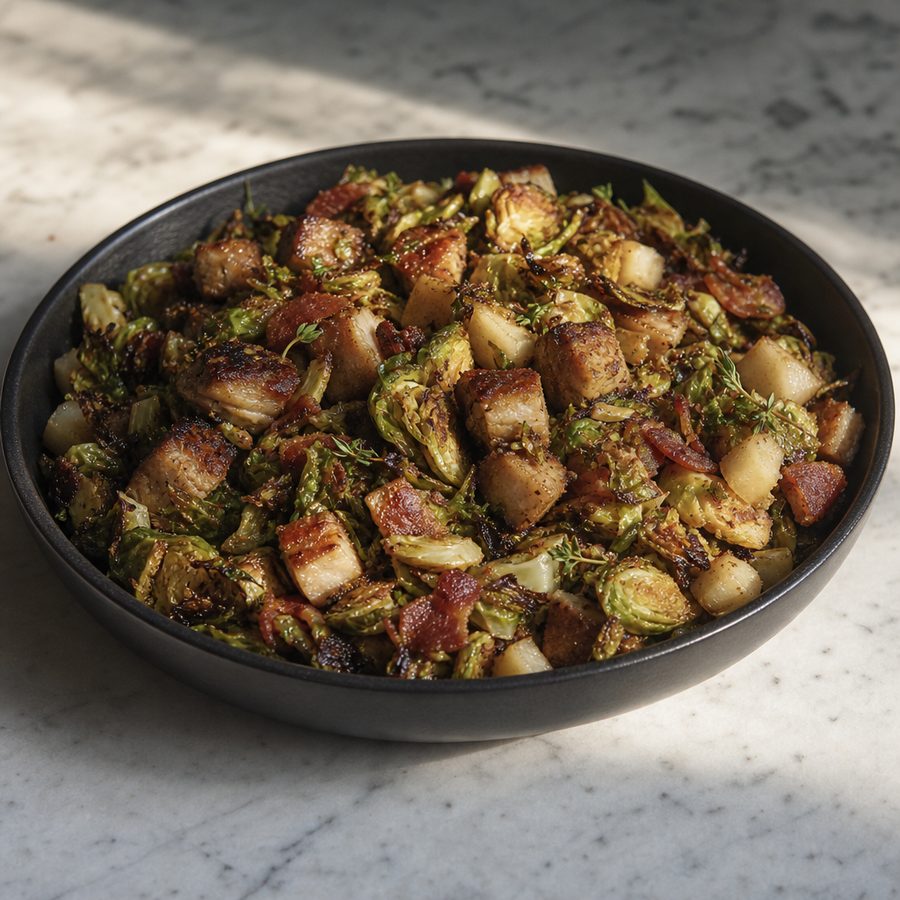
Shredded brussels sprouts caramelized in bacon fat with cubes of pork tenderloin and diced pear, sharpened with thyme and a spoonful of cider vinegar at the end.
Why You'll Love This Recipe
This is a cold-weather breakfast, the kind you make on a Saturday when the windows have fogged up and you want the house to smell like bacon for an hour afterward. It takes about forty five minutes, most of it hands off, and it feeds four people properly. I built it around shredded sprouts rather than whole ones because shredding changes the vegetable completely: you get far more cut surface, so far more of it browns, and the whole pan tastes toasted rather than boiled. If brussels sprouts are on your list of vegetables you politely avoid, this is the preparation that tends to change minds.
Everything cooks in the same pan in order, and each stage leaves something behind for the next. The bacon renders first and comes out crisp, leaving the fat that the pork browns in. The pork cubes sear hard and fast and come out while they are still juicy, because tenderloin is a quick-cooking cut and turns dry if you leave it in to finish. Then the sprouts go into all that flavor, pressed flat and left alone until the cut faces are properly dark. The pear goes in near the end, softening but keeping its shape, and everything comes back together for the last minute.
Sweet, salty, smoky, and sour is a combination that works at any hour and is particularly welcome at breakfast, when most food leans one way or the other. The pear and the caramelized sprout leaves supply the sweetness, the bacon brings the salt and smoke, and a tablespoon of cider vinegar off the heat cuts a line straight through the middle of it. There is a real amount of pork in every serving, so this holds you for hours, and it reheats better than almost any other hash I make.
Ingredients
- 6 slices bacon (about 6 oz), cut crosswise into 1/2-inch pieces
- 1 lb pork tenderloin, trimmed and cut into 1/2-inch cubes
- 1 lb brussels sprouts, trimmed and thinly shredded
- 1 large firm pear (Bosc or Anjou), cored and cut into 1/2-inch dice
- 1 shallot, thinly sliced
- 1 tbsp apple cider vinegar
- 1 tsp fresh thyme leaves
- 1/4 tsp fine sea salt
Instructions
- Shred the sprouts: Trim the stem end off each brussels sprout and halve it, then lay the halves cut side down and slice them thinly into shreds. A food processor with the slicing disc does a pound in under a minute. Pull apart any clumps with your fingers so the shreds cook evenly.
- Render the bacon: Put the bacon pieces in a cold, large cast iron skillet and set it over medium heat. Cook for eight to ten minutes, stirring now and then, until the pieces are crisp and the fat has rendered out. Lift the bacon onto a plate with a slotted spoon and leave the fat in the pan.
- Brown the pork: Pat the pork cubes dry and add them to the hot fat in a single layer with the salt. Leave them undisturbed for three minutes so a crust forms, then turn and cook two to three minutes more, until they are golden on two sides and an instant-read thermometer reads 145°F. Move them to the plate with the bacon.
- Caramelize the sprouts: Add the shallot and the shredded sprouts to the pan, press them flat, and leave them for four minutes without stirring so the underside darkens. Toss and repeat twice more, six to eight minutes in total, until the shreds are deep brown in places and tender through.
- Add the pear and bring it together: Stir in the pear and the thyme and cook for two to three minutes, just until the fruit softens at the edges but still holds its shape. Return the pork and bacon with any juices, toss for a minute to heat through, then take the pan off the burner, add the cider vinegar, and stir once.
Variations
- Apple and sage: Swap the pear for a firm apple and the thyme for chopped fresh sage, which pushes the whole pan in a more autumnal direction.
- Chicken thigh: Use cubed boneless chicken thigh in place of the pork, browned the same way and cooked through to 175°F.
- Sweeter and softer: Add half a cup of diced roasted butternut squash with the pear for a rounder, heavier hash on a cold morning.
- Green and peppery: Fold two handfuls of arugula or watercress in off the heat so it half wilts against the warm sprouts.
- Maple finish: Add a teaspoon of maple syrup along with the vinegar for a sweet and sour edge that suits the smoke of the bacon.
Storage & Leftovers
This keeps four days in a sealed container in the refrigerator and is one of the better leftovers in my kitchen. The sprouts hold their texture, the pork stays tender because it was pulled at the right moment, and the flavors settle overnight into something rounder than they were on day one.
Reheat it in a dry skillet over medium-high for three or four minutes, spread flat and left alone for the first two. That brings the browned edges back and crisps the bacon again. The microwave will heat it through but everything softens, and the crisp edges are half the pleasure here.
It freezes for up to three months in flat, sealed portions. Thaw overnight in the refrigerator and reheat in a pan rather than from frozen, since the pear releases water as it thaws and you want that to cook off. A fresh splash of vinegar at the end brings it right back.
Notes & Tips
- Start bacon in a cold pan: Bacon put into a hot skillet seizes and burns before the fat has rendered. A cold start gives you crisp pieces and a pan full of clean fat to cook in.
- Dry the pork cubes: Tenderloin is wet from the package and wet meat steams. A minute with paper towel is the difference between golden cubes and gray ones.
- Pull the pork at 145°F: It carries on cooking on the plate. Left in the pan until it looks done all the way through, tenderloin goes chalky and no amount of bacon fat rescues it.
- Use the widest pan you own: A pound of shredded sprouts needs room to sit in contact with the metal. Two batches in a small pan beat one crowded batch every time.
- Slice the pear last: Cut fruit browns while it waits. Dice it while the sprouts are caramelizing and it will go straight from board to pan.
- Go easy on the salt: Bacon brings plenty of its own and the pan concentrates it. Taste at the very end, after the vinegar, and add more only if it genuinely needs it.
Nutrition & Mindful Eating
- Pork, bacon, sprouts, and pear are doing four different jobs in one pan. The tenderloin carries the protein, the bacon carries the fat and the smoke, the sprouts bring fiber and bulk, and the pear gives the whole thing a sweetness that keeps it from tasting like dinner.
- Pork tenderloin is a close-grained, quick-cooking cut with a lot of protein behind it, and it brings thiamin, one of the B vitamins pork supplies more generously than almost any other food.
- Brussels sprouts belong to the cabbage family, which is where their sulfur compounds and their faint bitterness come from, and they carry vitamin K and vitamin C in quantity. Shredding and browning them turns that bitterness sweet and nutty.
- Pear cooked briefly keeps its shape and gives up just enough juice to glaze the pan, and its soft fiber is the gentle kind that suits people whose digestion is easily irritated.
- The cider vinegar goes in with the burner off, and it earns its place. Acid cuts the fat from the bacon and lifts the sweetness of the pear, which is why the last spoonful of this hash tastes as good as the first.
- As you eat, look for the dark toasted sprout leaves and the soft pieces of pear hiding among them, and notice how a plate this savory changes what you want later in the morning.
Frequently Asked Questions
Can I make this with only bacon and skip the pork?
You can, though the plate changes character and becomes more of a side dish than a breakfast. If you go that way, double the bacon and add a diced apple to balance the salt. Keeping the tenderloin is what makes the hash filling enough to be the whole meal.
My sprouts came out soggy. What happened?
Almost always a crowded pan. A pound of shreds needs a twelve-inch skillet, and if yours is smaller, brown them in two batches. Wet sprouts are the other culprit, so dry them thoroughly after washing and give them a still, hot pan to sit in.
Which pear should I buy?
A firm one. Bosc and Anjou hold their shape through cooking, while a ripe Bartlett collapses into sauce within a minute of hitting the heat. Underripe is better than overripe here, and apple works just as well if the pears at the store are hopeless.
Does this suit an AIP elimination phase?
Yes, with one thing to check. Bacon is the item to read carefully, since many brands are cured with paprika, pepper, or sugar. Look for one cured simply with salt, and the rest of the recipe, sprouts, pear, pork, shallot, thyme, and vinegar, is compliant as written.