
Baked Cod with Lemon & Asparagus
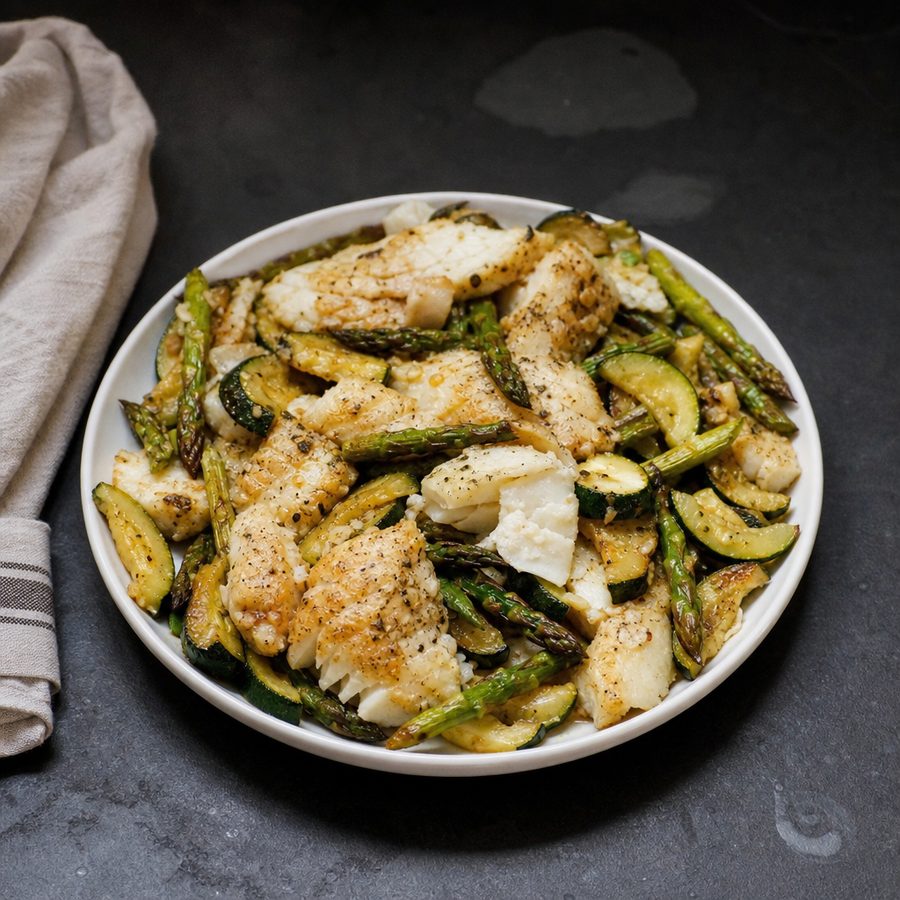
Flaky baked cod with bright lemon, tender asparagus, and zucchini roasted on one sheet pan for a light, fast AIP dinner.
Why You'll Love This Recipe
Seven ingredients, one pan, and twenty minutes you do not have to stand over. The reason this works when most sheet pan dinners do not is timing: cod, asparagus, and zucchini all want the same heat for the same stretch, so nothing goes in halfway through and nothing sits there overcooking while it waits for something else to catch up. You slide the pan in, you set the table, and it all comes out together. One pan to wash.
Cod is delicate and it goes from perfect to chalky in about ninety seconds, so pull it the moment it flakes under a fork. The lemon goes on after it comes out, not before, so the juice stays bright instead of cooking away. Asparagus is on the same clock, which is why the two of them share a pan: the spears want roughly as long as the fillets do, and both are better a shade under than a shade over.
White fish is mild and quick to cook, and it sits easy enough that you can eat it late in the evening without it following you to bed. That makes this a good dinner for a night that ran long, when the alternative is standing at the counter with a handful of whatever is open. Our Tilapia Bowl With Mango And Avocado is another gentle fish dinner in the same spirit.
Ingredients
- 4 cod fillets
- 1 lb asparagus
- 2 zucchini
- 1 lemon
- 3 tbsp olive oil
- 3 cloves garlic
- 1/2 tsp fine sea salt
Instructions
- Heat the oven and cut everything to size: Heat the oven to 400°F (200°C). Trim the woody ends off the asparagus, snapping one stalk to find where it gives, and slice the zucchini into half-moons about half an inch thick. The sizing is doing real work: cut thinner and the zucchini collapses long before the fish is done, cut thicker and it is still squeaky when you pull the pan out.
- Toss the vegetables and give them room: Toss the asparagus and zucchini on the sheet pan with half the olive oil, the garlic, and half the salt, then spread everything into a single layer with space between the pieces. Crowded vegetables steam in their own moisture and come out pale and limp. Spread out, they brown at the edges, and those browned edges are where the sweetness is.
- Dry the cod, then settle it in: Pat the cod dry on both sides with a paper towel. Wet fish steams instead of roasting and will not take on any color at all, and the surface moisture is the only thing standing between you and a browned edge. Nestle the fillets among the vegetables rather than on top of them, so the heat reaches all sides, and drizzle with the remaining olive oil and a pinch of salt.
- Bake until it flakes: Bake for 18 to 20 minutes, and start checking at 16. Cod goes from perfect to chalky in about ninety seconds, so this is the one moment worth standing at the oven for. Press the thickest part of a fillet with a fork: it should separate into clean white flakes with no translucent line left in the middle. The asparagus should bend when you lift it and still have some spring.
- Let the pan rest two minutes: Pull the pan out and leave it alone for two minutes before you serve. The fish keeps cooking in its own heat, and those two minutes are what let the flakes firm up enough to lift off the pan in one piece rather than falling apart on the spatula.
- Lemon last, off the heat: Squeeze the lemon over everything now, after the pan is out of the oven. Lemon juice baked for twenty minutes turns dull and faintly bitter, while juice added at the end stays sharp and pulls the whole pan together. Serve it straight from the sheet pan, while the vegetables still have their browned edges.
Variations
- Add more vegetables: Thin fennel wedges, broccolini, or halved leeks soften in about the time the cod needs, so they can go straight onto the pan with the asparagus.
- Change the fish: Haddock, pollock, or halibut bake on the same schedule. Thicker cuts like halibut may want an extra two or three minutes.
- Make it a herb pan: Scatter chopped parsley, dill, or tarragon over everything as it comes out of the oven. Fresh herbs do more here than dried ones.
- Swap the green: Green beans or thin-sliced broccoli stems work when asparagus is out of season. Both hold up to the full bake better than asparagus does.
- Add something briny: A spoonful of capers or a few chopped olives scattered over the finished pan gives the fish a salty edge without reaching for the salt again.
Storage & Leftovers
Cooked cod keeps three to four days in an airtight container, and it is better cold than most people expect. Flake it over greens with a squeeze of lemon and you have lunch without reheating anything, which is the kinder option anyway, because reheated white fish tightens fast. The asparagus loses its snap in the refrigerator whatever you do, so keep the fish and the vegetables in the same box and eat them within the week.
Reheat in a hot oven or a dry skillet rather than the microwave. A microwave drives the water out of fish and the flesh tightens as it goes, so what comes out is drier and tougher than what went in. Five minutes at 400°F on a sheet pan warms the cod through without cooking it a second time, and the vegetables get their edges back.
Freezing is not this dish's friend, and it is worth saying so. Cooked cod thaws watery and the asparagus comes back as string, so if you know you will not get through the pan, plan on the cold lunch rather than the freezer. If you do want to keep some, freeze the fish on its own for up to a month and thaw it overnight in the refrigerator.
Notes & Tips
- Do not overcook the fish: White fish is done as soon as it turns opaque and flakes easily. Pull it early to keep it moist.
- Match the asparagus to the bake time: Thick spears can go in at the start. If yours are pencil thin, hold them back and add them for the last eight minutes so they do not collapse.
- Pat the cod dry: Wet fillets steam instead of roasting, and the surface stays pale. A minute with paper towels changes the whole pan.
- Give the pan room: Everything should sit in one layer with a little space around it. Two pans beat one crowded one every time.
- Cut the zucchini thick: Half-moons about a half inch thick hold their shape through the bake. Thin slices turn to water.
- Use the lemon twice: The juice goes on before baking and mellows in the oven. Save fresh wedges for the table, where the sharpness still reads.
Nutrition & Mindful Eating
- Fish and two green vegetables roasting together means they season each other. The cod stays mild and sweet, the asparagus picks up the garlic and oil around it, and the lemon ties the whole pan together with its brightness.
- Cod is a fine-flaked, close-textured fish that turns opaque and pulls apart in wide petals when it is ready, and it carries complete protein in a form that sits gently, which is part of why it suits a night when you want dinner to be easy on you.
- Asparagus roasted at high heat goes sweet at the tips and a little browned at the edges, and along with that flavor it brings folate and a fiber called inulin that feeds the bacteria already living in your gut.
- Zucchini softens fast and gives up some of its water into the pan, which keeps the fish moist while it bakes, and it adds potassium and a mild green flavor that sits underneath the lemon.
- Garlic sliced into the oil turns nutty as it roasts, the salt draws the flavor up out of the fish, and a squeeze of lemon at the table keeps everything tasting lifted rather than flat.
- As you eat, notice how the cod comes apart under the fork and how the lemon keeps arriving after each bite, and give the plate the time it deserves rather than finishing it on your feet.
Frequently Asked Questions
Is cod allowed on AIP?
Plain white fish like cod is a great AIP protein; just avoid breading and nightshade-based seasonings.
Why is my cod watery?
Excess surface moisture steams the fish, so pat the fillets dry and avoid overcrowding the pan.
How long does it keep?
Refrigerate leftovers for up to 4 days and reheat in a hot oven or skillet to bring back the texture.
Can I make it ahead?
Yes, it's great for meal prep. Make a batch, portion it into containers, and you'll have easy servings ready for the week.