
Baked Okra Crisps
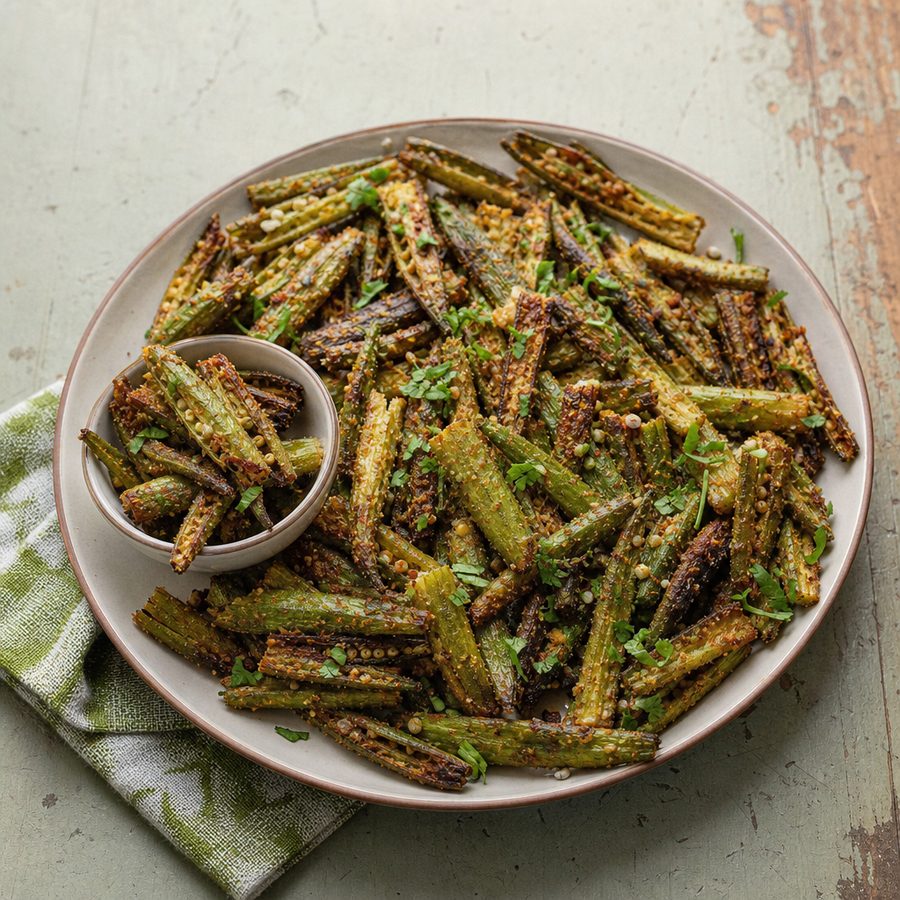
Okra halved lengthwise, tossed with olive oil, almond flour and smoked paprika, then baked on a preheated sheet pan until the edges curl and go brittle.
Why You'll Love This Recipe
If okra has only ever reached you boiled and slippery, this is the pan that changes your mind. Halved lengthwise and left in a hot oven long enough to dry out, it turns into something you eat with your fingers standing over the tray. I make it in late summer when the okra at the market is small and firm, and it usually disappears before it ever reaches a bowl.
The trick is surface area and patience. Cutting each pod lengthwise opens the seedy interior to dry heat, and that is what drives off the moisture responsible for the texture people complain about. A thin coat of olive oil carries the smoked paprika and garlic onto every cut face, and the almond flour gives that oil something to grip so the edges brown rather than steam.
What comes out is closer to a chip than a vegetable side. The pods shrink, the edges curl and go brittle, and the seeds inside toast to a faint nuttiness. Nutritional yeast in the coating adds a savory, almost cheesy back note that keeps you reaching for another one. It is the rare snack where the crunch belongs to the vegetable itself, which also means it has to be eaten the day it is made, since even a night in a container softens the edges back down.
Ingredients
- 1 1/2 lb okra, stems trimmed, halved lengthwise
- 3 tbsp olive oil
- 1/3 cup almond flour
- 2 tbsp nutritional yeast
- 1 tsp smoked paprika
- 2 cloves garlic, minced
- 1/4 tsp salt
- 1/2 tsp black pepper
Instructions
- Heat the oven and the pan: Heat the oven to 425°F (220°C) and slide a large rimmed sheet pan onto the middle rack while it comes up to temperature. Okra that lands on already hot metal starts browning immediately, which matters a great deal when the job is drying something out rather than steaming it.
- Trim and halve: Rinse the okra and dry it completely on a towel. Any water left on the surface turns to steam in the oven and softens the pods. Trim off the stem caps and slice each pod in half lengthwise so the seeded interior is fully exposed.
- Coat every cut face: Toss the halves in a bowl with the olive oil until each cut face is slick. Add the almond flour, nutritional yeast, smoked paprika, minced garlic, salt and black pepper, then toss again with your hands until the coating is even and a little clumpy along the edges.
- Spread cut side down: Pull the hot pan out and spread the okra in a single layer, cut side down, with room between the pieces. Crowding traps steam and you will end up with soft okra. Use two pans if the first one is looking full.
- Bake until brittle: Bake for 15 minutes, then flip each piece with tongs and bake another 10 to 14 minutes, until the edges are deep brown and curled and a pod feels light and stiff when you lift it. They look done several minutes before they are.
- Cool on a rack: Slide the crisps onto a wire rack in a single layer and let them sit 5 minutes. Air moving underneath lets the last of the steam escape, which is the difference between a crisp that stays crisp and one that softens in the middle.
Variations
- Chili and lime: Swap the smoked paprika for chili powder and squeeze lime over the crisps the moment they leave the oven.
- Curry coating: Turmeric, cumin and a pinch of cayenne in place of the paprika give the pods a warmer, earthier edge.
- Sesame finish: Toss a spoonful of sesame seeds into the coating so they toast alongside the okra and add a second layer of crunch.
- Sunflower crust: Finely ground sunflower seeds work where the almond flour goes and give a darker, toastier crust.
- Whole pods: Leave the smallest pods whole and bake them 5 minutes longer for a chewier center under a crisp skin.
Storage & Leftovers
These are at their best within an hour of leaving the oven, so bake what you plan to eat. If there are extras, let them cool completely before they go anywhere near a container, because trapped warmth becomes condensation and condensation turns a crisp okra soft.
Stored loosely covered at room temperature they hold their texture for about a day. Do not refrigerate them. The refrigerator is a humid place and the almond flour coating pulls moisture straight out of the air, leaving you with a chewy pod and a pale crust.
To bring back a batch that has gone limp, spread it on a sheet pan and give it 6 to 8 minutes in a 375°F (190°C) oven. It comes back most of the way. Raw okra keeps about four days in the refrigerator in a paper bag, which breathes better than plastic.
Notes & Tips
- Dry the pods completely: Water on the surface turns to steam, and steam is what stands between you and a crisp edge.
- Preheat the pan: Okra that lands on hot metal starts browning at once rather than sweating while the pan catches up.
- Cut side down: The exposed seeds and flesh do the browning, so give that face direct contact with the metal.
- Give them space: Two pans in one layer beat one crowded pan every single time.
- Bake past pretty: They look finished several minutes before they are, and those last minutes are where the crunch happens.
- Cool on a rack: Air underneath lets the last of the steam escape so the middles stay stiff.
Nutrition & Mindful Eating
- The okra, the olive oil and the almond flour coating behave as one thing here. The pods bring their own fiber and body, the oil carries the spice onto every surface, and the almond flour gives the outside something to brown into.
- Okra is one of the few vegetables that holds its shape in dry heat while giving up almost all of its water, and the soluble fiber that makes it slippery when raw is the same fiber that makes this sit so steadily afterward.
- Almond flour in the coating brings fat and a faint marzipan sweetness, and it toasts into a thin crust that shatters when you bite through it.
- Smoked paprika, garlic and coarse black pepper go on before the oven so they toast alongside the pods. The paprika is what you smell first, and the garlic settles into the background as something warm rather than sharp.
- Nutritional yeast is the savory back note, faintly nutty and faintly like cheese, and it carries B vitamins along with that flavor. It is also why people finish the tray without quite knowing why.
- As you eat, listen for the snap in the first one and notice how the smoked paprika arrives a beat before the okra does, then slow down enough to feel the tray emptying rather than reaching on autopilot.
Frequently Asked Questions
Can I use frozen okra?
You can, though the texture will not be quite the same. Thaw it completely, press it dry between towels with real pressure, and expect to add about 5 minutes to the bake. Frozen pods hold more water than fresh ones, and water is the thing standing between you and a crisp edge.
Mine came out slimy in the middle. What happened?
Either the pods were crowded on the pan or they came out of the oven too early. Okra needs space so the steam it releases can leave, and it needs to bake past the point where it first looks finished. Give each piece room and trust the color rather than the clock.
Can I coat them ahead of time?
Trim and halve the okra up to a day ahead and keep it dry in the refrigerator, but hold the oil and the coating until you are ready to bake. Salt draws water out of the cut faces, and okra sitting in its own moisture will never crisp properly.
Is there anything from an animal on this pan?
No. It is okra, olive oil, almond flour, nutritional yeast, garlic, and spices. The savory note that reads as cheese comes from the nutritional yeast. It suits a table where people eat differently, since there is one tray for everyone. It does contain tree nuts.