
Baked Parsnip Fries with Thyme
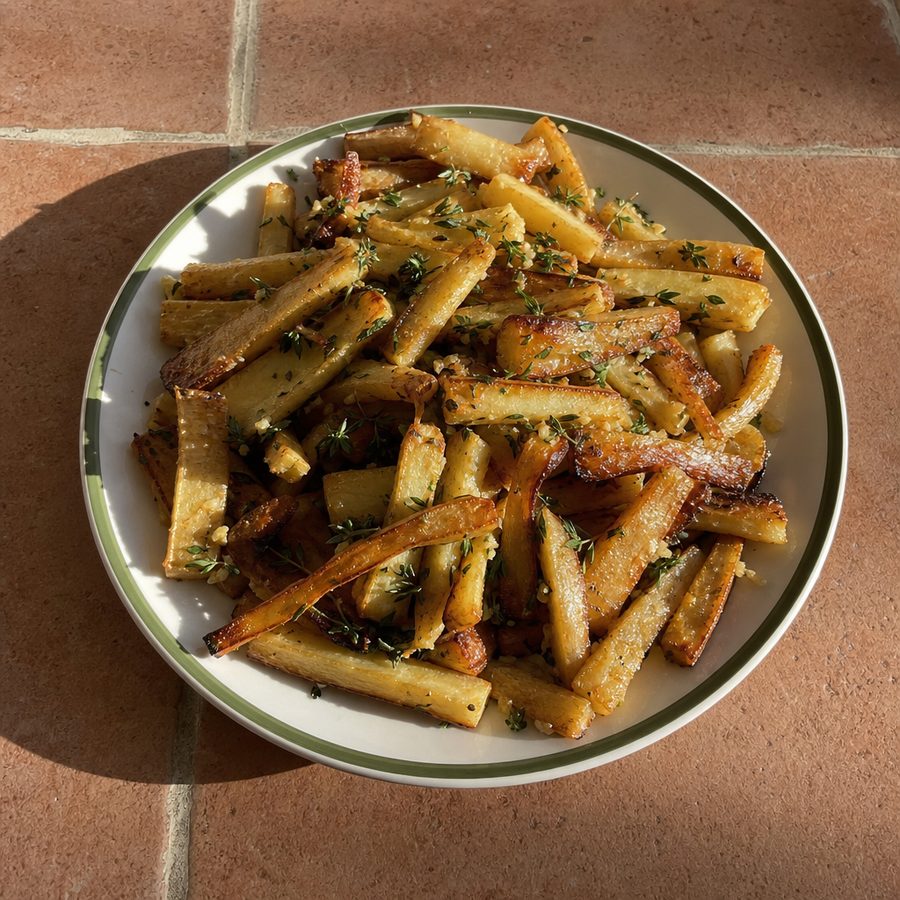
Parsnips cut into batons and roasted hot until the outsides go deep gold and their own sugar caramelizes, finished with grated garlic and fresh thyme.
Why You'll Love This Recipe
I started making these because I got tired of the same roasted potato, and now they get asked for more often. Parsnips taste sweet and slightly spicy, somewhere between a carrot and a parsley root, and roasting concentrates every bit of it. Half an hour and one pan gets you a bowl of something that usually disappears off the counter before it ever reaches the table.
Two moves do the heavy lifting. The sheet pan goes into the oven empty and comes out hot, so the parsnips start browning the second they land rather than slowly sweating in their own water. And the garlic and thyme wait until the last two minutes, because thirty five minutes at 425°F (220°C) turns fresh thyme to dust and garlic to something acrid. Adding them late keeps both of them green and alive.
The finished fry has a crisp brown shell and a soft, almost creamy middle, and the sweetness of the root plays against the black pepper and the resiny thyme. Parsnips bring real fiber along with that sweetness, which is why a bowl of these eats like a proper snack rather than something you keep picking at while you wait for dinner. They are best straight from the pan, since the shell softens within about ten minutes of coming out of the heat.
Ingredients
- 1 1/2 lb parsnips (about 5 medium), peeled
- 2 tbsp olive oil
- 1 tbsp fresh thyme leaves (about 8 sprigs)
- 2 cloves garlic, finely grated
- 1/4 tsp salt
- 1/2 tsp black pepper
Instructions
- Cut them evenly: Peel the parsnips and cut them into batons about half an inch thick and three inches long. The top of a parsnip is much wider than the tail, so quarter the thick end lengthwise and only halve the thin end. If a core looks pale and woody, cut it out, because it stays fibrous no matter how long it roasts.
- Dry and oil: Pat the batons dry with a towel, then toss them in a bowl with the olive oil and black pepper until every surface has a light coat. Hold the garlic and thyme back for now. Grated garlic and fresh thyme both burn at the temperature we need for the first stage, and burnt garlic takes over everything it touches.
- Roast hot on a preheated pan: Heat the oven to 425°F (220°C) with a rimmed sheet pan inside it. When it is hot, spread the parsnips over it in a single layer with space between them, cut side down. The hot pan starts the browning on contact, and the space is what lets steam escape. Crowd them and they will braise in their own water.
- Turn once: Roast for 20 minutes without touching them at all, then flip each baton with tongs and roast another 10 to 15 minutes. You are looking for deep gold, almost brown, on at least two sides. Parsnips carry a lot of sugar and they will get darker than a potato ever does, which is exactly what you want here.
- Add the aromatics at the end: Pull the pan out, scatter the grated garlic and thyme leaves over the hot fries and toss them right on the pan. The residual heat is enough to take the raw edge off the garlic and release the oil in the thyme in about a minute. Return the pan to the oven for two more minutes, and no longer than that.
- Salt and serve straight away: Sprinkle with the salt while they are hot and eat them within ten minutes. Parsnip fries soften faster than potato fries because of their higher sugar and water, so this is not a dish to hold. If you have to wait, leave them on the pan in the turned off oven with the door propped open.
Variations
- Rosemary and lemon: Swap the thyme for finely chopped fresh rosemary and add lemon zest along with the garlic at the end.
- Curried: Toss a teaspoon of curry powder into the oil at the start. Parsnip and warm spice belong together.
- Mixed roots: Carrots and celeriac cut to the same size roast alongside them, though the carrots will want an extra five minutes.
- With mustard: Whisk a teaspoon of dijon mustard into the oil before tossing, for a sharper, tangier crust.
- Smoky and hot: Half a teaspoon of smoked paprika and a pinch of cayenne in the oil turns these into something you can eat with your hands all evening.
Storage & Leftovers
These are genuinely best in the first ten minutes and I would plan the meal around that. If you do have leftovers, cool them completely on the pan before they go into a container, because trapping the steam guarantees they will be limp tomorrow. They keep for three days in the refrigerator.
To bring them back, spread them on a sheet pan and roast at 425°F (220°C) for six to eight minutes. A microwave will heat them through but it will also finish softening them, so the oven or a hot skillet is worth the extra few minutes. They will not be quite as crisp as they were the first time around.
You can do the cutting a day ahead. Keep the batons submerged in cold water in the refrigerator so they do not brown, then drain and dry them very thoroughly before they meet the oil. Any water left on the surface will steam them and you lose the crust entirely.
Notes & Tips
- Cut out the woody core: On large parsnips the center core is fibrous and stays that way. A pale, tough looking core is worth removing.
- Match the sizes: Parsnips taper hard. Quarter the thick end and halve the thin end so that everything finishes at the same time.
- Preheat the pan: A hot pan browns the first side on contact. A cold pan lets the parsnips sweat before anything else happens.
- Give them room: Two pans with space between the batons beat one crowded pan every single time.
- Aromatics at the end: Grated garlic and fresh thyme go on in the last two minutes. Any earlier and they burn.
- Eat them fast: These soften quicker than potato fries. Serve them straight off the pan while the crust is still there.
Nutrition & Mindful Eating
- Parsnips, olive oil and thyme are the whole recipe, and the balance between them is what carries it. The root brings sweetness and body, the oil is what makes the surface crisp and dark, and the thyme gives it a resiny, savory edge so it never tastes like a dessert.
- Parsnip is a sweeter root than it looks, and roasting concentrates every bit of that. It carries a lot of fiber for a vegetable that goes this soft in the middle, most of it sitting just under the skin, along with vitamin C and folate that hold up better in a hot oven than in a pot of water.
- Olive oil is doing more than lubricating the pan. It gets hot enough to brown the cut surfaces directly, which is where the crisp shell comes from, and it carries its own monounsaturated fat and a peppery bitterness that you catch at the back of the bite.
- Thyme added in the last two minutes stays green and piney rather than turning to dust, and the grated garlic softens just enough in the residual heat to lose its raw bite. Together with the black pepper, they are what make a sweet root taste savory.
- The contrast is the pleasure here. A dark, crisp outside from the hot pan against an interior that has gone soft and almost creamy, which is a texture that roasting produces and that boiling never will.
- As you eat, take the darkest fry first and notice how the caramelized edge gives way to something soft underneath, how the thyme keeps arriving after the sweetness, and slow down enough to taste the last few.
Frequently Asked Questions
Can I use carrots or sweet potato?
Both work with the same method, but adjust the timing. Carrots hold more water and want an extra five to eight minutes. Sweet potato browns faster because of its sugar, so start checking at fifteen. Parsnip has a drier flesh than either of them, which is part of why it crisps up so well.
Mine came out soft and pale. What happened?
Almost always a crowded pan or a cold one. Batons touching each other trap steam between them, and steam is the opposite of browning. Use two pans if you have to, preheat the pan before the parsnips go on, and make sure they were properly dry before the oil went on.
Can I roast these ahead for a party?
Roast them to about eighty percent, so they are cooked through but only lightly colored, and leave them out on the pan. Ten minutes before you want them, put the pan back into a 425°F (220°C) oven to finish the browning, then add the garlic and thyme at the end. It works well.
Are parsnips a reasonable everyday vegetable?
Very much so. They are a root with a good amount of fiber and a natural sweetness that means you need very little seasoning to make them taste like something. Prepared this way they are a whole vegetable, a spoonful of olive oil and some herbs, which fits comfortably into most ways of eating.