
Baked Salmon with Sweet Potato & Broccoli
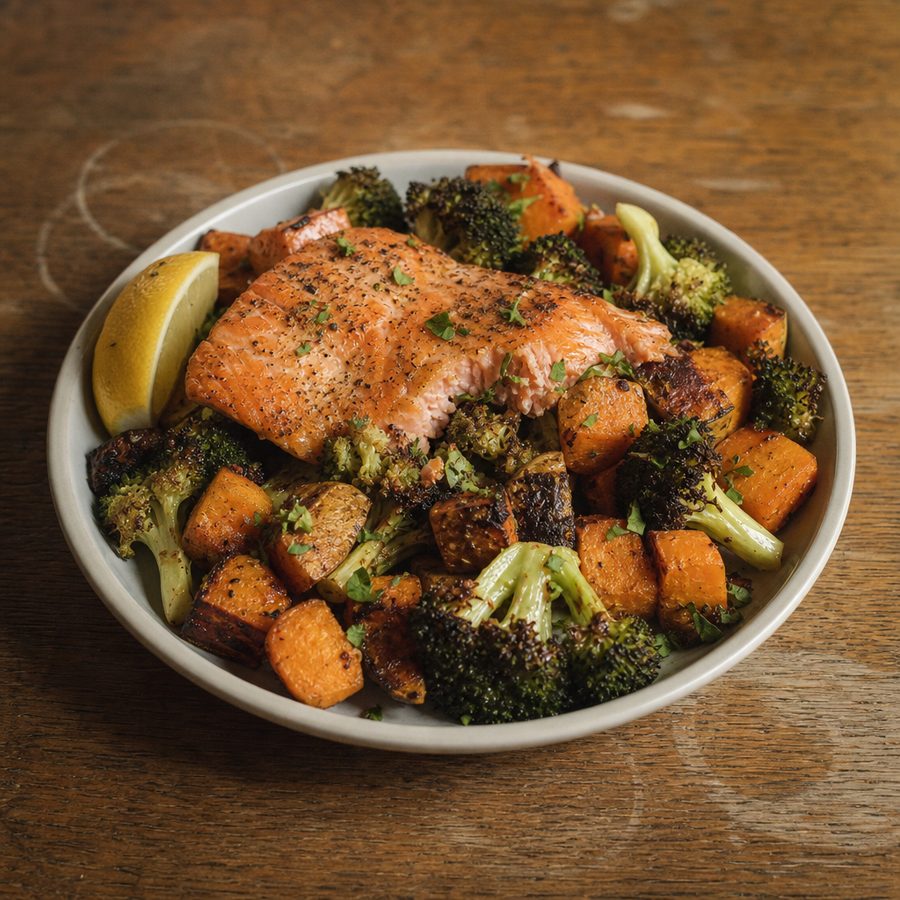
A balanced sheet-pan dinner of baked salmon, roasted sweet potato, and broccoli, rich in protein, omega-3s, and potassium for heart and blood-pressure health.
Why You'll Love This Recipe
This is the sheet pan night, the one where dinner was decided days ago and all that is left is to turn the oven on. Salmon, sweet potato, and broccoli, one pan, thirty-five minutes, and you are only really involved for ten of them. The squash goes in alone first, because a cube of sweet potato takes about three times as long as a salmon fillet and no amount of good intentions changes that. Everything finishes together because nothing started together.
Give the vegetables their ten minutes alone in a hot oven before the fish joins them, and the pan does the rest without anyone standing over it. By the time the salmon turns opaque and flakes under the edge of a fork, the sweet potato corners have gone dark and candied and the broccoli tips have charred and turned nutty. It all comes out at once and goes from the pan to the table, which means one dish to wash and nothing sitting under foil going soft while it waits for something else.
It is a whole dinner rather than a piece of fish and a side you had to think about separately. Salmon brings omega-3 fats along with the protein, and the sweet potato and broccoli handle the fiber, so you leave the table full in the way that lasts rather than the way that has you back in the kitchen at nine. Any that survives is a good cold lunch the next day, with lemon squeezed over it again. Our Herb-Roasted Salmon With Sweet Potato puts a herb crust on the same fish.
Ingredients
- 4 salmon fillets (6 oz each)
- 1 lb sweet potato, cubed
- 1 lb broccoli florets
- 3 tbsp olive oil, divided
- 3 cloves garlic, minced
- 1 lemon
- 1/2 tsp fine sea salt
- black pepper
- 1 tsp paprika
Instructions
- Start the sweet potato on its own: Heat the oven to 425°F (220°C). Toss the cubed sweet potato with 1 tbsp of the oil, the salt, and the paprika, then spread it over a sheet pan with room between the cubes and roast for 10 minutes. It goes in alone because a cube of squash needs about three times as long as a salmon fillet, and this head start is the whole trick of the recipe.
- Add the broccoli: Toss the broccoli with another tablespoon of oil, add it to the pan, and roast 10 minutes more. Use a second pan if the first one is crowded. What you want is color at the tips of the florets: broccoli that browns tastes sweet and faintly nutty, while broccoli packed in tightly steams in its own moisture and tastes like water.
- Tuck in the salmon: Push the vegetables out toward the edges and set the salmon fillets in the middle of the pan. Brush them with the remaining oil, the garlic, salt, and pepper, and roast 10 to 12 minutes. The fillets are ready when the thickest part flakes under gentle pressure from a fork and the flesh has turned from glossy to matte.
- Rest the pan for two minutes: Take the pan out and leave it alone for two minutes before you serve. Salmon holds a lot of heat and keeps cooking after it leaves the oven, so those two minutes are the difference between a fillet that is just set and one that went past it while you were finding the plates.
- Lemon at the very end: Squeeze the lemon over the whole pan now, off the heat, so the juice stays bright instead of cooking down into something flat. Serve straight from the sheet pan, while the sweet potato still has its crisp edges.
Variations
- Add more vegetables: Red onion wedges or bell pepper strips go in with the sweet potato. They want the same head start it does.
- Change the fish: Arctic char or steelhead trout roast on the same schedule. Thin fillets come out a couple of minutes sooner, so check them early.
- Swap the starch: Butternut squash cubes or halved baby potatoes stand in for the sweet potato and take the same head start.
- Glaze the salmon: Brush the fillets with a little mustard thinned with maple syrup for the last few minutes. It sets into a thin lacquer rather than a sauce. The syrup is an added sugar, so this version is no longer low in added sugar.
- Make it spicy: Add cayenne or chipotle powder to the paprika rub before the sweet potato goes in, so the heat roasts into the vegetables instead of sitting on top.
Storage & Leftovers
Cooked salmon keeps three to four days in an airtight container and eats beautifully cold, which is the easiest thing you can do with it. Flake it over the leftover vegetables, add a squeeze of lemon, and lunch is finished without turning on a pan. If you would rather warm it, do it gently: salmon that gets hot twice goes dry and chalky.
Reheat in a hot oven or a skillet rather than the microwave. Ten minutes at 400°F on a sheet pan brings the sweet potato edges back and warms the fish through without cooking it a second time. A microwave does the opposite, driving water out of the salmon so it tightens while the vegetables go soft around it.
The vegetables freeze better than the fish does, and it is worth separating them. Roasted sweet potato comes back well in a soup or a hash, broccoli comes back limp but perfectly usable, and salmon thaws watery. So freeze the vegetables for up to two months if you want to, and plan on eating the fish this week.
Notes & Tips
- Do not overcook the salmon: Pull it the moment it flakes and still looks just opaque in the center. A minute too long dries it out.
- Cut it evenly: Cut the sweet potato into similar-sized pieces so everything roasts through at the same rate.
- Keep the skin on: Roasted skin side down, the skin shields the flesh from the hot pan and lifts away easily afterward if you would rather not eat it.
- Respect the staggered timing: The head start is the whole point. Everything on the pan at once gives you crunchy sweet potato and overdone fish.
- Use two pans if you need to: Crowded vegetables release steam and go soft instead of browning. Spread out is better than tidy.
- Leftovers are better cold: Flake the chilled salmon over greens the next day rather than reheating it, which pushes it past done a second time.
Nutrition & Mindful Eating
- Salmon, sweet potato and broccoli each hold up their own corner of the plate. The fish brings the richness and the protein, the sweet potato brings soft, sweet starch, and the broccoli brings the crisp green edges and most of the fiber.
- Salmon roasts into something silky and full-flavored, and the fat that makes it taste that way is the same fat carrying its long-chain omega-3s and its vitamin D, which very few foods offer at all.
- Sweet potato turns properly sweet in a hot oven as its starch converts and the cut edges caramelize, and the beta-carotene behind that orange color needs fat to be absorbed, which the oil on the pan is already providing.
- Broccoli roasted rather than boiled keeps its vitamin C and the sulfur compounds it is known for, and the florets that catch the most heat go crisp and lightly charred, which is the best part of the tray.
- Garlic softens into the oil while everything roasts, and the lemon squeezed over at the end lifts the whole pan, cutting through the richness of the fish so the last bite tastes as bright as the first.
- As you eat, pay attention to the way the salmon gives under the fork and the lemon sharpens everything around it, and give yourself long enough at the table to notice when you have had enough.
Frequently Asked Questions
Why is salmon good for the heart?
It's rich in omega-3 fatty acids, which support heart health, along with high-quality protein, a cornerstone of heart-healthy and DASH eating.
Is this good for high blood pressure?
Yes, it's low in added sodium and high in potassium from the sweet potato and broccoli, the exact pattern DASH is built around.
Can I use frozen salmon?
Yes, thaw it fully and pat dry before roasting for the best texture.
How do I know the salmon is done?
It's ready when it flakes easily with a fork and looks just opaque in the middle. It's better to pull it a touch early than to overcook it.