
Balsamic and Orange Glazed Tempeh with Delicata Squash and Kale
Steamed tempeh slabs glazed with balsamic and orange, roasted alongside delicata squash and kale until the edges catch, then finished with goat cheese and toasted pecans.
Why You'll Love This Recipe
This is my October lunch, the one I start making the week the squash appears and keep making until it disappears again. Everything happens on one sheet pan, so cleanup is a pan and a mixing bowl, and it reheats better than almost anything else I pack. I put it together on a Sunday afternoon while something else is going on in the kitchen, and it turns into three lunches without any further thought. If tempeh has tasted bitter to you in the past, stay with me through the first step, because that is a fixable problem and most recipes skip the fix entirely.
Steam the tempeh for ten minutes before it ever meets the glaze. Ten minutes over simmering water opens the cake up so it drinks in the balsamic and the orange rather than letting them bead on the surface, and it carries off the faint bitterness that puts people off tempeh in the first place. After that it is mostly the oven doing the work. Delicata gets a head start because the squash needs longer, the glazed tempeh joins it partway through, and the kale goes on for the final six minutes only, so the thin edges crisp while the thicker ribs stay tender. The balsamic reduces down sticky and the orange keeps it from tasting flat.
The goat cheese and the pecans go on after the pan leaves the oven, and they are what turn roasted vegetables into lunch. The cheese softens against the hot squash without melting away into the tray, the pecans stay crunchy, and between them and the tempeh there is enough protein and fat here to carry a real afternoon. I eat it warm from the pan on the first day and cold from the container on the next two, and I have honestly come to prefer the cold version, once the glaze has set and the squash tastes even sweeter than it did hot.
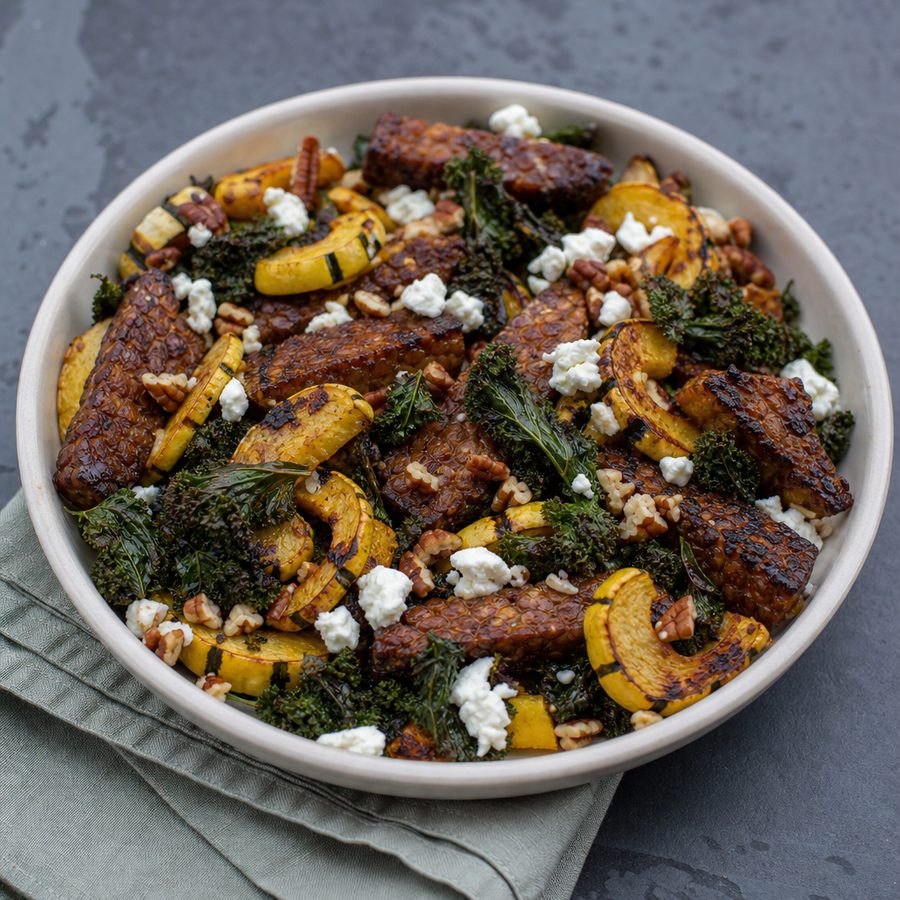
Ingredients
- 2 packages (8 oz each) tempeh, cut into 1/2-inch slabs
- 2 delicata squash (about 1 3/4 lb total), halved, seeded, and cut into 1/2-inch half-moons
- 1 large bunch lacinato kale (about 7 oz), stems removed and leaves torn
- 3 oz goat cheese, crumbled
- 1/2 cup pecan halves, roughly chopped
- 3 tbsp balsamic vinegar
- 1 orange, zested and juiced (about 1/4 cup juice)
- 1/4 cup olive oil, divided
- 1 tbsp chopped fresh rosemary
- 1/2 tsp black pepper
- 1 tsp fine sea salt, divided
Instructions
- Steam the tempeh: Set a steamer basket over an inch of simmering water. Cut each block into 1/2-inch slabs, lay them in the basket, cover, and steam 10 minutes. Lift them out and pat them dry. They will look exactly the same and taste noticeably less bitter, since the steam carries off the compounds that put people off tempeh in the first place.
- Roast the squash: Heat the oven to 400°F (200°C). Toss the delicata half-moons with 2 tablespoons of the olive oil, the rosemary, 1/2 teaspoon of the salt, and the black pepper. Spread them on a large sheet pan in one layer and roast 15 minutes.
- Glaze the tempeh: Whisk the balsamic vinegar, the orange zest and juice, and 1 tablespoon of the olive oil in the same bowl. Add the steamed slabs and turn them until coated on both sides, then leave them sitting in the glaze while the squash roasts.
- Add the tempeh: Turn the squash pieces over, push them to one side, and lay the glazed tempeh slabs on the open half of the pan. Pour any glaze left in the bowl over the tempeh. Roast 14 minutes more, until the squash edges are browned and the tempeh looks dark and lacquered.
- Kale at the end: Toss the torn kale with the last tablespoon of olive oil and the remaining salt. Scatter it over and between everything on the pan and roast 6 minutes, until the thin edges are crisp and darkened and the thicker leaves have gone soft.
- Finish off the heat: Pull the pan and let it sit 2 minutes. Scatter the crumbled goat cheese and the chopped pecans over the top so the cheese softens against the hot squash. Serve straight from the pan.
Variations
- Acorn squash: Acorn squash cut thinner and given 5 more minutes covers the weeks when delicata is out of season.
- Salty rather than tangy: Crumbled feta in place of the goat cheese if you want salt where the tang was.
- Nut swap: Walnuts or almonds in place of the pecans, chopped and added at the same moment.
- Something tart: A handful of cranberries scattered on for the last 8 minutes bursts into something sharp against the glaze.
- Make it a bowl: Serve the pan over cooked wild rice or quinoa when you want a heavier lunch.
Storage & Leftovers
Everything keeps together in one sealed container for up to 4 days. The kale softens after the first day and the glaze sets into the tempeh, neither of which is a loss. Add the goat cheese and pecans fresh to each portion rather than storing them mixed all the way through.
Reheat on a sheet pan in a 400°F oven for 8 minutes to bring the edges back, or eat it cold straight from the container, which is how it gets eaten in my house more often than not. A microwave warms it through but the squash goes slack and the pecans lose their snap.
The tempeh and squash freeze reasonably well for up to 2 months, though kale does not and is better left out of anything headed for the freezer. Thaw a portion overnight in the refrigerator and reheat it in a hot oven so the glaze tightens up on the tempeh again.
Notes & Tips
- Steam the tempeh first: Ten minutes over simmering water before anything else happens. It takes the bitterness out and lets the glaze soak in rather than bead up on the surface.
- Do not peel the delicata: The skin is thin enough to eat and it is what holds the half-moons together in a hot oven. A peeler on delicata is wasted work.
- Stagger the pan: Squash first, tempeh second, kale for the last 6 minutes only. Kale added at the start turns to ash while the squash is still firm.
- Oil the kale before the salt: Toss the leaves in oil first so the salt sits on the surface rather than pulling water out and steaming them flat.
- Watch the glaze at the end: Balsamic goes from syrupy to burnt in about 3 minutes. Pull the pan the moment the tempeh edges look dark and glossy.
- Cheese goes on off the heat: Crumbled onto the pan after it leaves the oven, the goat cheese softens against the squash without melting into the tray and vanishing.
Nutrition & Mindful Eating
- Tempeh, delicata squash, and kale hold this pan together. The tempeh gives it substance, the squash gives it sweetness, and the kale crisping at the edges gives you something to bite against, so the plate has range rather than one long note.
- Tempeh is whole soybeans fermented into a firm cake, and because the beans stay whole it keeps its fiber alongside the protein. That fermentation is also what makes it sit easily with a lot of people who find other soy foods difficult.
- Delicata squash has skin thin enough to roast and eat, which saves the peeling and keeps the fiber where it is. The deep orange flesh carries beta-carotene, and a hot oven concentrates the sugar in it so the cut faces caramelize.
- Pecans go on at the very end and stay crunchy and faintly sweet, and the monounsaturated fat they carry is part of why a tray of vegetables eats like a full lunch.
- Balsamic vinegar and orange juice cook down into a glaze that is sweet and sharp at the same time, and the rosemary and black pepper underneath are what keep the whole pan on the savory side.
- As you eat, notice the difference between the crisp kale edges and the soft squash underneath, and let the pan cool a minute so you actually taste the glaze rather than working through it.
Frequently Asked Questions
I cannot find delicata. What else works?
Acorn squash is the closest thing, though the skin is tougher, so peel it or eat around it. Cut the pieces a little thinner and give them 5 extra minutes. Parsnip and rutabaga also roast well here and take the glaze the same way.
Why does my tempeh taste bitter?
That is the fermentation, and steaming fixes it. Ten minutes over simmering water before the glaze goes on opens the cake up and takes the bitterness off with the steam. It also means the balsamic and orange soak in rather than sliding off the surface.
Can I prep this on the weekend?
Steam and glaze the tempeh and cut the squash up to 2 days ahead, keeping them in separate containers. The roast itself is only about 35 minutes and the kale takes 6 of those, so a full pan comes together easily on a weeknight.
Does this fit a low-FODMAP lunch?
It does, with one note about portion. Fermentation lowers the FODMAPs in tempeh a great deal, and the amount per serving here sits inside the usual guidance. Delicata, kale, pecans, and goat cheese are all comfortable at these portions, and there is no onion or garlic to be removed from the recipe.