
Barley, Leek, and Cauliflower Soup with Thyme
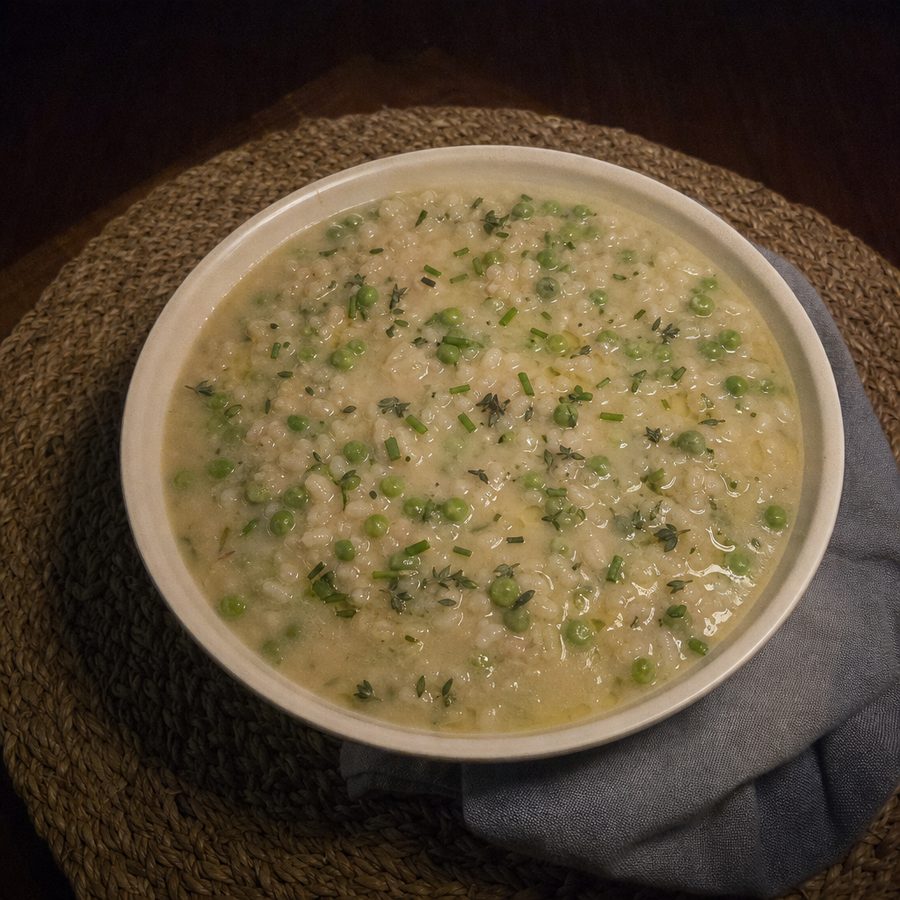
Slow-cooked leeks and cauliflower, half of it blended silky, with chewy barley and green peas dropped back in, finished with thyme, lemon, and chives.
Why You'll Love This Recipe
I started making this the winter I got tired of soups that were either all broth or all puree. Blending half the pot gives you both at once, a smooth base that coats the spoon and whole florets and pearls of barley still sitting in it. The leeks are the part I will not rush. Twelve minutes over gentle heat turns them sweet and almost jammy, and if you hurry them into color the whole pot tastes toasted rather than sweet. Cauliflower does the rest of the work, going so soft that the blender turns it velvety on its own.
It eats like a bowl of something much richer than it is. Barley is the reason. Pearl barley keeps a firm, slippery chew no matter how long it sits, so every few spoonfuls you get something to bite against the smoothness, and the green peas burst rather than dissolve if you add them at the very end. Thyme simmered on the stem gives a resinous, woody note through the base, while the leaves scattered on at the table smell green and sharp. Lemon juice at the finish is what stops the whole thing from tasting flat and milky.
This is my cold-day lunch and my clear-out-the-refrigerator soup, and it reheats better than any blended soup I know because the barley keeps its texture. I make it on Sunday, eat it Monday and Wednesday, and it is honestly better on Wednesday. If you are feeding people at a table, put the oil, the chives, and the extra thyme out in little bowls and let everybody finish their own, which turns a plain soup into something people fuss over.
Ingredients
- 2 large leeks, white and pale green parts only, halved lengthwise and sliced thin
- 1 small head cauliflower (about 1 lb trimmed), cut into small florets, stem sliced
- 2 cups cooked pearl barley (from about 2/3 cup dry)
- 1 1/2 cups frozen green peas
- 1 3/4 cups milk
- 3 cups vegetable broth
- 2 tbsp olive oil, plus a little for the bowls
- 4 cloves garlic, thinly sliced
- 4 sprigs fresh thyme, plus the leaves from 2 more for finishing
- 2 tbsp fresh lemon juice
- 3 tbsp thinly sliced chives
- 3/4 tsp coarsely ground black pepper
- 1/4 tsp fine sea salt
Instructions
- Cook the barley: Simmer 2/3 cup pearl barley in plenty of unsalted water for 25 to 30 minutes, until the grains are tender with a firm chew at the center, then drain. Cooking it apart from the soup rather than in it keeps the broth clear and the grains distinct, since barley simmered in the pot releases starch and turns the whole thing gluey. This can be done up to three days ahead.
- Sweat the leeks: Warm the olive oil in a heavy pot over medium-low heat and add the sliced leeks with the salt. Cook 10 to 12 minutes, stirring often, until they are completely soft, glossy, and sweet-smelling, with no color on them at all. If they start to catch, drop the heat and add a spoonful of water. Add the garlic and cook one minute more, just until it smells.
- Simmer the cauliflower: Add the cauliflower florets and sliced stem, the thyme sprigs, half the black pepper, and the broth. Bring to a boil, then lower to a steady simmer, cover, and cook 15 to 18 minutes. It is ready when a floret falls apart against the side of the pot under light pressure from a spoon. Fish out the thyme stems and discard them.
- Blend half: Lift about half the solids and a cup of the liquid into a blender, add the milk, and blend 45 seconds until completely smooth and slightly glossy. Vent the lid and cover it with a towel, since hot soup expands hard. Pour it back into the pot and stir. The soup should now coat a spoon and still be full of whole florets.
- Finish: Stir in the cooked barley and the peas and warm over medium for three minutes, just until the peas are bright green and hot through. Keep it below a boil now that the milk is in. Take it off the heat, stir in the lemon juice and the rest of the pepper, and taste. Ladle into bowls and finish each with thyme leaves, chives, and a thread of olive oil.
Variations
- Roasted cauliflower: Roast half the florets at 425°F until browned in patches and stir them in at the end rather than simmering them. It gives the bowl a nutty, toasted edge against the sweet leeks.
- Fennel and lemon: Swap one leek for a thinly sliced fennel bulb and add a wide strip of lemon peel with the broth. Anise and citrus, and a very different soup from the same method.
- Curried: Add 2 tsp curry powder and 1/2 tsp turmeric to the leeks before the broth goes in, and finish with cilantro rather than chives.
- Mushroom and thyme: Brown 8 oz of sliced mushrooms hard in a separate pan and spoon them over each bowl. They double down on the thyme and make it eat like a heartier supper.
Storage & Leftovers
It keeps five days in the refrigerator in a sealed container and thickens noticeably overnight as the barley keeps drinking. Loosen it with a splash of water or broth when you reheat, a little at a time, until it moves the way you want it to. The flavor rounds out by the second day, which is the main reason I make a full pot.
Reheat it gently in a saucepan over medium-low, stirring now and then. Milk-based soups split if you push them to a hard boil, so bring it to steaming rather than bubbling. The microwave works in a pinch at half power in one-minute bursts, stirred between each. Add the lemon and the fresh herbs after reheating rather than before, since both fade with a second warming.
It freezes for up to two months, with one honest caveat. The blended base can go slightly grainy after thawing because of the milk. Thaw it overnight in the refrigerator, reheat gently, and whisk hard for a moment as it warms, and it comes back together well enough that nobody at my table has ever commented.
Notes & Tips
- Wash the leeks after slicing: Grit hides in the layers and rinsing a whole leek never reaches it. Slice first, then swish the pieces in a bowl of cold water and lift them out with your hands so the sand stays behind.
- Keep the leeks pale: Color means the sugars have started to toast, which is delicious in other dishes and wrong in this one. Low heat, frequent stirring, and a splash of water if they threaten to catch.
- Vent the blender: Hot liquid in a sealed jar builds pressure and lifts the lid off. Take out the center cap, hold a folded towel over the hole, and start on the lowest speed.
- Peas go in last: Three minutes is all they want. Longer and they turn olive-colored and mealy, and the small burst of sweetness they give the bowl is gone.
- Lemon after the heat is off: Acid added to simmering milk can make it look curdled. Off the burner it simply brightens everything and the soup stays smooth.
- Taste before you reach for the salt: The leeks and the barley both read sweet, and lemon plus a heavy hand with black pepper does most of what salt would do here. Taste after the lemon goes in.
Nutrition & Mindful Eating
- The cauliflower, the barley, and the milk are what give this soup its body. The blended cauliflower makes it smooth, the barley keeps a chew that makes it eat like a meal and brings a good deal of fiber with it, and the milk adds calcium and enough richness that a spoonful coats the tongue.
- Pearl barley holds a slippery firmness no matter how long it sits in liquid, and the soluble fiber it carries, mostly beta-glucan, is the same thing that gives the broth around it a faintly silky feel by the second day.
- Cauliflower cooked until it collapses turns sweet and nutty rather than sulfurous, and it brings vitamin C and fiber into a soup that reads as rich, which is a useful trick for a vegetable most people boil into blandness.
- Leeks softened slowly are the sweetest allium there is, and they feed the bacteria in your gut with the same inulin that makes them taste that way. Twelve patient minutes is what converts them from sharp to jammy.
- Thyme, lemon, chives, and black pepper are the whole seasoning here, and each one lands in a different place. Thyme is woody and deep in the base, the lemon is a bright line right at the end, chives are sharp and green on top, and the pepper gives the back of the throat something to hold on to.
- As you eat, look for the moment a spoonful gives you both the velvety part and a whole floret at once, and let a hot bowl be a reason to sit down properly rather than eat standing at the stove.
Frequently Asked Questions
Can I use hulled barley rather than pearl?
Yes, and it keeps even more chew, but plan for time. Hulled barley has the bran intact and needs 45 to 55 minutes of simmering, or about 30 after an overnight soak. Cook it the same way, apart from the soup, and drain it well.
Do I need a high-powered blender?
No. Cauliflower cooked until it collapses blends smooth in any ordinary blender in about 45 seconds. An immersion blender also works if you tip the pot and blend only one side of it, which is a nice trick since it saves you a second appliance to wash. Do not blend the whole pot or you lose the contrast the soup is built on.
Can I make it without dairy?
Use an unsweetened plain soy beverage in place of the milk, which blends smooth and behaves the same way. Canned coconut milk works too and takes the soup somewhere richer and faintly sweet, in which case double the lemon at the end to balance it.
Why is my soup thin?
Usually the cauliflower was not cooked far enough. It has to be genuinely falling apart before it will blend into something that coats a spoon. Give it five more minutes and blend again. Letting the finished pot sit for twenty minutes off the heat also thickens it, since the barley pulls in liquid as it stands.