
Basque Cod in Green Sauce with Asparagus and White Beans
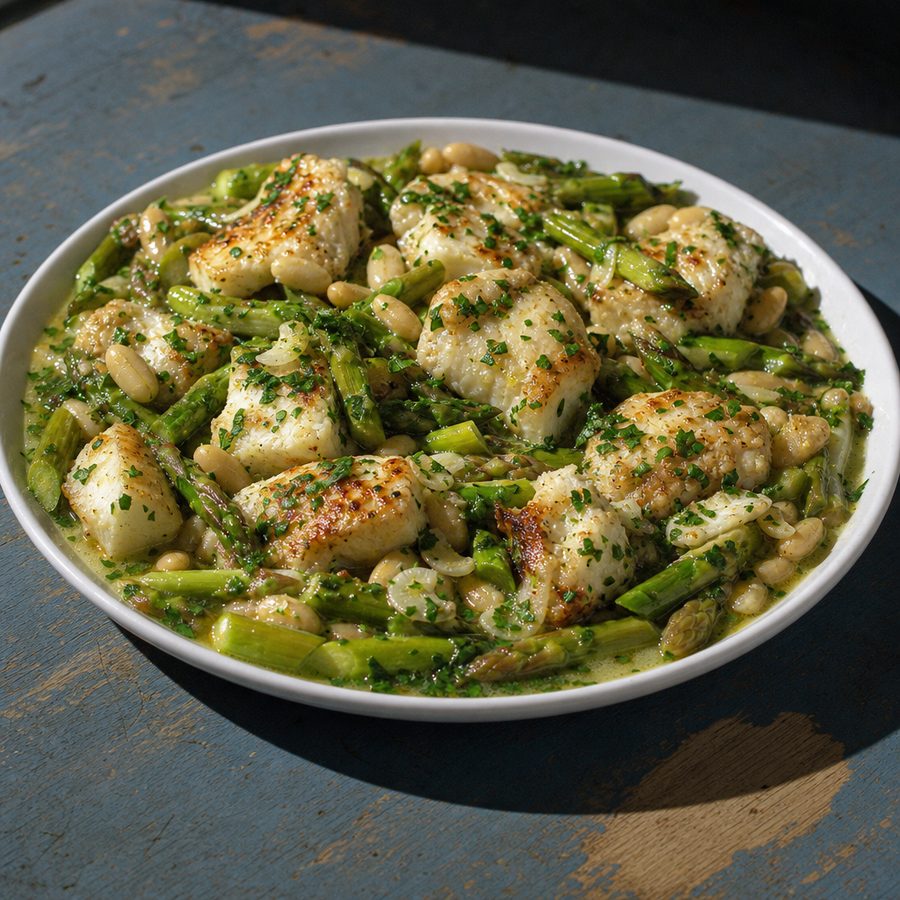
Cod simmered in a garlicky parsley sauce that thickens in the pan, with lengths of asparagus and white beans underneath soaking up all that green olive oil.
Why You'll Love This Recipe
This is my weeknight answer when I want dinner to feel like something and still be finished before anyone has set the table. It is my shortcut version of the green sauce they make all along the Basque coast, where cooks swirl the pan until the fish and the olive oil come together into a sauce with no cream and no flour in it at all. The whole thing happens in one wide skillet in under twenty minutes, and the only knife work is slicing garlic, chopping an onion, and snapping the ends off two bunches of asparagus. If you have never made a pan sauce that thickens without cream or flour, this is a forgiving place to learn how it works.
The sauce is the part worth understanding. Gentle heat under sliced garlic and olive oil, a splash of broth, and then the cod goes in and releases its juices, which are full of the gelatin that makes the sauce cling. Keep the pan at a lazy simmer and shake it in circles every minute or so, and the liquid thickens and turns pale green. Boil it hard and it will stay thin and the fish will go tough, so this is a dish that rewards a low flame and a little patience with the pan. You can hear when it happens, because the bubbling goes quieter and thicker as the liquid takes on body.
It eats like a bowl of something, not like a fillet on a plate with two sides. The beans go creamy at the edges and hold the sauce, the asparagus stays green and squeaky against the soft fish, and the parsley and lemon at the end keep it from ever tasting heavy. I serve it in shallow bowls with a spoon, because the sauce is the best part and you will want all of it. It is also the rare fish dinner that four people can share without anybody feeling shortchanged. A wide bowl, a spoon, and a piece of the sauce in every bite is really the whole idea.
Ingredients
- 1 1/3 lb skinless cod fillet, cut into 4 even pieces and patted dry
- 1/4 tsp fine sea salt
- 1/2 tsp freshly ground black pepper
- 2 tbsp olive oil
- 5 garlic cloves, thinly sliced
- 1/2 medium onion, finely chopped
- 3/4 cup chicken broth
- 1 (15 oz) can cannellini beans, drained and rinsed
- 2 bunches asparagus (about 1 1/4 lb), woody ends snapped off, cut into 2-inch lengths
- 1 cup flat-leaf parsley leaves, finely chopped
- 2 tbsp lemon juice, from 1 lemon
Instructions
- Season the fish and get everything cut: Pat the cod pieces dry on both sides and season them with the salt and half the black pepper. Slice the garlic thinly, chop the onion fine, snap the woody ends off the asparagus and cut the spears into 2-inch lengths, and drain and rinse the beans. Once the pan is going, this dish moves quickly, so have all of it on the board.
- Warm the garlic in the oil: Put the olive oil and sliced garlic in a wide 12-inch skillet over medium-low heat and let them come up to temperature together. You want a slow, quiet sizzle for two to three minutes, until the slices are barely gold at the edges and the oil smells sweet. Garlic browned hard here turns bitter and the sauce never recovers, so keep the flame low.
- Soften the onion and add the beans: Stir in the onion and cook for three minutes, until it turns translucent but takes on no color. Add the broth and the beans, bring it to a bare simmer, and press about a quarter of the beans against the side of the pan with a spoon. Those crushed beans are what give the sauce its body from the very first minute.
- Add the cod and the asparagus: Lay the cod pieces in the pan and scatter the asparagus around them. Cover and cook at a lazy simmer for six to eight minutes, shaking the pan in small circles every minute or so rather than stirring, until the fish is opaque all the way through, flakes when you press it, and reads 145°F at its thickest point. The asparagus should be bright green and still have some bite.
- Finish with parsley and lemon: Take the pan off the heat, add the parsley, the lemon juice, and the rest of the pepper, and swirl the pan for thirty seconds so the sauce comes together glossy and pale green around the fish. Taste and add another squeeze of lemon if it needs waking up. Serve in shallow bowls with a spoon for the sauce.
Variations
- Green peas and mint: Swap half the asparagus for a cup of green peas added in the last three minutes, and finish with mint alongside the parsley.
- Clams in the pan: Add a dozen scrubbed littleneck clams with the broth and cook them until they open before the cod goes in, which is how it is done on the coast.
- A pinch of saffron: Crumble a few threads of saffron into the warm broth before the fish goes in for a golden, faintly floral version of the same sauce.
- Smoky and warm: Stir a half teaspoon of smoked paprika into the garlic oil for a rounder, deeper sauce that leans Spanish rather than green.
- Chickpeas instead of white beans: Use a can of chickpeas for a firmer, nuttier bite that holds its shape in the sauce.
Storage & Leftovers
Leftovers keep three days in a sealed container in the refrigerator. The sauce sets to a soft jelly once it is cold, which is a good sign, since that is the gelatin from the cod doing exactly what it should. Store the fish sitting in its sauce so it does not dry out overnight.
Reheat gently in a covered skillet over low heat with a tablespoon of water, just until the sauce loosens and the fish is warm through, about four minutes. Cod that gets boiled a second time goes stringy and dry. If you have a microwave you trust, use half power and stop while the center is still barely warm.
I would not freeze this one. Cod turns cottony after a spell in the freezer and the asparagus goes limp and drab. If you want a head start, chop the garlic, onion, and parsley and cut the asparagus a day ahead, then cook the whole dish fresh in under twenty minutes.
Notes & Tips
- Use a wide pan, not a deep one: A 12-inch skillet lets the fish sit in a single layer with the asparagus around it, and the shallow liquid is what allows the sauce to thicken in the time the cod takes to cook.
- Slice the garlic, do not mince it: Slices melt slowly into the oil and stay sweet. Minced garlic hits the hot oil all at once and scorches before the onion has even softened.
- Shake, do not stir: Swirling the pan in small circles is what pulls the olive oil and the fish juices into one glossy sauce. A spoon just breaks the cod into pieces.
- Pull the cod at 145°F: Cod goes from silky to chalky in about a minute. Check the thickest piece with an instant-read thermometer and take the pan off the heat the moment it gets there.
- Add the parsley off the heat: A full cup of it stirred in while the pan is still bubbling turns dull olive within seconds. Off the burner it stays green and tastes fresh.
- Rinse the beans well: A good rinse under cold water takes away the starchy canning liquid, which would otherwise cloud a sauce you want clean and glossy.
Nutrition & Mindful Eating
- Cod, white beans, and asparagus each carry a different part of this bowl. The fish brings the protein and the gelatin that thickens the sauce, the beans bring fiber and something soft to spoon up, and the asparagus keeps it green and gives the whole thing a fresh, vegetal edge.
- Cod is a mild, large-flaked fish that stays sweet as long as you pull it the moment it turns opaque, and a piece this size carries a great deal of protein along with the selenium and iodine that ocean fish are known for.
- Cannellini beans go creamy at the edges and thicken the sauce wherever you crush them, and their soft fiber is the slow kind that makes a plate of fish eat like a full dinner.
- Asparagus cut into short lengths cooks in the same few minutes the fish needs, staying green and squeaky, and it carries folate along with the faint mineral bitterness that plays so well against lemon.
- Garlic warmed slowly in olive oil is the whole flavor base here, sweet rather than sharp, and the parsley and lemon stirred in at the end are what make the last spoonful taste as bright as the first.
- As you eat, notice how the sauce clings to the beans and how the asparagus still snaps between your teeth, and take the meal slowly enough in the bowl to feel it settle before you go back for more.
Frequently Asked Questions
Can I use a different fish?
Yes. Any firm white fish works, so halibut, hake, and pollock all sit well in this sauce, and thick tilapia fillets are fine if you shorten the covered simmer by a minute or two. What matters is thickness. A thin fillet cooks through before the sauce has any time to thicken.
My sauce stayed watery. What went wrong?
Almost always too much heat. At a hard boil the olive oil and the fish juices separate rather than coming together, and the liquid reduces before it can emulsify. Bring it back to the lowest simmer you can hold, shake the pan in circles for a minute, and crush a few more beans into the liquid to help it along.
Can I make it with frozen cod?
Frozen cod works well here as long as you thaw it overnight in the refrigerator and then dry it thoroughly with paper towel. Frozen fillets carry a lot of water, and water in the pan is the enemy of a sauce this delicate. Cook it straight from thawed and seasoned.
What can I serve alongside?
It is built to stand on its own, since the beans and the asparagus are already in the bowl. If you are feeding people with big appetites, a handful of bitter greens dressed with lemon on the side suits the sauce, and everyone will want a spoon regardless.