
Basque Piperade with Peppers, Tomato, and Eggs
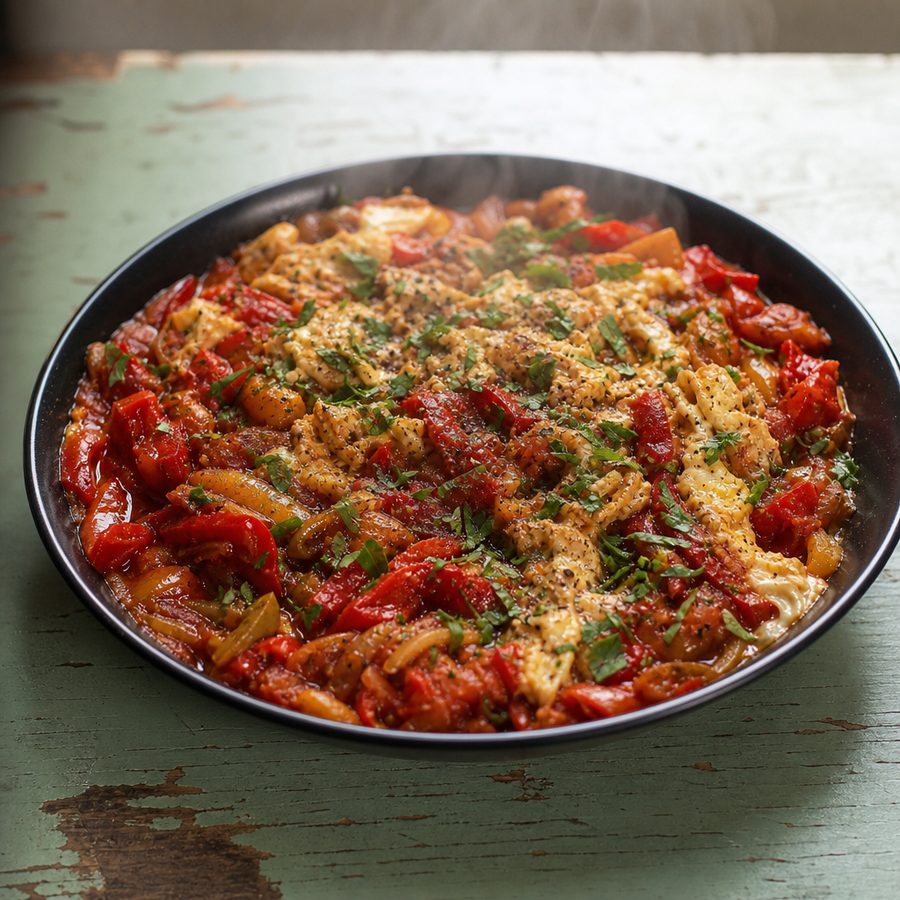
Sweet and green peppers stewed slowly with onion, garlic, tomato, and paprika until they collapse into a thick red jam, then finished with beaten eggs stirred through so the pan sets soft and loose.
Why You'll Love This Recipe
Piperade is named for piment, the pepper, and everything else in the pan is there to serve it. That means the peppers get real time, thirty minutes at least, until the strips lose their shape and the pile in the skillet has gone from bright and squeaky to dark and slumped. People who tell you they do not much like peppers are usually thinking of them crisp and half-cooked. Cooked to this point they are one of the sweetest vegetables there is, and the tomato and paprika only deepen what is already happening.
The eggs are where this can go wrong and it goes wrong the same way every time, which is too much heat and too much stirring. What you want is not a scramble with peppers in it but a pan of peppers held together by soft egg, so the burner goes to its lowest setting, the beaten eggs go in all at once, and you fold rather than stir, three or four passes. Pull it while it still looks a little wet. The pan is hot and it will finish on the way to the table, and eggs that look done in the skillet are dry by the time anyone eats them.
In the Pays Basque this turns up at every hour, with ham, with tuna, on its own, spooned over toast at midnight. I make it for dinner in late summer when peppers are cheap and enormous, and I make the pepper base in a double batch because it keeps for a week and turns into a dinner in four minutes whenever I add eggs to it. Serve it warm, not hot, with bread, and a great deal of parsley over the top.
Ingredients
- 3 tbsp extra virgin olive oil
- 2 medium yellow onions, halved and sliced thin
- 3 red bell peppers, seeded and cut into 1/2-inch strips
- 2 poblano or long green Italian peppers, seeded and cut into 1/2-inch strips
- 4 garlic cloves, thinly sliced
- 1 1/2 tsp sweet paprika, or piment d'Espelette if you have it
- 1/8 tsp cayenne
- 1 1/4 cups canned crushed tomatoes, no salt added
- 2 tsp fresh thyme leaves
- 8 large eggs, beaten with a fork
- 1/2 cup chopped flat-leaf parsley
- 1/2 tsp coarsely ground black pepper
- 1/4 tsp fine sea salt
Instructions
- Soften the onions: Warm the olive oil in a wide heavy skillet over medium-low heat. Add the sliced onions with half the salt and cook for eight to ten minutes, stirring now and then, until they are limp and translucent. Keep them pale. Browning here gives the finished pan a caramelized note that sits oddly against the paprika.
- Stew the peppers down: Add all the pepper strips and the rest of the salt, cover, and cook for ten minutes so they steam and soften. Uncover and keep cooking over medium-low for fifteen minutes more, stirring every few minutes, until the strips have lost their shape entirely and the pile has reduced by about half. This is the step that makes the dish and it cannot be hurried.
- Add the spice and the tomato: Stir in the sliced garlic, the paprika, the cayenne, and the thyme and cook for one minute, until the spices smell toasted rather than dusty. Add the crushed tomatoes and simmer uncovered for eight to ten minutes, stirring, until the mixture is thick, dark red, and holds a line when you draw the spoon across the pan.
- Fold in the eggs: Turn the heat to its lowest setting and wait thirty seconds for the pan to calm down. Pour the beaten eggs over the peppers all at once. Let them sit undisturbed for forty seconds, then fold them through with a wooden spoon in three or four slow passes, lifting from the bottom rather than stirring in circles.
- Pull it early and finish: Take the skillet off the burner while the eggs still look glossy and slightly underset, which will be about ninety seconds after they went in. Grind the black pepper over the top and scatter the parsley thickly. Let it sit for two minutes, then bring the pan to the table and serve it warm rather than hot.
Variations
- With ham: Warm a few slices of Bayonne or serrano ham in the pan before the onions and lay them over the finished piperade, which is the classic Basque plate.
- Poached rather than folded: Skip the beaten eggs and instead make wells in the pepper base, crack a whole egg into each, cover, and cook until the whites are set and the yolks still run.
- With tuna: Flake a can of tuna through the pepper base before the eggs go in for the version served along the coast.
- Over rice or potatoes: Spoon it over cooked rice or crushed boiled potatoes to turn it into a heavier plate.
- Roasted pepper shortcut: Use jarred roasted red peppers, drained and rinsed, and cut the pepper stewing time to eight minutes for a faster, smokier pan.
Storage & Leftovers
The finished dish keeps three days sealed in the refrigerator and is very good cold, spread on toast, which is how it is often eaten in the Basque country. The egg firms up as it chills into something closer to a set custard, and the pepper flavor deepens overnight.
Reheat it in a skillet over low heat with a teaspoon of oil, three or four minutes, folding once. High heat or a microwave at full power tightens the egg and squeezes water out of it, and the soft texture you took care over disappears in about a minute.
The pepper base freezes beautifully on its own for up to three months, and that is the way I would do it. Cook through step three, cool, and freeze flat in portions. Thaw overnight, warm the base in a skillet, and add the eggs fresh, which puts dinner about five minutes away. The finished dish with the eggs already in it does not freeze well at all.
Notes & Tips
- Give the peppers twenty five minutes: The entire character of the dish is peppers cooked past the point most recipes stop. Pulled early they stay squeaky and grassy and the tomato tastes sharp against them.
- Keep the onions pale: Browned onions bring a caramel note that fights the fruity paprika. Low heat, and a splash of water if they start taking color.
- Bloom the paprika for a full minute: Paprika stirred into liquid stays dusty. Sixty seconds in the hot oil with the garlic is what turns it fragrant and deepens the color of the whole pan.
- Lowest heat before the eggs: Give the skillet half a minute off the burner if you need to. Eggs poured into a pan that is still bubbling will be firm before you have folded them twice.
- Fold, do not stir: Lift from the bottom and turn the mixture over. Circular stirring breaks the egg into small dry curds and you lose the soft ribbons entirely.
- Serve it warm rather than hot: Straight off the heat the sweetness of the peppers is hard to taste. Five minutes of sitting makes a noticeable difference, and it is how it is served where the dish comes from.
Nutrition & Mindful Eating
- Peppers, onions, tomato, and eggs are the whole dish and they arrive in that order of importance. The peppers are the body and the sweetness, the tomato and paprika give it depth and color, and the eggs turn a pan of stewed vegetables into a dinner you can sit down to.
- Bell peppers are one of the highest vitamin C foods in the produce aisle, more so when they are red, and long slow cooking concentrates their sugars until a pan of them tastes almost like jam.
- Eggs folded in at the end bring protein and choline, and they also do the mechanical work of pulling the vegetables together, which is why the dish holds on a fork rather than running across the plate.
- Paprika and a pinch of cayenne are ground dried peppers, so the seasoning and the vegetable are the same plant at different stages. They carry the carotenoids that make the pan such a deep red, and blooming them in oil is what releases both the color and the aroma.
- Olive oil, sliced garlic, and thyme are the quiet floor under all that sweetness. The oil carries the paprika through the whole pan, and the garlic softens into the peppers until you taste it without ever finding a piece of it.
- As you eat, notice how far the peppers have traveled from crisp and grassy to sweet and slumped, and let the warm pan in the middle of the table slow the meal down.
Frequently Asked Questions
What is piment d'Espelette and do I need it?
It is a mild red chili grown in one Basque village, dried and ground, with a fruity warmth and very little heat. It is the authentic seasoning and it is worth buying if you see it. Sweet paprika with a pinch of cayenne, which is what this recipe calls for, gets you most of the way there.
Which peppers should I use?
The Basque original uses long, thin, pale green peppers with a mild grassy flavor. A mix of red bell for sweetness and poblano or Italian frying peppers for that green note is the closest easy substitute. All red bell peppers make a sweeter, jammier pan, which is not wrong, just different.
My eggs turned into a dry scramble. What happened?
The pan was too hot or you stirred too much, and usually both. The burner should be on its lowest setting before the eggs go anywhere near it, and three or four folds is the entire amount of movement they need. Take the pan off the heat while they still look wet.
Can I make this ahead for a crowd?
Make the pepper base a day or two ahead, which actually improves it, and refrigerate it. When you want to eat, warm the base through in the skillet until it is steaming, then add the eggs and finish as written. It takes about six minutes from cold base to the table.