
Oven Pot Roast with Celeriac and Carrots
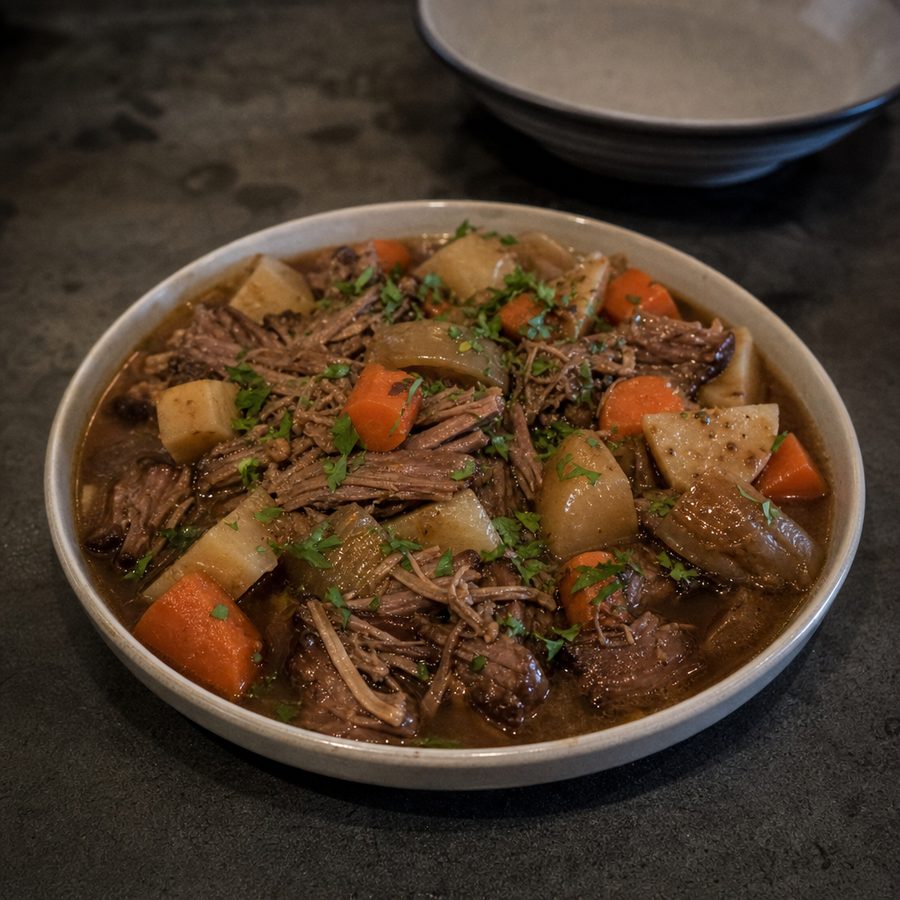
A whole chuck roast browned and then covered for three hours with celeriac, carrots, and bay, until the meat pulls apart under a fork and the broth turns glossy.
Why You'll Love This Recipe
This is my Sunday roast, the one I start around two in the afternoon when the house is cold and nobody has anywhere to be. A chuck roast is not an expensive piece of beef and it is not a fast one either, so most of the three hours belongs to you while the oven does the work. By the time it comes out, the kitchen smells like beef, bay, and browned onion, and that smell alone tends to pull people into the room. I make it in a Dutch oven and serve it straight from the pot, and whatever is left over becomes the best lunch of the week.
Two things decide whether this tastes like a pot roast or like boiled beef. The first is the sear. A dry surface, a properly hot pot, and enough patience to leave the meat alone until it releases with a deep brown crust are what put the roasted flavor into the broth, because nothing that happens later will add it. The second is the lid. Covered, in a 300°F oven, the roast sits in a shallow inch of liquid and steams as much as it simmers, and that slow gentle heat is what turns tough connective tissue silky rather than stringy. Balsamic vinegar goes in at the start so the hours can carry it through the meat.
Celeriac is the part people are surprised by. It is a homely knobbly root that smells of celery and parsley the moment you cut into it, and ninety minutes in beef broth turns it silky and faintly sweet, nothing like the raw vegetable it started out as. Add it at the halfway mark rather than the beginning, which is the step most people get wrong, because celeriac that goes in at the start will have surrendered to the sauce by the time the beef is ready. The meat should not need a knife at the end. Pull it into big pieces with two forks, spoon the dark broth over everything, and scatter the parsley on top so the plate tastes fresh at the edges.
Ingredients
- 2 1/2 lb boneless beef chuck roast, tied if it is loose
- 1 1/2 lb celeriac (about 1 large root), peeled and cut into 2-inch chunks
- 4 large carrots (about 12 oz), cut into 2-inch lengths
- 2 medium yellow onions, peeled and quartered through the root
- 6 cloves garlic, peeled and left whole
- 2 cups beef bone broth
- 2 tbsp balsamic vinegar
- 2 tbsp olive oil
- 2 sprigs fresh rosemary
- 6 sprigs fresh thyme
- 2 dried bay leaves
- 3 tbsp chopped fresh parsley
- 1 1/2 tsp fine sea salt, divided
Instructions
- Heat the oven and dry the beef: Heat the oven to 300°F (150°C) with a rack in the lower third. Pat the chuck roast very dry on all sides with paper towels, then season it all over with 1 teaspoon of the salt. A wet surface steams and will never brown, so give it a minute on the counter while the pot heats.
- Sear the roast: Warm the olive oil in a large Dutch oven over medium-high heat until it shimmers. Lay the roast in and leave it alone for 5 to 6 minutes, until it releases easily and the underside is deep brown. Turn and repeat on the second side and the edges, about 12 minutes in all, then lift the roast onto a plate.
- Build the pot: Add the onions and garlic to the fat left in the pot and cook for 3 minutes, stirring, until the cut faces color. Pour in the balsamic vinegar and scrape the browned bits off the bottom with a wooden spoon. Add the broth, rosemary, thyme, bay leaves, and the remaining salt, then set the roast back in with any juices.
- Cover and braise: Bring the liquid to a bare simmer, cover the pot tightly, and move it to the oven. Cook for 1 hour and 30 minutes without opening it. The liquid should never boil hard, so if you hear it rolling when you check, drop the oven to 285°F (140°C).
- Add the root vegetables: Tuck the celeriac and carrots around the roast, spooning some broth over them. Cover again and return the pot to the oven for a final 1 hour and 30 minutes, until a fork slides into the beef with no resistance and twists freely, and the celeriac is tender all the way through.
- Rest, pull, and serve: Let the pot stand covered off the heat for 15 minutes. Skim the fat from the surface, lift out the herb stems and bay leaves, and pull the beef into large pieces with two forks. Taste the broth for salt, then serve the meat and vegetables in shallow bowls with the broth spooned over and parsley scattered on top.
Variations
- Turnip and parsnip: Swap the celeriac for quartered turnips and thick parsnip pieces when you want the pot sweeter and more peppery.
- Orange and bay: Add two wide strips of orange peel with the broth and lift them out at the end for a citrus note that cuts the richness.
- Cider braise: Replace half the broth with unsweetened apple cider and use apple cider vinegar in place of the balsamic for a lighter, fruitier pot.
- Mushroom depth: Brown 8 ounces of sliced mushrooms after the onions and leave them in for the whole braise if you want the broth darker and earthier.
- Shredded for the week: Pull all the meat, return it to the strained broth, and keep it as a base for bowls, soups, and quick weeknight plates.
Storage & Leftovers
Leftovers keep in a sealed container in the refrigerator for up to 4 days, and this is one of the few dinners that genuinely tastes better on day two. Store the beef submerged in its broth so the outside does not dry out, and keep the vegetables in the same container rather than draining them.
Reheat in a covered saucepan over low heat with a splash of extra broth, about 8 minutes, stirring once. The fat sets into a firm cap in the refrigerator, which makes it easy to lift off first if you want a cleaner broth. A microwave works but tends to toughen the outer edges of the beef.
This freezes better than most braises. Pack the meat, vegetables, and broth together in one container, leave an inch of headroom, and freeze for up to 3 months. Thaw overnight in the refrigerator and warm gently on the stove. The celeriac softens further on thawing, so expect a mellower vegetable than the day it was made.
Notes & Tips
- Dry the meat properly: Water on the surface has to boil off before browning can start, and by then the pot is scorched. Paper towels, both sides, every time.
- Do not crowd the pot: The roast should sit flat on the bottom with room around it. A pot that is too small traps steam and the sear turns gray.
- Keep the liquid shallow: The broth should come about a third of the way up the roast, no higher. A submerged roast poaches, and poached beef tastes washed out.
- Check the lid seal: If steam escapes freely the pot dries out. Lay a sheet of parchment over the meat before the lid goes on if yours fits loosely.
- Time the roots: Celeriac and carrots need 90 minutes, not three hours. Going in at the halfway point is what keeps them whole rather than dissolving.
- Skim before serving: Chuck renders a good amount of fat, and skimming it off is the difference between a glossy broth and a greasy one.
Nutrition & Mindful Eating
- Chuck, celeriac, and carrots end up tasting like one another by the end of three hours. The beef gives the pot its body, the roots take on the broth and soften, and the balsamic and bay keep something this rich from ever tasting flat.
- Chuck is a hard-working cut, which is why it needs the long slow oven and why it tastes the way it does afterward. The connective tissue melts into gelatin and gives the broth its silk, and the meat carries iron in the form your body absorbs most readily.
- Celeriac tastes like celery and parsley when it is raw and turns silky and mild under a lid, soaking up more of the beef broth than anything else in the pot. The fiber it carries is part of why a bowl of this settles in and stays with you.
- Carrots hold their shape through the second half of the braise and deepen in color as they cook, and that color is beta carotene, which your body converts into vitamin A. They also give the broth a background sweetness that salt alone could never supply.
- Most of what you smell for three hours is onion, garlic, bay, and rosemary. The onions collapse into the liquid completely, and the balsamic goes in at the start so the acid has hours to work through the meat, which is why the pot tastes layered rather than simply beefy.
- As you eat, notice how little work the meat takes to come apart under a fork, and let the warmth of the broth be a reason to sit down with the bowl rather than eat standing at the stove.
Frequently Asked Questions
Can I use a different cut of beef?
Yes, as long as it is a hard-working one. Brisket, bottom round, or beef shanks all braise well at this temperature, though shanks need closer to 3 hours 30 minutes because of the bone. Avoid tender quick-cooking cuts like sirloin or tenderloin, which have no connective tissue to soften and turn dry and grainy over a long cook.
My beef came out tough after three hours. What happened?
It almost certainly needed longer, not less. Tough at hour three means the collagen has not finished melting, so cover it and give it another 30 to 45 minutes. The other common cause is a pot that was boiling rather than barely bubbling, which tightens the muscle fibers, so check that your oven runs true and drop the temperature if it does.
Can I make this ahead for a weeknight?
This is the best possible make-ahead dinner. Cook it fully up to 3 days early, cool it in the pot, and refrigerate the whole thing. Lift off the set fat, reheat it covered in a 325°F (163°C) oven for about 35 minutes, and it will be better than it was the first night. Add the parsley fresh at the table.
Does this fit an AIP elimination phase?
It does. There are no grains, dairy, legumes, eggs, nuts, seeds, or nightshades in the pot, and the seasoning is onion, garlic, bay, rosemary, thyme, and a spoonful of balsamic vinegar rather than a spice blend. Check that your broth and vinegar have no added spices or preservatives, since that is where hidden ingredients usually turn up.