
Beef and Dandelion Green Breakfast Skillet
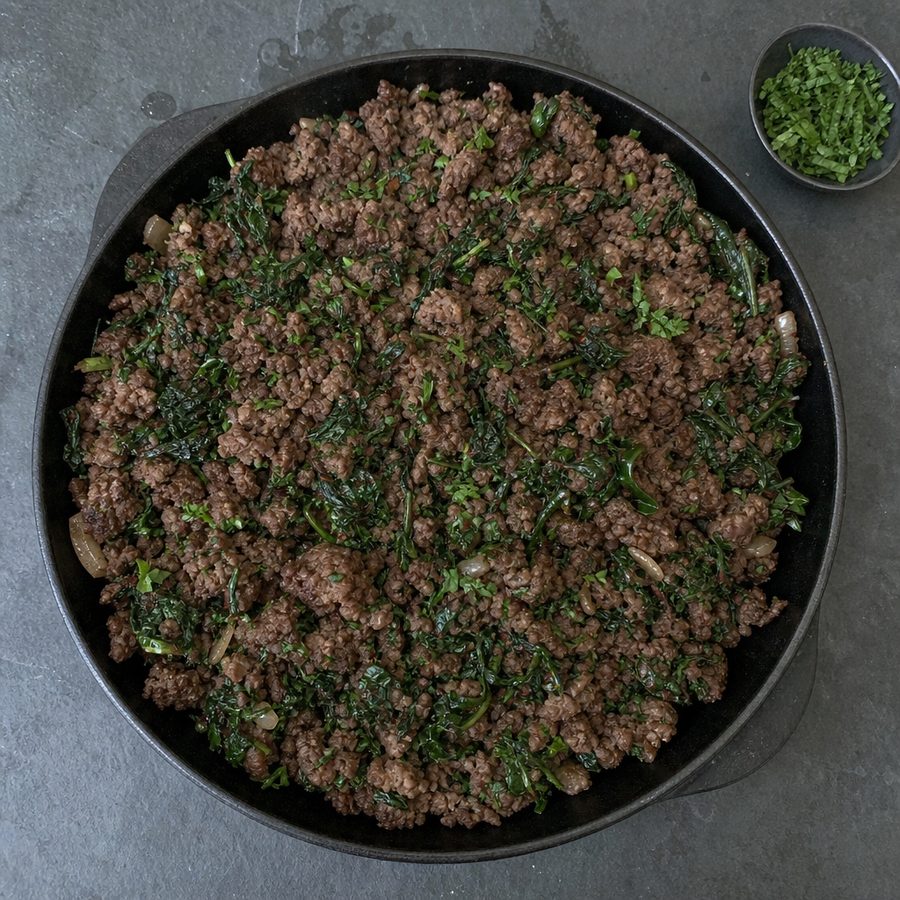
Ground beef browned with onion and rosemary, then bitter dandelion greens wilted into the fat and sharpened with cider vinegar at the very end of the cooking.
Why You'll Love This Recipe
This is a breakfast for someone who has never really wanted sweet food in the morning. It is beef and bitter greens in one pan, done in about half an hour, and it tastes like something a grandmother in Puglia would put in front of you rather than anything invented for a diet. I started making it because so many people in an elimination phase end up eating the same mild food day after day, and mild food gets old faster than restrictive food does. Bitterness fixes that. It wakes your mouth up, and it makes a plate of ground beef taste like a real dish rather than a protein serving.
Sequence counts for more here than the ingredient list does. Brown the beef first and hard, in a wide pan, without stirring much, so it develops a proper dark crust rather than turning gray in its own steam. The onion goes in afterward to soften in the rendered fat, the garlic follows for under a minute, and the rosemary joins them so its oils bloom in the heat rather than sitting raw on top. Then the greens go in by the handful and collapse fast. Dandelion loses about three quarters of its volume, so what looks like far too much on the board is exactly right in the pan.
Fat, salt, and acid are what tame bitterness, and this skillet uses all three deliberately. The beef fat coats the leaves, the salt goes in twice, and a tablespoon of cider vinegar off the heat lands right where the bitterness peaks and turns it into something bright rather than harsh. What you get is a savory, dark green, deeply seasoned pan that holds you for hours. If you have only ever met dandelion greens raw in a salad and decided against them, cooked like this they are a different vegetable entirely.
Ingredients
- 1 1/4 lb ground beef (85/15)
- 1 large bunch dandelion greens (about 9 oz), tough stems trimmed, leaves cut into wide ribbons
- 1 small yellow onion, thinly sliced
- 4 cloves garlic, thinly sliced
- 2 tbsp olive oil
- 1 tbsp apple cider vinegar
- 1 tsp finely chopped fresh rosemary
- 3/4 tsp fine sea salt, divided
Instructions
- Prepare the greens: Wash the dandelion greens well in a sink of cold water and lift them out so the grit stays behind. Trim off the thick lower stems, which stay tough no matter how long you cook them, and cut the leaves crosswise into ribbons about two inches wide. They will look like a mountain and cook down to almost nothing.
- Brown the beef: Heat a large skillet over medium-high. Add the ground beef in large clumps with half the salt and leave it undisturbed for four minutes so the underside forms a dark crust. Break it up and cook another five to six minutes, until no pink remains and an instant-read thermometer reads 160°F. Tip the beef into a bowl and leave the fat in the pan.
- Soften the onion and garlic: Add the olive oil to the rendered fat and lower the heat to medium. Cook the onion for four to five minutes, until it is limp and just beginning to color at the edges. Add the garlic and rosemary and cook for forty five seconds, until the pan smells strongly of both.
- Wilt the greens: Add the dandelion greens a handful at a time, turning each batch with tongs until it collapses before adding the next. Season with the remaining salt and cook for five to six minutes total, until the leaves are tender and dark and most of the liquid they released has cooked away.
- Bring it back together: Return the beef and any juices to the pan and fold everything together over medium heat for one minute. Take the skillet off the burner, pour in the cider vinegar, and stir once. Taste and add a little more salt or vinegar until the bitterness sits where you want it.
Variations
- Lamb and lemon: Swap the beef for ground lamb and finish with lemon juice rather than vinegar for a version that leans Greek.
- Sweeter against the bitter: Add a diced pear or apple with the onion so it softens into the pan and takes the sharpest edge off the greens.
- Roots underneath: Fold in a cup of diced roasted parsnip or celeriac at the end for a heartier skillet on a cold morning.
- Mixed greens: Use half dandelion and half swiss chard if you are easing into bitter vegetables, and increase the dandelion as you get used to it.
- Olive and orange: Stir in a handful of chopped kalamata olives with the greens and finish with orange zest for a southern Italian slant.
Storage & Leftovers
Sealed in the refrigerator this keeps four days and the flavor rounds out overnight, which is unusual for a green vegetable. The bitterness softens by the second day as the fat and vinegar work through the leaves, so a batch cooked Sunday is often the best of the week on Monday.
Reheat it in a skillet over medium heat for three or four minutes, adding a teaspoon of water if the pan looks dry. A microwave works here better than it does for most dishes, since there is no crisp texture to protect, but the pan gives you back a little of the browning.
It freezes well for up to three months in flat, sealed portions. Thaw overnight in the refrigerator and reheat in a pan, then add a fresh splash of vinegar at the end, because acid is the one thing that dulls in the freezer while everything else holds.
Notes & Tips
- Trim the stems, keep the leaves: The lower stems of dandelion stay woody through any amount of cooking. Strip the leaves off anything thicker than a pencil lead and compost the rest.
- Wash in a sink, not a colander: Dandelion grows low and holds grit. Swish the leaves in a full sink and lift them out with your hands so the sand stays at the bottom.
- Let the beef sit still: Four minutes without touching it is what gives you the dark crust and the fond. Stirring from the start gives you gray meat and a pan with nothing in it.
- Add greens in handfuls: The pan looks far too full if you dump them in at once. Turn each handful until it collapses and the next one will fit easily.
- Vinegar off the heat: Acid added to a hot pan cooks off and goes flat within seconds. Add it with the burner off and you will taste every drop of it.
- Taste before the last of the salt: Bitterness reads stronger when a dish is underseasoned. Salt it properly and you will find the greens taste far less sharp than you expected.
Nutrition & Mindful Eating
- Beef and bitter greens work as a pair here in a way neither manages alone. The meat brings richness and staying power, the dandelion cuts straight through it, and the fat carries the flavor of the leaves into every bite of the skillet.
- Dandelion greens are a genuinely calcium-rich leaf, and they bring vitamin K and a real amount of vitamin A along with their bitterness. Their bitter compounds are also traditionally associated with stimulating digestion before a meal.
- Ground beef gives you protein in a form that keeps you settled for hours, along with heme iron, the kind the body absorbs most readily, and the B12 that comes almost exclusively from animal food.
- Rosemary and sliced garlic bloom in the rendered fat rather than sitting on top of the finished dish, which is why the whole pan smells the way it does before anything green has even gone in.
- The cider vinegar at the end is doing more than seasoning. Acid is what turns bitterness from something you brace against into something you taste and enjoy, and it is why this skillet eats so much lighter than the ingredient list suggests.
- As you eat, notice how the bitterness rises and then settles as the fat and vinegar catch up with it, and give the plate the attention that kind of flavor asks for.
Frequently Asked Questions
Where do I find dandelion greens, and what if I cannot?
Look near the chard and kale, often sold in big bunches with the roots trimmed, and reliably at Italian and Latin markets. Escarole, broccoli rabe, mustard greens, and radicchio all give you the same bitter edge. Swiss chard or collards work too, though you lose most of the bitterness that makes this dish what it is.
The greens are too bitter for me. What can I do?
Blanch them for two minutes in boiling water first and squeeze them dry before they go in the pan, which strips a good deal of the bite. More fat, a longer cook, and a bit more vinegar all help as well. Younger, smaller leaves are milder than the big ones.
Can I use another meat?
Ground lamb is the natural partner for bitter greens and makes this richer and more aromatic. Ground pork works well and takes 160°F the same as beef. Ground turkey is milder, so it needs a little more rosemary and salt to stand up to the dandelion.
Does this fit an AIP elimination phase?
It does. Ground beef, greens, onion, garlic, rosemary, olive oil, and cider vinegar are all compliant, and there are no nightshades, seeds, or seed-based spices in the seasoning. Buy plain ground beef rather than a seasoned blend, which often carries pepper or paprika.