
Beef Meatballs Poached in Milk and Butter
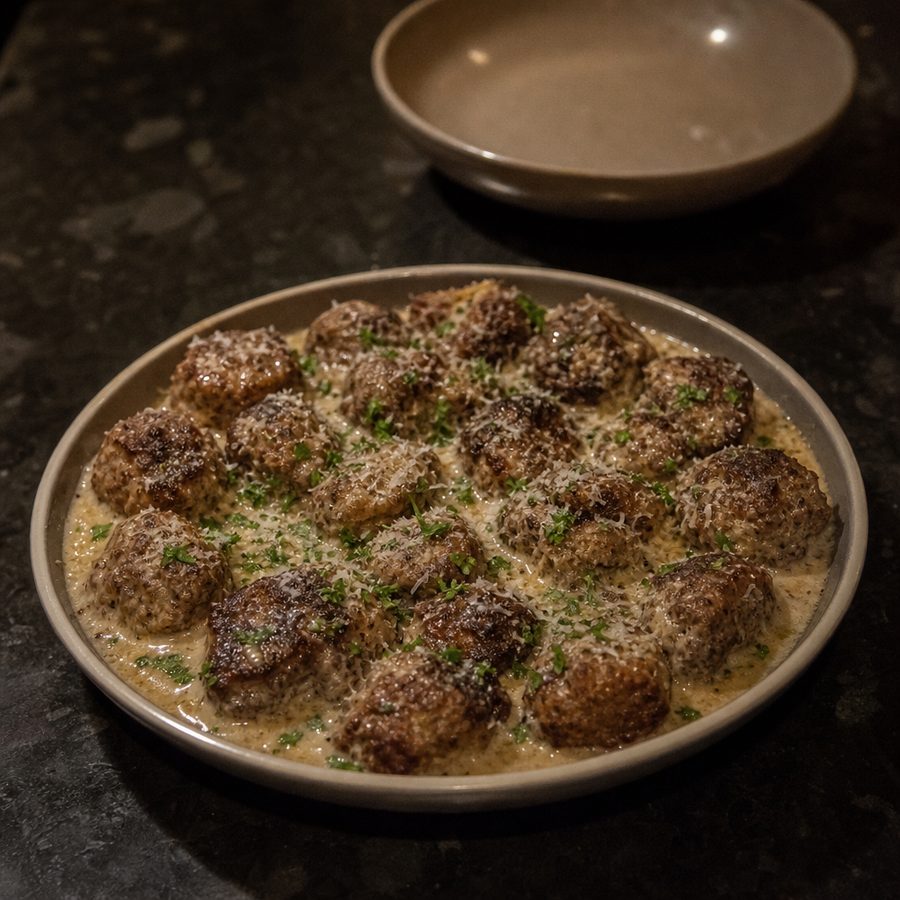
Meatballs browned hard in foaming butter, then simmered in whole milk until it reduces and thickens, finished with grated parmesan whisked in off the heat.
Why You'll Love This Recipe
Ground beef in the refrigerator and about half an hour before people want to eat is all this one asks for. Meatballs simmered in milk are an old Italian home technique, and the reason it survives is that milk does something no other liquid does to beef: it softens the outside of the meat while the pan reduces, so the meatballs stay tender even after they are cooked all the way through. The sauce that comes out of it is pale and mild and slightly sweet, which is an unexpected thing to spoon over something that was browned as hard as this.
The two halves of the method pull in opposite directions on purpose. First comes high heat and a dry pan surface, which is where the crust and the browned bits on the bottom come from, and those browned bits are the entire flavor of the sauce later. Then comes low heat and liquid, which is what keeps the interiors juicy. The important part is that the milk never boils. Hold it at a tremble, with bubbles breaking only at the edges, and it reduces smoothly. Let it roll and it will separate into curds and thin watery liquid, and there is no coming back from that.
It suits a night when you want one skillet and no side to think about. The parmesan is doing double duty here, a third of it worked into the meat so the meatballs hold together and season themselves, the rest whisked in at the end where the residual heat is enough to melt it but not enough to make it stringy. Leftovers are good, and the sauce sets to something closer to a custard in the refrigerator, which loosens back to a sauce with a splash of milk in a warm pan.
Ingredients
- 1 1/2 lb ground beef, 85/15
- 3/4 cup finely grated parmesan, divided
- 2 cups whole milk
- 3 tbsp butter
- 1/4 tsp fine sea salt
Instructions
- Mix and roll: Put the ground beef in a bowl with the salt and a third of the parmesan, about a quarter cup. Work it with your hands for no more than twenty seconds, just until the cheese disappears into the meat. Roll into sixteen balls a little larger than a golf ball, pressing each one firmly between your palms three or four times so it holds its shape in the pan.
- Brown them hard: Melt the butter in a wide skillet over medium-high. When the foaming has quieted and the butter smells nutty, put the meatballs in with space between them and leave them completely alone for three minutes. They should sizzle steadily, not spit. When the underside has a dark brown crust it will release from the pan on its own, so if a meatball sticks, give it another thirty seconds.
- Turn and build the fond: Turn each meatball with tongs and brown a second side for two more minutes. The bottom of the pan should be going deep brown between them, which is what the sauce is made of. Lower the heat to medium if the butter starts smoking or the browned bits go from chestnut toward black.
- Add the milk and drop the heat: Pour the milk in around the meatballs and immediately turn the heat to low. Scrape the bottom of the pan with a wooden spoon to lift the browned bits into the liquid, which will turn the milk the color of weak tea. Bring it to a bare tremble with bubbles breaking only around the edge. It must not boil at any point or it will separate.
- Simmer until reduced: Simmer uncovered for ten to twelve minutes, turning the meatballs once at the halfway mark and shaking the pan now and then. The milk will reduce by about a third and thicken enough to coat the back of a spoon. An instant-read thermometer in the center of a meatball should read 160°F.
- Finish with parmesan off the heat: Take the pan off the burner and let it sit for thirty seconds, then scatter the remaining half cup of parmesan over the surface and swirl the pan until it melts into the sauce. Doing this off the heat keeps the cheese smooth rather than stringy. Spoon the sauce over the meatballs and serve straight from the skillet.
Variations
- Half beef, half pork: Use twelve ounces of each for a softer meatball and a rounder, sweeter sauce.
- Cheddar in the middle: Push a cube of sharp cheddar into the center of each ball before rolling so it melts into a pocket.
- Lamb: Swap in ground lamb, brown it a shade harder, and expect a richer sauce that reduces slightly faster.
- Cream finish: Replace half a cup of the milk with heavy cream for a thicker sauce that reduces in about eight minutes.
- Smaller and quicker: Roll twenty four small meatballs, brown them in two batches, and cut the simmer to seven minutes.
Storage & Leftovers
Meatballs and sauce keep four days together in a sealed container in the refrigerator, and they are better on day two than they were the night before. The sauce sets firm and pale as it chills, closer to a custard than a sauce, which is what it is supposed to do and not a sign that anything went wrong.
Reheat gently in a covered skillet over low with a splash of milk stirred in, five or six minutes, shaking the pan rather than stirring hard. Low heat is the whole instruction here for the same reason it was the first time around. A microwave on full power will split the sauce and squeeze the meatballs tight.
The meatballs freeze well for three months, though the sauce does not, so freeze them browned and cooked with as little liquid clinging as you can manage. Thaw overnight in the refrigerator, then warm them through in a fresh cup of milk and finish with parmesan the same way, which takes about eight minutes.
Notes & Tips
- Handle the meat briefly: Twenty seconds of mixing is enough. Worked longer, ground beef goes springy and the meatballs turn bouncy rather than tender.
- Wait for the release: A meatball that sticks is not finished browning. Crust lets go of the pan by itself, and forcing it early tears off the best part.
- Never let the milk boil: A bare tremble at the edges is the target. A rolling boil splits milk into curds and water within a minute and the sauce cannot be brought back.
- Scrape the pan when the milk goes in: Those dark browned bits are stuck-on flavor. Thirty seconds with a wooden spoon moves all of it into the sauce and turns the milk tan.
- Grate the parmesan finely: Fine gratings melt into the sauce in seconds. Coarse shreds sit in clumps and stay stringy no matter how long you swirl the pan.
- Cheese goes in off the heat: Thirty seconds away from the burner drops the pan below the point where parmesan tightens, which is the difference between a smooth sauce and a rubbery one.
Nutrition & Mindful Eating
- Beef, milk, and parmesan make a complete plate between them. The meatballs bring the body and the deep browned flavor, the milk turns into a mild sweet sauce as it reduces, and the cheese thickens that sauce while carrying most of the calcium in the skillet.
- Ground beef is what makes this filling. It is a close-grained meat that browns into a real crust, and it carries iron in the form your body absorbs most readily along with the B12 and zinc that red meat is one of the better sources of.
- Whole milk does something here that water would not. Simmering it down concentrates its natural sweetness into a sauce that clings, and it brings calcium and a little more protein along with the fat that gives the sauce its body.
- Parmesan aged this long has almost no moisture left in it, which is why a small amount tastes so savory and why it carries calcium in real quantity. Grated fine and melted off the heat, it thickens the sauce as it goes in.
- The browned crust is worth waiting for. Those dark bits on the bottom of the pan are what turn a skillet of pale milk into a tan, glossy sauce, and they are the reason this tastes slow-cooked after twenty minutes on the stove.
- As you eat, notice how differently the two halves of a meatball taste, dark and almost bitter at the crust, soft and mild in the middle, and let that contrast keep you at the table long enough to feel when you are satisfied.
Frequently Asked Questions
My sauce broke into curds. Can I save it?
Not really, though the meatballs are still good and you can lift them out and serve them without the sauce. The cause is almost always a boil, sometimes a hard stir right after the milk went in. Next time turn the heat down before the milk goes into the pan rather than after.
Can I use ground pork or turkey?
Both work. Pork behaves almost identically and gives a slightly sweeter sauce. Ground turkey needs a gentler brown and a shorter simmer, about eight minutes, since it dries out faster than beef does once it passes the finish line.
Why parmesan in the meat and not just in the sauce?
It seasons from the inside and it helps the meatballs hold together, which matters because there is nothing else binding them. A quarter cup worked through the beef does that job. The rest goes in at the end purely for the sauce, where it thickens as it melts.
Is this suitable if I am eating animal foods only?
Yes, as written. Beef, butter, whole milk, parmesan, and salt are all it contains. The only thing worth checking is the parmesan, since a few grated products carry starch as an anticaking agent, so buy a wedge and grate it yourself if you are keeping strictly to it.