
Beef Sirloin and Watercress Breakfast Plate
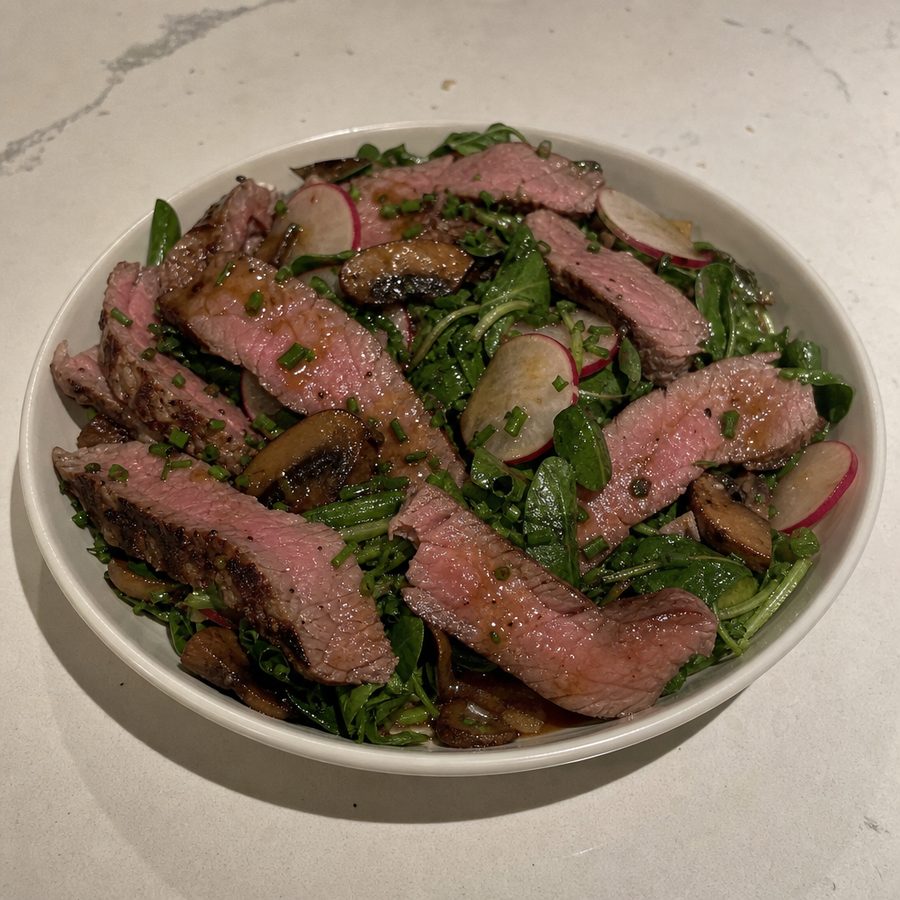
Seared sirloin sliced over peppery watercress with browned mushrooms, thin radishes, and shallot, all under a lemon dressing spooned on while the steak is still warm.
Why You'll Love This Recipe
Steak for breakfast sounds like an indulgence and is really just an efficient way to eat. This is the plate I put together on a morning when I have to be sharp for hours, because a seared sirloin and a pile of watercress is about as direct a route to a real meal as the kitchen offers. It takes fifteen minutes of actual cooking, most of which is the steak resting while you brown the mushrooms. During an elimination phase it is also a relief to eat something that needs no reinvention at all, just good meat, a green with some personality, and lemon.
The searing is the only part worth being fussy about. Take the steak out of the fridge half an hour ahead and dry the surface properly, because a wet steak steams and never browns. Get the pan hot enough that the oil is just beginning to shimmer and move, lay the steak down, and leave it for three to four minutes a side until a dark crust has formed and the middle reads 130°F for medium rare. Then rest it, which is not optional. Slicing straight away pushes all the juice onto the board, and the meat you eat afterward is drier and grayer for it.
Everything else is built to cut through the richness of the beef. Watercress is properly peppery, radishes are sharp and cold, and the lemon dressing goes on at the last second so the leaves are still standing up when the plate reaches the table. The mushrooms are the bridge, browned in the same pan so they taste of the steak. A plate like this carries a serious amount of protein and very little that slows you down, which is why it suits a morning with real work in it. Half a steak each, eaten sitting down, and you will not think about food again until the afternoon.
Ingredients
- 1 1/4 lb sirloin steak, about 1 inch thick
- 8 oz cremini mushrooms, quartered
- 2 large bunches watercress (about 5 oz), thick stems trimmed
- 6 radishes, sliced paper thin
- 1 small shallot, sliced paper thin
- 2 tbsp olive oil, divided
- 1 1/2 tbsp fresh lemon juice
- 2 tbsp chopped fresh chives
- 3/4 tsp fine sea salt, divided
Instructions
- Temper and season the steak: Take the sirloin out of the fridge 30 minutes before you cook, pat both sides completely dry with paper towel, and season with half the salt. A cold, damp steak steams in the pan, and no amount of heat afterward will bring back the crust you lost.
- Sear the sirloin: Heat one tablespoon of the olive oil in a cast iron skillet over high until it shimmers and moves easily. Lay the steak away from you and leave it undisturbed for three to four minutes a side, until a deep brown crust has formed and a thermometer in the center reads 130°F to 135°F for medium rare.
- Rest the meat: Move the steak to a board and leave it alone for eight to ten minutes. It will keep cooking a few degrees while it sits, and the juices settle back through the muscle instead of running out the moment you cut it. Do not cover it tightly or the crust goes soft.
- Brown the mushrooms: While the steak rests, add the mushrooms to the same pan over medium-high with the remaining salt. Leave them undisturbed for three minutes, then toss and cook for another two or three, until they have given up their water, browned at the edges, and picked up what the steak left behind.
- Dress the greens: Toss the watercress, sliced radishes, and shallot in a wide bowl with the lemon juice and the remaining olive oil. Dress it at the last moment, since watercress collapses within minutes of meeting acid and you want the leaves upright.
- Slice and build the plates: Cut the steak across the grain into quarter-inch slices. Divide the dressed greens between four plates, lay the warm slices over them so the leaves wilt slightly underneath, add the mushrooms, and spoon any juice from the board over the top. Finish with the chives.
Variations
- Horseradish-free sharpness: Grate a peeled radish or a piece of daikon over the finished plate for the same nose-tingling sharpness a sauce would give you.
- Steak and squash: Add roasted delicata or butternut cubes to the plate for a heartier, sweeter breakfast that suits a cold morning.
- Herb oil finish: Blitz parsley, chives, and olive oil into a rough green oil and spoon it over the sliced beef in place of the lemon dressing.
- Grilled version: Cook the sirloin over a hot grill, three minutes a side, and char a few scallions alongside it for a smokier plate in summer.
- Ground beef morning: Use ground beef browned hard with the mushrooms when sirloin is out of the budget, piled over the same dressed watercress.
Storage & Leftovers
Keep leftover steak whole rather than sliced, wrapped in the fridge for up to three days. A whole piece holds its juice far better than slices do, and you can cut it cold in the morning. The mushrooms keep alongside it for the same three days.
Eat the leftovers cold rather than reheating. Cold rare beef is genuinely good, and reheating a medium rare steak takes it straight to well done and tough. If you want it warm, slice it thin and lay it on plates that have been warmed under hot water, which is enough.
Dress the watercress fresh every time, because greens that have sat in lemon overnight turn dark and slack. Cooked steak freezes for up to two months but comes back noticeably drier, so I would rather cook the amount I plan to eat.
Notes & Tips
- Dry the steak, then dry it again: Surface moisture is the enemy of a crust. Paper towel on both sides, and if you have time, leave it uncovered in the fridge for an hour beforehand.
- Let the pan get properly hot: Cast iron takes longer to heat than you think. Give it a full three or four minutes before the oil goes in, and only add the steak when the oil moves like water.
- Rest it longer than feels right: Eight to ten minutes is not too long. The steak stays hot, and everything you would have lost on the cutting board ends up in the meat instead.
- Cut across the grain: Find the direction the muscle fibers run and slice at right angles to them. The same steak eats tender one way and chewy the other.
- Do not stir the mushrooms early: They release water first and brown second. Three undisturbed minutes gets you past the first stage, and stirring before that keeps them pale.
- Dress at the very last second: Watercress wilts fast in lemon. Toss it as the steak is being sliced, not before, and it will still have structure when it reaches the table.
Nutrition & Mindful Eating
- Beef and bitter greens is one of the oldest pairings there is, and the balance is the point here. The sirloin brings dense protein and fat, the watercress and radish bring water, fiber, and bite, and the lemon keeps a rich plate tasting sharp.
- Sirloin carries heme iron and vitamin B12 in the forms your body takes up most easily, along with zinc, which is involved in immune function and wound healing. A single steak sliced across four plates goes a long way toward a day's worth.
- Watercress grows in running water and tastes of it, clean and hot at the back of the throat. It carries a remarkable amount of vitamin K for such a delicate leaf, and its peppery bite comes from glucosinolates, the same family of compounds found in mustard.
- Mushrooms browned in the steak pan bring savory depth and a little selenium and B vitamins with it. Any that have been grown or dried under sunlight also carry vitamin D, which is worth checking the label for.
- Thin radishes and lemon land cold and sharp against warm beef, and that contrast is what stops a plate with steak on it from feeling like a heavy way to start the day.
- As you eat, notice how the watercress cools and sharpens each mouthful of warm beef, and let that back and forth keep you from finishing the plate faster than you meant to.
Frequently Asked Questions
What cut should I buy?
Top sirloin about an inch thick is the sweet spot: enough fat to taste of something, tender enough to slice thin, and not so expensive that breakfast feels extravagant. Flat iron, flank, and skirt all work, though flank and skirt need to be cut across the grain even more carefully.
How do I know when it is done without a thermometer?
Press the middle with a finger. Rare feels soft and yielding, medium rare springs back slowly, and anything that feels firm has gone past medium. A thermometer is a few dollars and takes the guesswork out entirely, which for a cut this good is worth it.
Can I use a different green?
Yes, though the peppery ones suit beef best. Arugula is the closest match and behaves the same way under warm meat. Baby mustard greens work, and so does a mix of romaine and endive if you want something crunchier and milder underneath.
Does this fit an AIP elimination phase?
It does. Beef, mushrooms, watercress, radish, shallot, chives, olive oil, lemon, and salt are all allowed in the elimination phase. Season with salt alone rather than a steak rub, since almost every rub on the shelf is built on black pepper and paprika.