
Seared Beef Strips with Blistered Tomatoes, Zucchini, and Basil
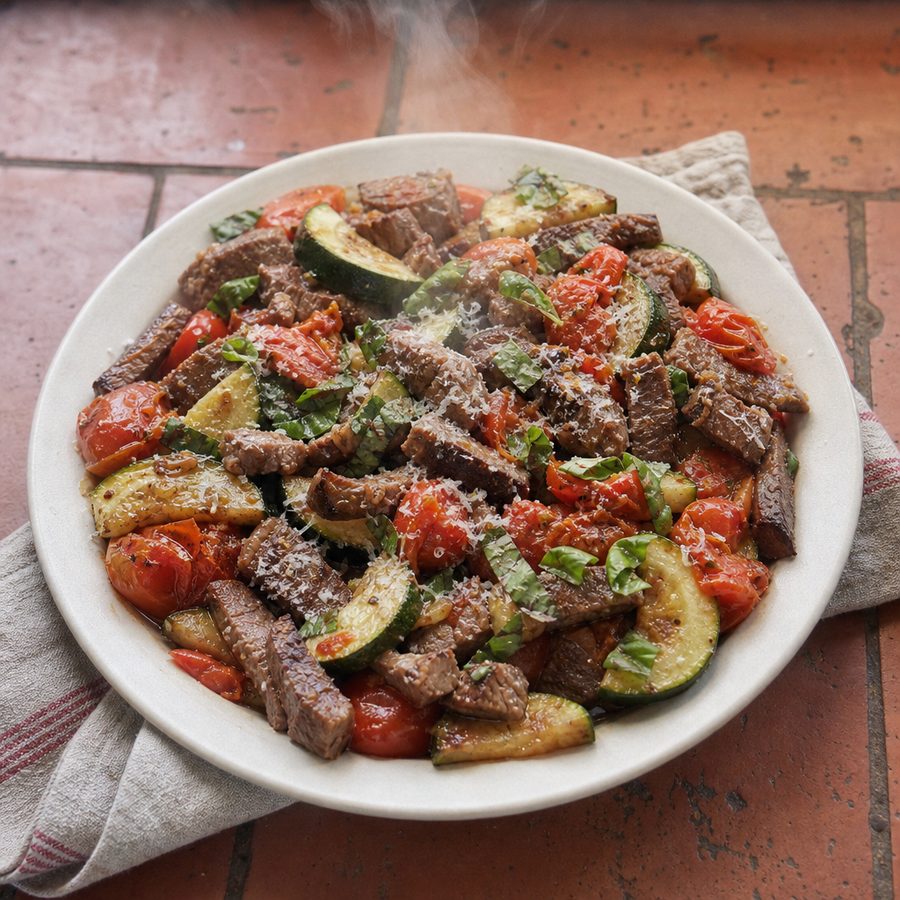
Sirloin strips seared fast in a very hot skillet, folded off the heat with blistered cherry tomatoes, browned zucchini, torn basil, lemon zest, and grated parmesan.
Why You'll Love This Recipe
Lunch has to happen in the next half hour, and I still want to be pleased about it. Everything is cut before anything goes in the pan, and then the skillet runs hot for about twelve minutes in total. It sits at the summer end of my rotation, the one I reach for when there are more tomatoes on the counter than I know what to do with and the thought of turning the oven on is unbearable. It also travels better than most skillet food, which surprises people, because the vegetables have already given up their water in the pan and there is nothing left to make a container soggy by Tuesday.
The whole thing depends on cooking in stages and not stirring. Tomatoes go in first and stay completely still until the skins blacken in spots and burst, which takes about four minutes and turns them jammy and concentrated. The zucchini follows, cut side down, and browns properly rather than steaming into mush, which is exactly what happens the moment you start pushing it around the pan. The beef goes last, in two batches, into a skillet that is nearly smoking, and it needs about ninety seconds on the first side. Everything comes back together off the heat, where the parmesan melts into the pan juices rather than seizing into strings.
The finish is what makes it taste like more than the sum of its parts. Lemon zest and torn basil go in once the pan is off the burner, so both stay bright and green, and grated parmesan stirred through the warm juices turns them into a light sauce that clings to the beef. Sirloin sliced thin across the grain stays tender even after it cools, so this eats as well at room temperature out of a container as it does straight from the skillet. If you are making it for the week, keep the basil separate and add it fresh, since torn leaves blacken overnight in a closed box.
Ingredients
- 1 1/2 lb beef sirloin, cut across the grain into 1/2-inch strips
- 2 small zucchini (about 10 oz), cut into 1/2-inch half moons
- 1 3/4 cups cherry tomatoes
- 3 tbsp olive oil, divided
- 1 cup fresh basil leaves, torn
- 1/2 cup finely grated parmesan
- 1 tbsp fresh lemon juice, plus the zest of 1 lemon
- 1/4 tsp cayenne
- 1 1/2 tsp fine sea salt, divided
- 1 tsp black pepper
Instructions
- Cut everything first: Slice the sirloin across the grain into strips about 1/2 inch wide, pat them very dry, and season with 1 teaspoon of the salt and the black pepper. Cut the zucchini into 1/2-inch half moons. This dish moves quickly once the pan is hot, so nothing should still be waiting on the cutting board.
- Blister the tomatoes: Heat 1 tablespoon of the oil in a large skillet over medium-high until it shimmers. Add the cherry tomatoes and leave them alone for 4 to 5 minutes, shaking the pan once, until the skins blacken in spots and burst. Scrape them into a bowl along with all their juices.
- Brown the zucchini: Add another tablespoon of oil and lay the zucchini in a single layer, cut side down. Cook 3 minutes without moving it, until the faces are deep gold, then turn and give it 2 minutes more with a pinch of the salt. Move it to the bowl with the tomatoes.
- Sear the beef: Raise the heat to high, add the last tablespoon of oil, and wait until it just begins to smoke. Lay half the beef in a single layer and sear 90 seconds without touching it, then turn for 30 seconds more. Move it to a plate and repeat with the second batch.
- Bring it together off the heat: Take the pan off the burner and return the vegetables and beef along with any juices. Add the lemon juice and zest, the cayenne, and the rest of the salt, then fold in the basil and parmesan so the cheese melts into the pan juices. Taste, and serve warm or at room temperature.
Variations
- Ground beef: Brown a pound and a half of ground beef in place of the strips for a version that comes together even faster.
- Feta and mint: Use crumbled feta in place of the parmesan and mint in place of the basil when you want the pan to taste sharper.
- Real heat: Add a sliced jalapeño with the zucchini for a version with proper heat behind the sweetness of the tomatoes.
- Darker herbs: Fresh oregano or thyme in place of the basil takes the pan somewhere deeper and more savory.
- Over greens: Fold the whole panful through two handfuls of spinach so the leaves wilt in the residual heat.
Storage & Leftovers
This keeps for 3 days in a sealed container and is as good at room temperature as it is hot, which is what makes it a workable desk lunch. Hold back a handful of basil and add it when you eat, since torn leaves go black and slippery overnight in a closed box.
Reheat it gently in a skillet over medium-low for about 3 minutes, only until it steams. The beef is already cooked to medium-rare, and anything more than a brief warming pushes thin strips of sirloin straight past tender into gray and chewy, which no amount of sauce will bring back.
Freezing does not suit this one. Zucchini turns to water on thawing and the tomatoes lose everything the blistering gave them. For a head start, blister the tomatoes and brown the zucchini up to 2 days ahead, then sear the beef fresh, which is 5 minutes of work on the day.
Notes & Tips
- Dry the beef: Damp strips steam and go gray. Ten seconds with paper towels is the difference between a brown crust and none at all.
- Leave the tomatoes alone: Blistering only happens where the skin sits against hot metal. Shake the pan once, and only once.
- Give the zucchini a single layer: Stacked pieces boil in their own water. Two batches cost 3 minutes and change the texture completely.
- Sear in two batches: Half the beef at a time keeps the skillet hot. All of it at once drops the temperature and stews the meat.
- Parmesan off the heat: Grated cheese stirred into a hot pan seizes into strings. Off the burner it melts into the juices and thickens them.
- Basil at the last second: Heat blackens torn basil within a minute. Add it as you serve, or as you eat if it is going into a container.
Nutrition & Mindful Eating
- Beef, tomatoes, and zucchini cooked in the same pan borrow from each other. The sirloin brings the protein and the browned edges, the tomatoes burst into something sweet and sharp, and the zucchini soaks up the juices from both so nothing on the plate eats dry.
- Sirloin cut across the grain into thin strips cooks in about ninety seconds and stays tender, and red meat is where the iron and zinc in this pan come from.
- Cherry tomatoes cooked in olive oil until they collapse are where the lycopene here comes from, and the oil they burst into is what makes that lycopene easier for the body to take up.
- Basil torn in off the heat and lemon zest added at the same moment are what keep the pan tasting fresh, and the parmesan stirred in last brings salt and calcium along with the savory edge that pulls everything together.
- Strips this thin still eat like a full meal. The protein in the beef is doing most of that work, and the vegetables cooked down in the same fat make a plate that holds you through the afternoon rather than thinning out by three.
- As you eat, find the tomatoes that collapsed completely and let their sweetness against the salty parmesan set the pace, working through the container slowly enough to notice when you have had enough.
Frequently Asked Questions
Can I use a different cut of beef?
Flank or flat iron sliced the same way both work and want the same fast sear. Ground beef makes a good version too, browned hard and left in big crumbles, though you lose the texture of separate strips against the soft burst tomatoes.
My zucchini went watery. What happened?
It was moved too soon, or the pan was crowded. Zucchini holds a lot of water and needs an uncrowded skillet and 3 undisturbed minutes to brown rather than boil in its own liquid. Cook it in two batches if your pan is not wide.
Can I make this for the week?
Yes, with one adjustment. Cook the vegetables and beef, cool them, and portion them into containers, then add the basil, lemon, and parmesan on the day you eat each one. That keeps the cheese from going grainy and the basil from turning black.
Does this suit a low-FODMAP lunch?
It does. There is no onion or garlic in the pan, and the flavor comes from hard browning, blistered tomato, basil, lemon, and parmesan, which is a hard aged cheese most people handle comfortably. Keep the zucchini to the amount given, since it adds up quickly across a serving.