
Bison Braised with Orange, Cumin, and Collard Greens
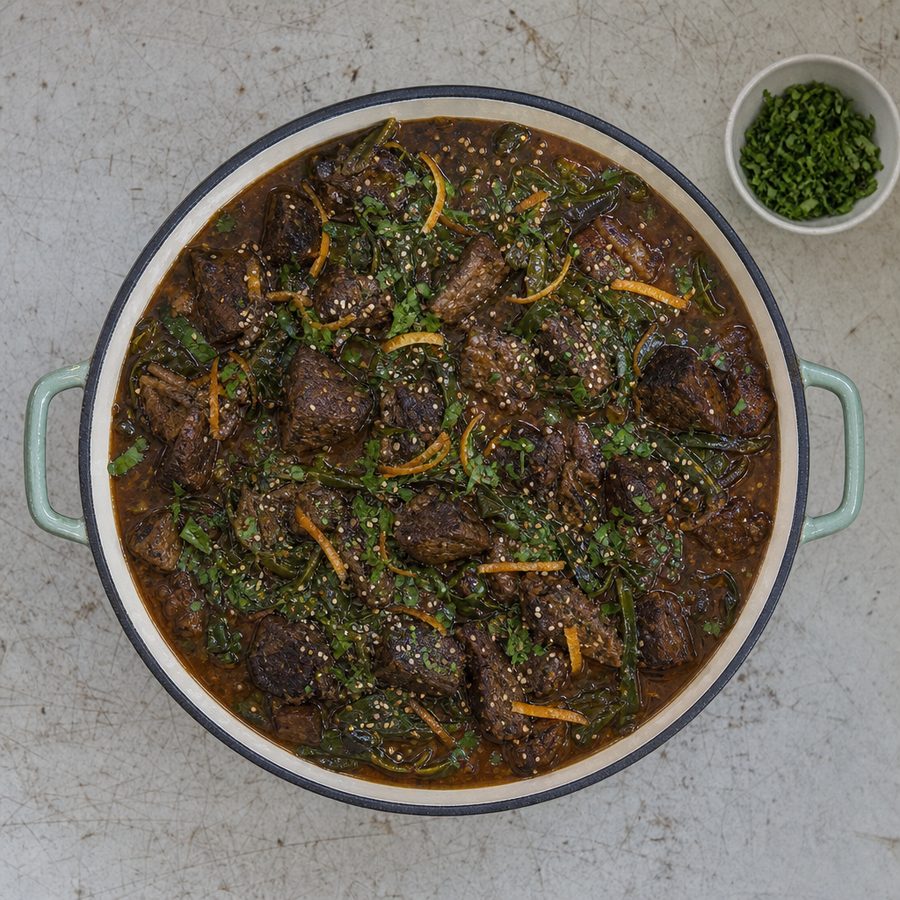
Cubes of bison braised slowly with cumin, orange, and smoked paprika, then finished with a heap of collard ribbons stirred into the sauce and toasted sesame over the top.
Why You'll Love This Recipe
I make this on a Sunday when I want the house to smell of cumin and orange for the rest of the afternoon. Bison is a good animal for a long braise because it takes spice beautifully and comes out tender without going greasy, so the sauce stays clear and savory rather than turning into something you have to skim. The cooking is nearly all waiting. Twenty minutes of chopping and browning, then two hours in a low oven while you do something else entirely. It feeds four generously and I have never had any of it left over.
The spices go into the hot fat before any liquid, which is the step that decides how this tastes. Cumin and coriander bloom in oil and turn nutty and fragrant, cinnamon rounds them off, and smoked paprika brings a low smokiness that sits under everything. Orange is the other half of the flavor. The juice goes in early and cooks down into the sauce, and the wide strips of zest release their oil slowly over the whole braise. Collards go in only for the last twenty minutes, so they soften into the sauce and pick up its flavor while still tasting like a green vegetable.
A deep, spiced, faintly sweet pot of meat with a real pile of greens folded through it, which is the reason I built it this way rather than serving the greens alongside. The collards drink up the sauce. Every forkful has meat, greens, and a little of the orange in it. The sesame on top is not decoration either. Toasted seeds against soft braised meat give you something to bite, and they keep the last few spoonfuls as interesting as the first.
Ingredients
- 1 1/4 lb bison chuck or stew meat, cut into 1 1/2-inch cubes
- 2 large bunches collard greens (about 1 1/4 lb trimmed), stems stripped and leaves cut into wide ribbons
- 1 large yellow onion, halved and sliced
- 5 garlic cloves, sliced thin
- 3 tbsp tomato paste
- 3/4 cup canned crushed tomatoes
- 1 orange, zest peeled off in wide strips and the fruit juiced
- 1 tbsp ground cumin
- 2 tsp ground coriander
- 1/2 tsp ground cinnamon
- 2 tsp smoked paprika
- 1 1/2 cups beef broth
- 2 tbsp olive oil
- 3 tbsp sesame seeds, toasted
- 1/3 tsp fine sea salt
- 3/4 tsp coarsely ground black pepper
Instructions
- Brown the bison: Pat the cubes dry and season them with the salt and pepper. Heat the olive oil in a heavy Dutch oven over medium-high until it shimmers, then add the meat in a single layer with space between the pieces. Leave them alone for three to four minutes until a dark crust forms, turn once, and brown the second side. Work in two batches if the pot is crowded, and move the meat to a plate.
- Soften the onion and bloom the spices: Lower the heat to medium and add the onion to the fat left behind. Cook for six to eight minutes, scraping up the brown bits, until it is soft and starting to color. Add the garlic, cumin, coriander, cinnamon, and smoked paprika and stir for about sixty seconds. The spices will smell toasted and the pot will look almost dry, which is exactly what you want before the liquid goes in.
- Build the braise: Stir in the tomato paste and cook it for two minutes until it darkens from red to brick. Add the crushed tomatoes, the orange juice, the strips of zest, and the broth, and scrape the bottom of the pot clean. Return the bison with any juices on the plate. The liquid should come about two thirds of the way up the meat.
- Braise low and slow: Bring it to a bare simmer, cover, and slide it into a 315°F oven for two hours. Check once at the ninety minute mark. It is ready when a cube gives way completely under the side of a spoon and the sauce has thickened enough to coat the back of it. If the sauce still looks thin, uncover the pot for the last twenty minutes.
- Fold in the collards: Pull out and discard the orange zest strips. Add the collard ribbons in handfuls, stirring each one down into the hot sauce before the next goes in. Cover and cook on the stovetop over low heat for fifteen to twenty minutes, until the leaves are tender but still deep green and the sauce has taken on their color.
- Toast the sesame and serve: Put the sesame seeds in a dry skillet over medium heat and shake the pan constantly for two to three minutes, until they are golden and beginning to pop. Tip them straight out of the pan so they stop cooking. Taste the braise, adjust the salt, and scatter the seeds over each bowl at the table so they stay crisp.
Variations
- Preserved lemon: Swap the orange juice for the chopped rind of half a preserved lemon added at the end, which makes the whole pot sharper and saltier.
- With dates: Drop four chopped dates in with the broth for a rounder, sweeter sauce that leans toward a tagine.
- Mustard greens: Use mustard greens in place of the collards for a peppery bite, and give them only eight to ten minutes since they wilt much faster.
- Hotter: Add half a teaspoon of cayenne with the other spices, or a whole dried chile that you fish out with the orange zest.
- Venison: Cubed venison shoulder braises on the same timing and gives the pot a darker, more mineral flavor.
Storage & Leftovers
This keeps five days in a sealed container in the refrigerator and it improves on day two. The spices settle into the meat overnight and the sauce thickens as it cools, so what looks stiff in the container loosens right back up over heat. Store the toasted sesame separately in a jar at room temperature.
Reheat it gently in a covered saucepan over low heat with a splash of broth or water, stirring now and then, for about ten minutes. High heat tightens the meat and dulls the collards. If you are doing a single bowl, the microwave at half power in two-minute bursts works well enough, stirred between each one.
It freezes for three months and is one of the better things to have in a freezer. Cool it completely, portion it flat in sealed bags, and thaw overnight in the refrigerator. Toast fresh sesame when you reheat, since seeds lose their crackle after a spell in the freezer.
Notes & Tips
- Dry the meat before it hits the pan: Wet cubes steam rather than sear and you lose the dark crust that colors the whole sauce. Two minutes with a paper towel is all it takes.
- Peel the zest, do not grate it: Wide strips taken off with a vegetable peeler release oil slowly across two hours and pull out cleanly at the end. Grated zest disappears into the sauce and turns bitter.
- Bloom the spices in fat: Ground cumin and coriander stirred into liquid taste dusty. Sixty seconds in hot oil is the difference between a spiced braise and a gritty one.
- Add the collards in handfuls: A whole pound of leaves dumped in at once sits on top and steams unevenly. Push each handful under the sauce before the next goes in.
- Keep the oven low: At 315°F the meat relaxes. Much above that and the outside of each cube tightens before the middle has a chance to give way.
- Toast sesame in a dry pan: No oil, constant motion, and out of the pan the second they turn gold. They carry on cooking in a hot skillet and go bitter fast.
Nutrition & Mindful Eating
- The bison, the collards, and the spice base each do something the others cannot. The meat gives the pot its body and nearly all of its protein, the greens fold in a real amount of calcium and fiber, and the cumin, coriander, and orange keep something this rich from ever tasting heavy.
- Bison is a close-grained meat with a clean, faintly sweet flavor, and it carries iron in the form your body takes up most readily along with the B12 that red meat supplies.
- Collard greens are sturdy enough to hold their texture through twenty minutes in a hot sauce, and they are one of the better plant sources of calcium, which your body absorbs from them unusually well.
- Ground cumin and coriander bloomed in oil are what you smell first when the lid comes off, and cumin quietly brings its own calcium and iron along with all that fragrance.
- Sesame seeds toasted in a dry pan land crisp against the soft meat, and seeds this small are dense in calcium, which is why a few spoonfuls over the top are worth the extra pan.
- As you eat, notice how the orange comes through after the cumin rather than with it, and let the slowness of a dish that took two hours set the pace you eat it at.
Frequently Asked Questions
Can I use beef in place of the bison?
Yes. Beef chuck cut the same size behaves almost identically and needs the same two hours. It carries more fat than bison does, so skim the surface of the sauce before the collards go in, and taste for salt at the end since chuck can take a little more.
My collards are still tough. What went wrong?
Usually the stems. The thick center rib runs most of the way up the leaf and never softens on the same schedule as the rest, so strip it out by folding the leaf in half and running a knife along the spine. Older, larger leaves also want the full twenty minutes rather than fifteen.
Can I make it in a slow cooker?
Brown the meat and bloom the spices in a skillet first, because that step is where most of the flavor lives, then transfer everything to the slow cooker and give it six hours on low. Stir the collards in for the last forty minutes with the lid on.
What do you serve with it?
It has meat and a great deal of greens already, so it does not want much company. A spoonful of cooked millet or barley in the bottom of the bowl catches the sauce nicely, and so does a piece of roasted squash if you have one in the oven anyway.