
Cheesy Black Bean & Quinoa Stuffed Peppers
Bell peppers stuffed with quinoa, black beans, and tomato, a high-fiber, plant-forward dinner that's hearty, colorful, and easily made vegan.
Why You'll Love This Recipe
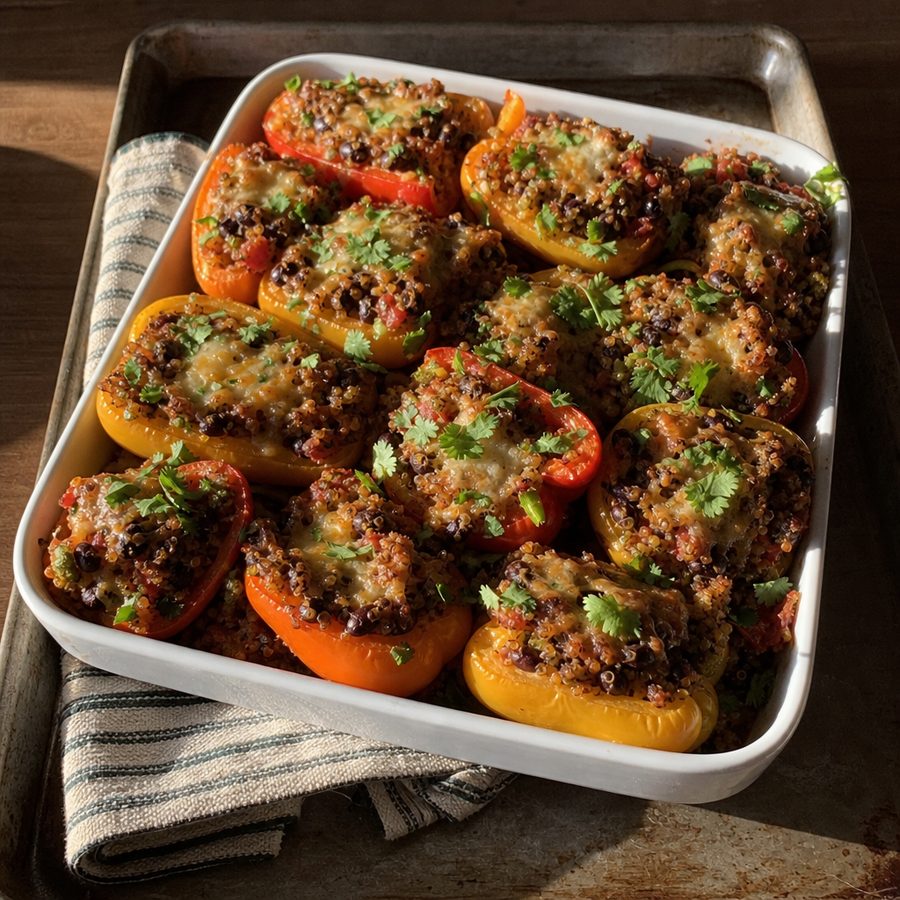
Halved bell peppers filled with quinoa, black beans, and tomato, then baked until the walls slump and give a little and the cheese on top browns in patches. It is a whole dinner served in its own bowl, which is most of the appeal: a grain, a bean, a vegetable, and something browned on top, all in one piece you lift onto a plate. The filling is finished on the stove before it goes anywhere near the oven, so the bake is only doing two jobs, softening the pepper and browning the top.
Cook the quinoa first and let it cool before it goes into the filling. This is the one piece of timing that decides how the finished peppers eat. Warm quinoa carries on steaming once it is packed into a pepper and covered with foil, and the filling turns loose and wet around it. Cooled quinoa has already absorbed what it is going to absorb, so it holds its shape, takes on the tomato and the spices instead of releasing water into them, and the halves cut cleanly on the plate. Leftover quinoa straight from the refrigerator is perfect here.
Beans and quinoa between them cover the protein, and there is plenty of fiber from the peppers and the beans. Two halves make a full dinner and one makes a solid lunch, so a tray of them covers more than one meal without any further work. They reheat well in a hot oven, which brings back the browned top a microwave flattens. Leave the cheddar off and it is fully plant-based, like our Creamy Saag Tofu Bowl.
Ingredients
- 4 large bell peppers, halved and seeded
- 1 1/2 cups cooked quinoa
- 1 can (15 oz) black beans, drained and rinsed
- 3/4 cup crushed tomatoes
- 1/2 small onion, diced
- 2 cloves garlic, minced
- 1/2 cup shredded cheddar (optional)
- 1 tbsp olive oil
- 1 tsp cumin
- 1 tsp chili powder
- 1/2 tsp fine sea salt
- cilantro
Instructions
- Heat the oven and set the halves so they sit flat: Heat the oven to 400°F (200°C). Halve the peppers through the stem, pull out the seeds and the pale ribs inside, and set them cut side up in a baking dish. Halves want to tip and pour their filling out, so trim a thin sliver off the rounded side of any that rock, or choose a dish just big enough that they hold each other upright. A dish that is too large is the usual reason a batch ends up on its side.
- Build the filling in the skillet and bloom the spices: Warm the olive oil in a skillet over medium heat and cook the diced onion for about four minutes, until it turns translucent at the edges. Add the garlic, cumin, and chili powder and stir for thirty seconds, no longer, because ground spices need hot oil to release their flavor and they scorch and turn bitter not long after that. Stir in the cooled quinoa, the drained black beans, the crushed tomatoes, and the salt, and let it cook another two minutes until the mixture looks glossy rather than wet.
- Taste the filling before it goes into the peppers: This is the last moment you can fix the seasoning. Once the filling is packed into eight halves and covered with foil, anything you add lands on the surface and stays there. Taste it now: more salt if the beans read flat, more cumin if it wants warmth, a squeeze of lime if it feels heavy. Aim for a filling that tastes slightly bolder in the pan than you want the finished dish to be, because the peppers themselves go in sweet and unseasoned and will pull it back.
- Pack them full and press the filling down: Spoon the filling into the halves and press it down with the back of the spoon as you go, so no air pockets run through the middle. Mound it slightly above the rim, because the filling settles as it bakes and a level fill looks sunken by the time it comes out. Scatter the cheddar over the top last if you are using it, keeping it on the filling rather than the pepper rim, where it slides off and browns onto the dish instead.
- Foil first, then bare, and test the wall: Cover the dish with foil and bake for twenty-five minutes, then uncover it and bake ten to fifteen minutes more. The foil traps steam and that is what makes the peppers tender; the uncovered stretch is what browns the cheese, and skipping either one costs you half of what makes this good. They are ready when the tip of a knife slides through the pepper wall with no resistance and the edges have started to char and pull away from the filling. Scatter the cilantro after they come out of the oven, not before.
Variations
- Make it vegan: Leave the cheddar off or use a plant-based shred. The filling itself has no dairy in it, so nothing else has to change.
- Add more protein: Brown a little ground turkey or beef and fold it into the filling, or add a second can of beans to keep it meatless.
- Lower carb: Swap the quinoa for cauliflower rice or extra chopped vegetables to lighten the carbohydrate load.
- Add more vegetables: Stir corn, diced zucchini, or chopped spinach into the filling before you spoon it into the peppers.
- Change the grain: Cooked brown rice or millet stands in for the quinoa cup for cup. Both are a little softer, so the filling holds together less tightly.
Storage & Leftovers
Refrigerate leftovers in an airtight container for up to four days. Let the peppers cool before you put the lid on, because trapped steam collects in the bottom of the container and the walls sit in it and go slack overnight. Store them upright in a single layer if you have the room, since a pepper with another pepper on top of it arrives at lunch with no shape left.
Reheat them in a 375°F (190°C) oven for about fifteen minutes rather than in the microwave. A microwave heats the water in the pepper first, which finishes the softening the oven started and leaves the walls limp, while dry heat firms the filling back up and gives the cheese a second chance to brown. Tent them loosely with foil for the first ten minutes so the filling does not dry out at the edges.
They freeze better before baking than after. Assemble the halves, wrap them individually, and freeze for up to two months, then thaw overnight in the refrigerator and bake as written with an extra five minutes under the foil. Peppers that were baked, frozen, and then reheated come back softer than most people want, although the filling on its own freezes without complaint and is worth a container of its own.
Notes & Tips
- Rinse canned beans: Drain and rinse canned beans well to cut sodium and give them a cleaner taste and better texture.
- Rinse the quinoa: Give quinoa a quick rinse before cooking to wash off its natural coating and any bitterness.
- Steady the peppers: Halves want to tip and spill. Trim a thin sliver off the rounded side so they sit flat, or pack them against each other in a snug dish.
- Cover, then uncover: The foil steams the peppers tender and the uncovered stretch is what browns the top. Skipping either step costs you one of the two.
- Pre-bake for softer peppers: If you like them very tender, roast the empty halves for ten minutes before filling them.
- Flexible swap: No onion? You can leave it out, or swap in a little chopped celery or chives.
Nutrition & Mindful Eating
- Quinoa and black beans together cover the full range of amino acids, and the tomato, onion and garlic cooked through them keep the filling savory and loose rather than dense. That pairing is what makes one pepper eat like a whole dinner.
- The pepper is the dish here rather than a container for it. Roasting turns it softer and sweeter than it is raw, and it stays one of the richest vegetable sources of vitamin C even after its time in the oven.
- Quinoa cooks into small round grains that keep a slight pop, so the filling never turns to paste. It is a complete plant protein and brings fiber and magnesium into the middle of the pepper.
- Black beans give the filling its weight and go creamy at the edges as they warm through, and the soluble fiber they carry is a good part of why a stuffed pepper sits with you.
- Cheddar melts across the top and blisters where it meets the heat, and underneath it the onion and garlic softened in olive oil give the filling its savory base. That browned cheese edge is the first thing most people go for.
- As you eat, notice how the roasted pepper gives way against the grain of the quinoa and the softness of the beans, and take the plate slowly enough to tell when you are comfortably full.
Frequently Asked Questions
Are stuffed peppers healthy?
Yes, built on quinoa, beans, and vegetables, they're high in fiber and plant protein and naturally satisfying, especially without a lot of added cheese.
Can I make them vegan?
Easily, just leave out the cheddar or use a plant-based cheese.
Can I prep them ahead?
Yes, assemble the stuffed peppers, refrigerate, and bake when you're ready; they also freeze well.
How long does it keep?
Four days, cooled first and covered. Reheat in a hot oven rather than the microwave; a stuffed pepper that has been microwaved gives up its water and the walls go slack, while dry heat firms the filling and re-browns the cheese on top.