
Black-Eyed Pea and Collard Skillet with Eggs and Toasted Sesame
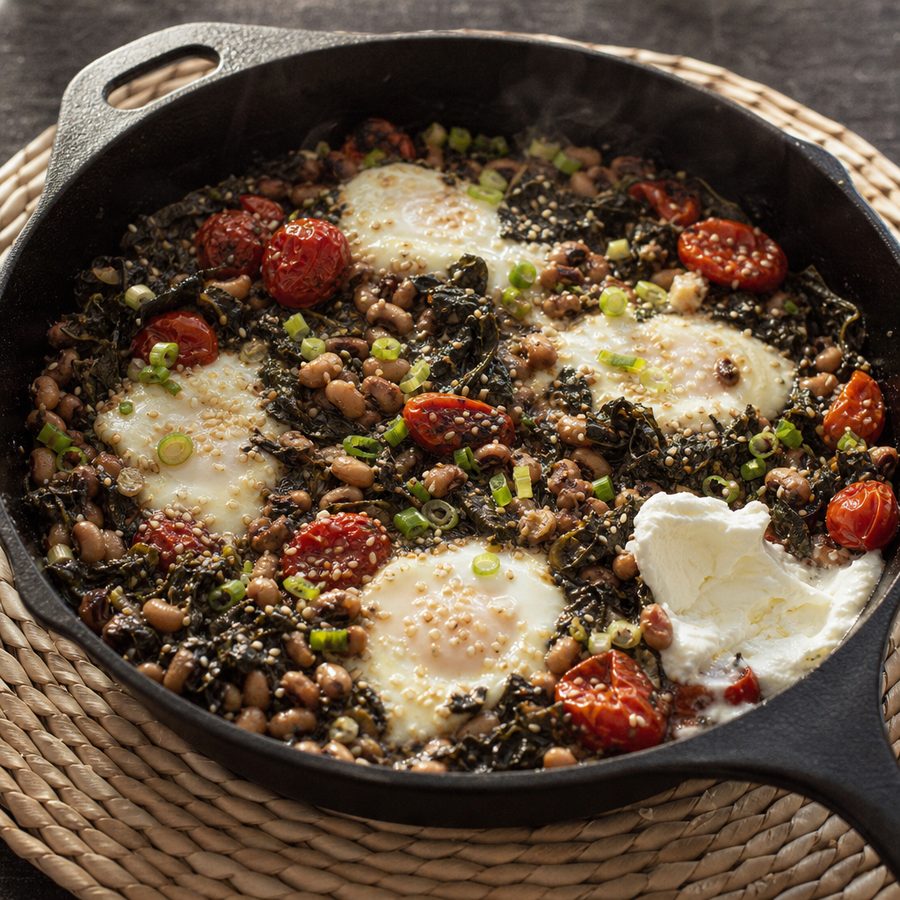
Collard ribbons wilted into smoky onions with black-eyed peas and burst cherry tomatoes, eggs cooked in wells in the same pan, finished with toasted sesame and a cool spoon of skyr.
Why You'll Love This Recipe
Peas and greens is an old pairing and it belongs at breakfast as much as anywhere else, which is something I came to late. What changed my mind was cooking the collards fast rather than long. Sliced into narrow ribbons they go tender in six or seven minutes in a hot pan, and they keep their color and a bit of chew rather than collapsing into the gray, salty softness of an all-afternoon pot. The peas come from a can, warmed through at the end, and the whole skillet is on the table in under thirty minutes.
It tastes smoky and sharp, and the sharpness is what keeps you eating it. Smoked paprika and a little cayenne go in with the onion, cider vinegar hits the greens partway through, and the halved tomatoes burst and sweeten everything they touch. The eggs cook in wells you press into the greens, so the whites set against hot collards and pick up the flavor of the pan. Toasted sesame is the last thing to go on, and that nutty crackle against the soft greens is the reason I now toast a spoonful for almost every pan of vegetables.
I cook this on Sunday mornings when the refrigerator is thin and there is still half a bunch of collards in the drawer, and on weeknights when nobody wants to think about dinner. It reheats well as long as you leave the eggs out of the leftovers, so I sometimes cook the greens and peas ahead and crack fresh eggs into a reheated pan the next morning. The skyr goes on cold, straight from the tub, and the contrast between that cool spoonful and the hot smoky greens is most of the pleasure.
Ingredients
- 1 (15 oz) can black-eyed peas, drained and rinsed
- 1 large bunch collard greens (about 12 oz), thick ribs cut out and leaves rolled and sliced into 1/2-inch ribbons
- 4 large eggs
- 1 1/4 cups plain skyr
- 1 1/2 cups cherry tomatoes, halved
- 1 medium yellow onion, halved and sliced thin
- 3 1/2 tbsp sesame seeds
- 4 garlic cloves, sliced
- 1 tsp smoked paprika
- 1/8 tsp cayenne
- 1 1/2 tbsp cider vinegar
- 1 1/2 tbsp olive oil
- 3 scallions, thinly sliced
- 1/8 tsp fine sea salt
Instructions
- Prepare the greens: Stack the collard leaves a few at a time, fold each in half along the rib, and cut the thick stem away. Roll the leaves into a tight cigar and slice across into half-inch ribbons. Wash and spin them dry, since wet leaves will steam and stay dull green when they hit the pan.
- Toast the sesame seeds: Put the sesame seeds in a small dry pan over medium heat and shake it constantly for two minutes, until they smell nutty and a few of them jump. Tip them onto a plate straight away. Left in a hot pan they go from golden to bitter faster than you can turn around.
- Build the base: Set a twelve-inch skillet over medium-high with the olive oil. Add the onion and cook four minutes, stirring now and then, until the edges are browned. Stir in the garlic, smoked paprika, and cayenne and cook thirty seconds, until the pan smells sweet and smoky and the paprika has darkened slightly.
- Wilt the collards and warm the peas: Add the collards in three handfuls with the salt, tossing between each so they have room to fall. Cook six to seven minutes, pressing them down against the metal, until the ribbons are glossy, deep green, and tender with a little chew left. Add the vinegar and let it sizzle away, then fold in the black-eyed peas and the halved tomatoes and cook two minutes more, until the tomatoes have started to slump.
- Cook the eggs in the greens: Press four wells into the greens with the back of a spoon and crack an egg into each. Cover the pan, lower the heat to medium, and cook six to eight minutes, until the whites are firm all the way to the yolk and the yolks have set through. Scatter the sesame seeds and scallions over the top and put a spoonful of cold skyr on each serving at the table.
Variations
- With crisped tempeh: Brown eight ounces of crumbled tempeh in the oil before the onion, then set it aside and fold it back in with the peas for a smokier, chewier pan.
- Mustard greens: Use mustard greens for a peppery version that needs a minute less in the pan and takes well to an extra splash of vinegar.
- Sweet potato underneath: Add two cups of small-diced sweet potato at the start with a lid on for eight minutes, which turns this into a heavier cold-weather skillet.
- Tomato-free winter version: Leave out the cherry tomatoes and add a diced apple with the collards, so the sweetness comes through softer and rounder.
Storage & Leftovers
Greens and peas keep four days sealed in the refrigerator and are worth making on purpose for the leftovers, since the smoke and the vinegar settle into the collards overnight. Cooked eggs are the weak part of any leftover skillet, so lift them out and eat them the day they are made.
Reheat the greens and peas in a skillet over medium heat with a splash of water, three or four minutes, then press in fresh wells and cook new eggs. That gives you a second breakfast in about ten minutes. Add the sesame after reheating rather than before, since it softens once it sits in a warm pan.
The greens and peas freeze for three months in flat sealed portions. Thaw overnight in the refrigerator and reheat in a pan. Freeze the tomatoes along with them and expect them to break down completely, which turns the second version saucier and is no bad thing on a cold morning.
Notes & Tips
- Cut the ribs out properly: Collard stems stay tough long after the leaves are tender. Fold each leaf and run a knife up the side of the rib, and the greens will cook evenly in seven minutes.
- Dry the leaves: Water clinging to washed collards drops the pan temperature and steams them. A salad spinner or a few minutes on a towel is the difference between glossy and dull.
- Add vinegar to a hot pan: Splashed onto the greens while the pan is still ripping, the sharpness cooks down into them. Added at the table it sits on top and tastes like a separate ingredient.
- Make real wells for the eggs: Press all the way to the metal with the back of a spoon so the whites have something to hold them. Eggs cracked onto a heap of greens slide sideways and cook unevenly.
- Toast sesame seeds before anything else: They need a clean, dry, moderate pan and two minutes of your attention. Doing it first means the skillet is free later and the seeds are cool and crisp when they go on.
Nutrition & Mindful Eating
- Collards, black-eyed peas, and eggs work together in one pan. The greens give the dish its body and bulk, the peas bring fiber and a creamy starchiness, and the eggs sit in the middle of it all with the protein that turns a pan of vegetables into breakfast.
- Collard greens are the calcium in this skillet, and the form in the leaf is absorbed unusually well. Cut into ribbons and cooked hot and fast, they hold their color and their chew, which is why this tastes green rather than muted.
- Black-eyed peas cook up creamy and mild, and they carry both fiber and iron. The cider vinegar going into the pan with them is doing more than sharpening the greens, since acid alongside plant iron helps your body take more of it up.
- Sesame seeds toasted in a dry pan bring the nutty crackle that runs through every bite, and seed for seed they are one of the richest calcium sources in the kitchen. A few tablespoons scattered over the top changes the texture of the whole skillet.
- Skyr goes on cold at the table, thick and tangy against the smoke, and it adds a quiet layer of protein and calcium to a dish that is already carrying plenty of both. A spoonful is enough to cool the cayenne without softening the flavor.
- As you eat, notice how the cold skyr changes the smoke and the pepper as it melts into the greens, and give yourself long enough at the table to feel the meal settle before you get up.
Frequently Asked Questions
Can I use frozen collards?
You can, and they save you the slicing. Add them straight from the freezer and give them nine or ten minutes so the water cooks off, otherwise the pan goes soupy and the eggs will not sit in their wells.
Are dried black-eyed peas better here?
They are excellent, though they take an hour and put this outside a weekday morning. If you have cooked peas in the refrigerator or the freezer, use a cup and a half of them and add a pinch more salt, since canned peas come already seasoned.
What if my eggs are still wobbly after eight minutes?
Cover the pan and give them two or three more minutes over gentle heat. A wide skillet loses heat every time the lid comes off, and eggs straight from a cold refrigerator run slower than eggs that have sat out for a bit.
Can I skip the skyr?
The skillet stands on its own, but the cold spoonful against the smoky greens is worth keeping if you have any in the refrigerator. Greek yogurt does the same job, and either one wants to go on at the table rather than in the pan.