
Black-Eyed Pea and Collard Green Stew
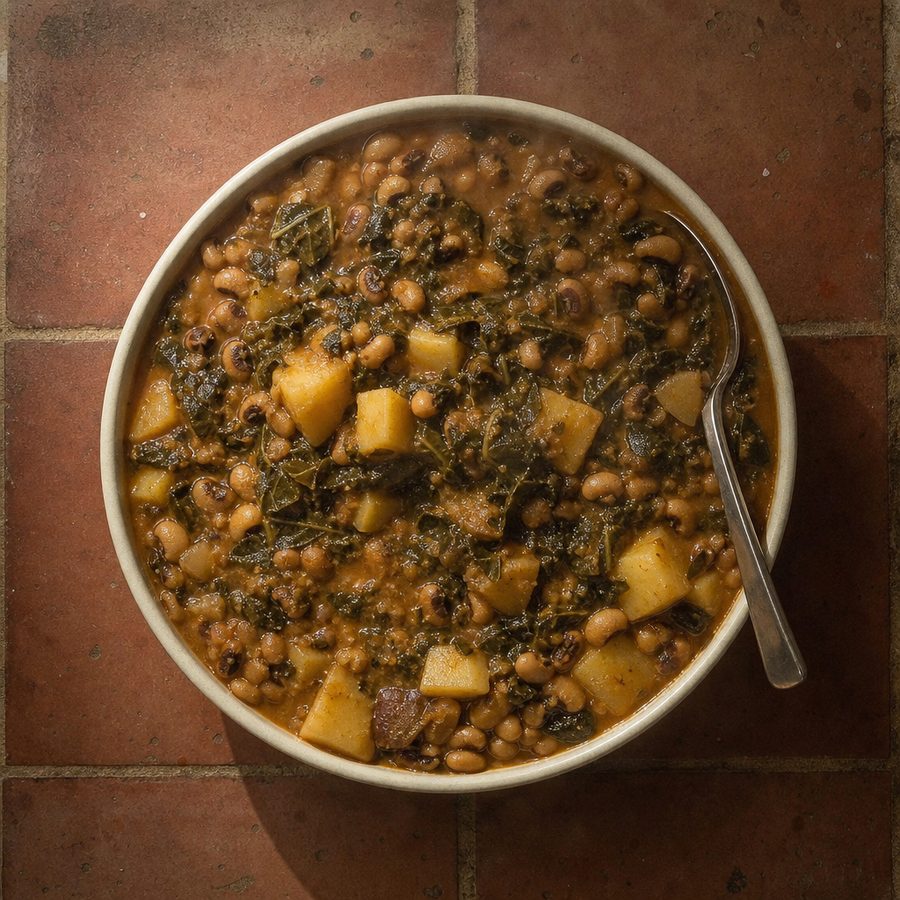
A thick stovetop stew of black-eyed peas, collard greens and yukon gold potatoes, built on smoked paprika and finished with a splash of cider vinegar.
Why You'll Love This Recipe
When the weather turns, dinner should take care of itself. It simmers away while you do something else, it gets better every day it sits in the refrigerator, and it costs almost nothing to put together. Serve it in wide, shallow bowls with a spoon and it is a full dinner on its own, though a piece of cornbread on the side is never a mistake and is what I grew up putting next to it.
The flavor here comes from two moves. Smoked paprika bloomed in the hot oil at the start lays a deep, savory base under everything, the kind of smoky bottom note a long simmered pot of collards lives on. Then cider vinegar goes in at the very end, off the heat, and lifts the whole pot. Greens and vinegar belong together, and the potatoes soak up both of them.
What makes this eat like dinner rather than a side dish is the combination of peas and potatoes. The black-eyed peas hold their shape and bring the protein, the potatoes break down slightly at the edges and thicken the broth around them, and the collards give up their toughness and go silky. You get three textures in a single spoonful, and a bowl of it holds you well into the evening.
Ingredients
- 3.5 cups black-eyed peas (two 15-oz cans, drained and rinsed)
- 12 oz collard greens, stems removed and leaves cut into ribbons
- 1.25 lb yukon gold potatoes, scrubbed and cut into 3/4-inch cubes
- 1 cup crushed tomatoes
- 1.5 cups vegetable broth
- 1 large onion, diced
- 2 stalks celery, diced
- 1 red bell pepper, seeded and diced
- 5 cloves garlic, minced
- 3 tbsp olive oil
- 1 3/4 tsp smoked paprika
- 1 tbsp chopped fresh thyme leaves
- 2 bay leaves
- 1 tbsp apple cider vinegar, plus more to taste
- 1/4 tsp salt
- 1/2 tsp freshly ground black pepper
Instructions
- Build the base: Warm the olive oil in a large heavy pot over medium heat. Add the onion, celery and bell pepper with a pinch of the salt and cook 8 to 10 minutes, stirring occasionally, until the onion is translucent and the pepper has softened at the edges. Take your time here, because this is where the sweetness in the finished pot comes from.
- Bloom the paprika: Add the garlic and cook 1 minute, until fragrant. Add the smoked paprika, thyme and black pepper and stir constantly for about 30 seconds; the paprika should darken and smell toasty. If the pot looks dry, add another teaspoon of oil, since paprika scorches quickly on bare metal.
- Add the tomatoes and potatoes: Stir in the crushed tomatoes and cook 3 to 4 minutes, until the mixture thickens and pulls away from the bottom of the pot. Add the potatoes, the bay leaves, the broth and 1.5 cups of water. Bring to a boil, then lower the heat to a steady simmer.
- Simmer the potatoes: Cook uncovered 15 to 18 minutes, until a cube of potato gives way easily under the back of a spoon. Press three or four cubes against the side of the pot and stir them back in; that released starch is what thickens the stew.
- Add the peas and collards: Stir in the black-eyed peas, then add the collard ribbons a large handful at a time, letting each addition wilt down before the next goes in. Simmer 20 to 25 minutes more, until the leaves are dark and tender enough to cut with the side of a spoon and the stew has thickened around them. Collards are sturdier than most greens and want the full time, so taste a ribbon before you call it done.
- Finish and rest: Take the pot off the heat, fish out the bay leaves, and stir in the cider vinegar and the rest of the salt. Taste, then add more vinegar a teaspoon at a time until the stew reads bright rather than flat. Let it sit 10 minutes before serving, since it thickens noticeably as it rests.
Variations
- Slow cooker: Build the base in a skillet, move everything to a slow cooker on low for six hours, and stir the collards in for the last hour.
- Smoky heat: Add a teaspoon of chipotle powder along with the smoked paprika for a pot with real heat behind the smoke.
- Okra version: Stir in two cups of sliced okra with the greens, which thickens the broth and pulls the stew further south.
- Sweet potato swap: Use sweet potatoes in place of the yukon golds for a sweeter pot that plays against the vinegar.
- Tomato-forward: Double the crushed tomatoes and halve the broth for a redder, brighter stew.
Storage & Leftovers
This is a stew that improves for three days. The vinegar works its way through the collards and the potato starch keeps setting up, so by the second day it is thick enough to stand a spoon in. Covered, it keeps five days in the refrigerator.
It freezes better than most vegetable stews, up to three months. Potatoes can turn slightly grainy on thawing, so if you know a batch is headed for the freezer, cut them a little larger and pull them a few minutes early. Thaw overnight in the refrigerator and reheat gently.
Reheat on the stove over medium-low with a splash of water or broth, since the stew tightens considerably in the cold. Taste for vinegar again before serving, because acid dulls in storage, and half a teaspoon stirred in at the end makes a reheated bowl taste freshly made.
Notes & Tips
- Strip the thick stems: Collard stems are woody all the way up, so fold each leaf along its rib and pull the stem away rather than trying to cook it tender.
- Stack and roll the leaves: Pile the trimmed leaves, roll them into a cigar and cut across into ribbons, which is the fastest way to get pieces that cook at the same rate.
- Add the greens in stages: A whole bunch at once will not fit in the pot, while a handful at a time wilts in seconds and makes room for the next.
- Mash a few potatoes: Pressing three or four cubes against the side of the pot releases starch and is the easiest way to thicken any stew.
- Vinegar goes in off the heat: Simmering vinegar cooks away the very brightness you added it for, so stir it in once the pot is off the burner.
- Rest before serving: Ten minutes off the heat lets the starch set and the collards drink up the broth, and the stew tastes noticeably rounder for it.
Nutrition & Mindful Eating
- The peas, the collards and the potatoes each carry a different part of this stew. The black-eyed peas bring protein and structure, the greens bring color and a deep mineral edge, and the potatoes break down at their corners into the thickness that makes it a stew rather than a soup.
- Black-eyed peas cook softer than most beans while still holding their shape, which is exactly what a long simmer needs. They carry a good amount of folate, and their fiber is part of why a bowl of this sits with you well into the evening.
- Collard greens are broad and leathery in the bunch and need the full simmer to give way, and once they do they turn glossy and mild with a faint cabbage sweetness. Cooking a whole bunch down to a few ribbons is the easiest way to eat that much of a green that carries this much calcium and vitamin K.
- Smoked paprika bloomed in oil at the start is what you taste first, and the cider vinegar stirred in off the heat is what you taste last. Between them, the thyme and bay leaves hold a savory line through the middle of every spoonful.
- A bowl of this holds you for a long stretch. The peas and the potato starch are doing most of that work together, and the olive oil carried through the whole pot is what makes the stew eat rich rather than thin.
- As you eat, notice how completely the collards have given way and how the vinegar arrives at the back of each spoonful, and give yourself the length of the bowl before deciding whether you want more.
Frequently Asked Questions
Can I use a different green?
Yes, but adjust the time. Kale wants about ten minutes and holds its texture well, swiss chard cooks faster still so add it in the last five minutes, and turnip greens behave almost like the collards do here. Whatever you use, strip the tough center ribs and cut the leaves into ribbons so they cook evenly.
My stew came out watery. How do I thicken it?
Simmer it another ten minutes with the lid off and mash a few more potato cubes against the side of the pot. Starch is the thickener in this recipe. If you are in a hurry, scoop out a cup of the stew, blend it smooth and stir it back in.
Can I make this in advance for the week?
It is one of the better recipes for that. Make the full pot, cool it, and portion it into containers. Hold back a little of the vinegar and add it to each bowl as you reheat, which keeps the flavor sharp rather than muted.
Is one bowl enough for dinner?
For most people, yes. The peas and potatoes together are what make it substantial, and it is thick enough to eat with a fork if you want to. If you need it to go further, spoon it over cooked brown rice or millet, which also soak up the broth.