
Black Pepper Tempeh Stir-Fry with Napa Cabbage and Snow Peas
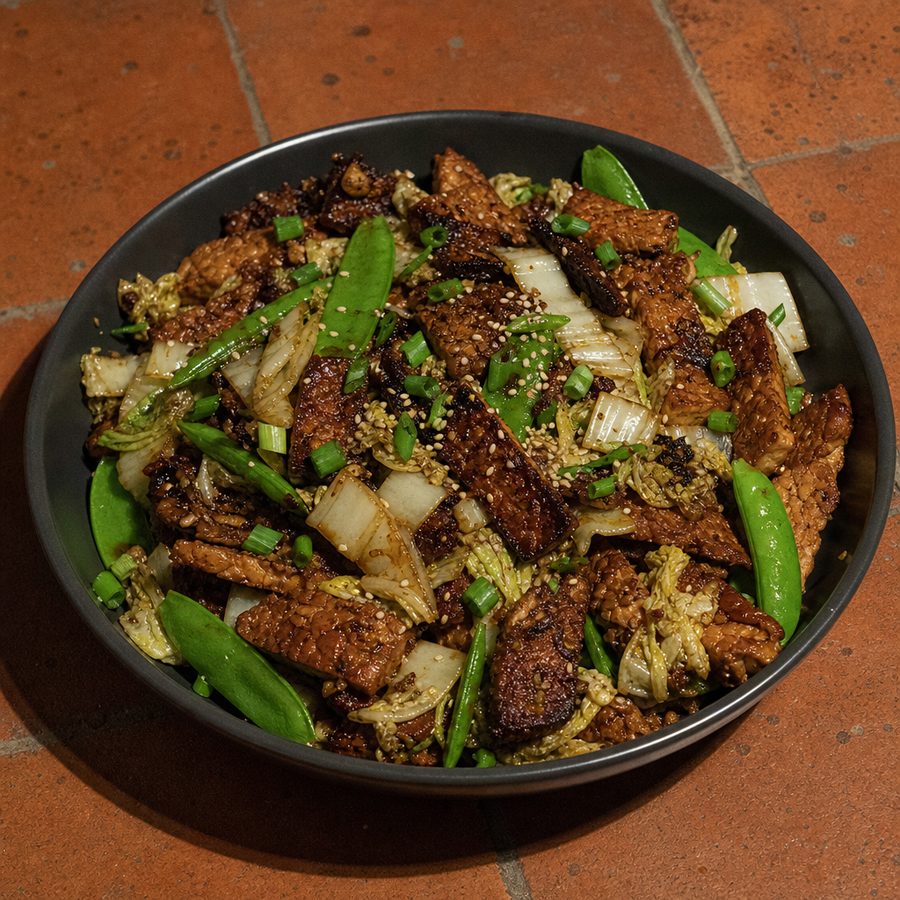
Tempeh seared hard in a wok with cracked black pepper, ginger, and garlic, tossed with wilted napa cabbage, snap-crisp snow peas, and toasted sesame.
Why You'll Love This Recipe
This is the fastest real dinner I know how to make, and it is the one I turn to when I have twenty minutes and no interest in turning the oven on. Everything is cut before anything is cooked, which is the whole discipline of a stir-fry, and after that the cooking takes about eight minutes of standing at the stove. I build it on tempeh because it takes hard heat better than almost anything else in the refrigerator: the slabs go genuinely brown, they stay firm in the sauce, and they carry the pepper the way a piece of meat would.
Black pepper is the flavor here, not a background seasoning, and cracking it coarsely rather than grinding it fine is what makes that possible. Coarse pepper toasted in oil for fifteen seconds turns floral and warm rather than merely hot, and it clings to the tempeh. The sauce is three things stirred in a cup, soy sauce, cider vinegar, and a little maple, and it goes in at the very end where it reduces onto the food in about thirty seconds. Napa cabbage wilts faster than any other cabbage, so it goes in after the snow peas rather than before.
The pleasure of this plate is the contrast in it. Tempeh is dense and chewy, the cabbage goes soft and slippery, the snow peas snap, and the sesame seeds give a last bit of crunch on top. It is savory and peppery and just barely sweet, and it eats as a full dinner straight out of the wok. I sometimes put it over brown rice when I am feeding people who have been outside all day, but most nights it does not need anything under it.
Ingredients
- Two 10-oz blocks tempeh, cut into 1/4-inch slabs and then into 1-inch squares
- 1/2 head napa cabbage (about 14 oz), cut crosswise into 1-inch ribbons
- 7 oz snow peas, strings pulled
- 1 red bell pepper, cut into thin strips
- 6 scallions, cut into 2-inch lengths, whites and greens separated
- 2 tbsp finely minced fresh ginger
- 4 cloves garlic, minced
- 2 tsp coarsely cracked black pepper
- 2 tbsp soy sauce
- 1 tbsp cider vinegar
- 1 1/2 tsp maple syrup
- 2 tsp avocado oil
- 2 tsp toasted sesame oil
- 2 1/2 tbsp sesame seeds, toasted
Instructions
- Cut everything first: Slice the tempeh into 1/4-inch slabs and then into rough 1-inch squares. Cut the napa into 1-inch ribbons, keeping the thick white ribs separate from the leafy tops. String the snow peas, strip the bell pepper into thin strips, and cut the scallions into 2-inch lengths with the whites in one pile and the greens in another. A stir-fry gives you no time to chop once the pan is hot.
- Mix the sauce: Stir the soy sauce, cider vinegar, and maple syrup together in a small cup with two tablespoons of water. Set it right next to the stove. Having it premixed is the difference between a sauce that reduces onto the food and one you are still measuring while the cabbage overcooks.
- Sear the tempeh: Heat a wok or a wide skillet over high until a drop of water skitters and vanishes. Add the avocado oil, then the tempeh in one layer, and leave it completely alone for three minutes. Turn the pieces and give them two minutes more. You want dark brown faces and a crust that resists the spatula. Move the tempeh to a plate.
- Bloom the pepper and aromatics: Add the sesame oil to the empty wok, then the cracked black pepper, and swirl it for fifteen seconds until it smells sharp and toasty. Add the ginger, garlic, and scallion whites and stir constantly for thirty seconds. Do not let the garlic take on more than a pale gold, because past that it turns bitter and the pepper will not cover it.
- Add the vegetables in order: Add the bell pepper and the white napa ribs and toss for ninety seconds, then the snow peas for one minute, then the leafy napa tops. Keep everything moving. The cabbage leaves need only about a minute, and they are done the moment they go from stiff to glossy and start to slump.
- Sauce and finish: Return the tempeh, pour the sauce down the hot side of the wok so it sizzles as it lands, and toss hard for thirty to forty seconds until it has reduced to a glaze that clings rather than pools. Take it off the heat, throw in the scallion greens and the toasted sesame seeds, and toss once. Serve immediately.
Variations
- Chili and citrus: Add a sliced jalapeno with the ginger and finish with lime juice in place of the vinegar.
- Mushroom depth: Sear 8 oz of sliced mushrooms with the tempeh for a darker, meatier wok.
- Broccoli and edamame: Swap the snow peas for small broccoli florets and a cup of shelled edamame, adding the broccoli two minutes earlier.
- Peanut finish: Scatter chopped roasted peanuts over with the sesame seeds for a heavier crunch.
- Over rice: Serve it over brown rice or soba, with an extra tablespoon of water in the sauce so there is something to soak in.
Storage & Leftovers
This keeps three days in the refrigerator, though it changes character overnight as the cabbage gives up water and softens completely. Store it in a container with a tight lid and expect a little liquid at the bottom, which you can pour off or stir back in.
Reheat it in a hot dry skillet for two or three minutes rather than in the microwave, which turns the snow peas dull and gray. Spread it out, leave it alone for the first minute so some of the moisture cooks off, then toss and serve.
It does not freeze. Every vegetable in it depends on texture, and napa cabbage and snow peas both come out of the freezer limp. If you want to get ahead, cut all the vegetables and mix the sauce a day early and keep them in separate containers in the refrigerator.
Notes & Tips
- Crack the pepper, do not grind it: Whack peppercorns under the bottom of a heavy pan. Fine grind disappears into the sauce, while coarse cracks stay as little bursts of warmth.
- Get the pan genuinely hot: A drop of water should skitter and disappear in a second. Anything cooler and the tempeh steams gray rather than searing brown.
- Separate the napa ribs from the leaves: The white ribs take three times as long as the leafy tops. Put them in together and you get either raw ribs or collapsed leaves.
- Pour the sauce down the side: Sauce poured into the middle drops the pan temperature and stews the food. Down the hot wall it hits the metal and reduces as it runs in.
- Prep before you light the burner: Once the pan is hot there is no chopping time. Bowls of cut vegetables lined up in cooking order is how this dish stays easy.
- Toast the sesame seeds yourself: Two minutes in a dry pan over medium, shaking constantly, until they smell nutty and start to jump. Raw seeds taste of very little.
Nutrition & Mindful Eating
- Tempeh, cabbage, and snow peas divide the work in this wok. The tempeh brings the protein and most of the calcium, the napa gives volume and a soft, sweet base, and the snow peas keep their snap so the plate never eats uniformly.
- Tempeh is soybeans fermented into a firm cake, which is why it takes hard searing without falling apart and comes out chewy rather than soft. It carries a complete set of protein along with calcium, and the culture gives it the nutty, faintly mushroomy flavor that stands up to this much pepper.
- Sesame seeds go on at the end for crunch and a rich toasted note, and they are one of the better plant sources of calcium there is. Toasting them first is what draws that flavor out.
- Snow peas cooked for barely a minute stay bright and audible, and they bring vitamin C and fiber along with that snap. Cooked any longer they lose both the color and the sound, which is most of what they are here for.
- Cracked black pepper toasted in sesame oil turns warm and floral, and ginger and garlic land underneath it. That trio, plus the vinegar in the sauce, is why a dish this quick tastes like it took longer.
- As you eat, notice how the pepper arrives a beat after the sweetness and how the snow peas still snap between your teeth, and let the last few bites be slow ones rather than shoveled straight from the wok.
Frequently Asked Questions
Can I use tofu in place of the tempeh?
You can. Press it hard for twenty minutes, cut it into slabs rather than cubes for more surface area, and expect a softer bite. Tofu also needs a little more patience in the pan before it will release from the metal, so give it four minutes on the first side.
Two teaspoons of black pepper sounds like a lot.
It is deliberate, and it is the point of the dish. Toasting coarse pepper in oil softens the raw bite into something warm and aromatic, so it reads as flavor before it reads as heat. If you are unsure, start with one teaspoon and add the rest at the end where you can taste as you go.
My stir-fry came out watery.
Either the pan was not hot enough or it was too crowded. A wok needs to be smoking before food goes in, and a wide skillet holds less than you think. If your burner is modest, cook the tempeh and the vegetables in two batches and bring them together only for the sauce.
What can I use in place of napa cabbage?
Bok choy is the closest, with the stems added early and the leaves at the end the same way. Regular green cabbage works but wants two extra minutes, and savoy sits somewhere in between.