
Blackened Tempeh with Cider-Braised Collards and Toasted Sesame
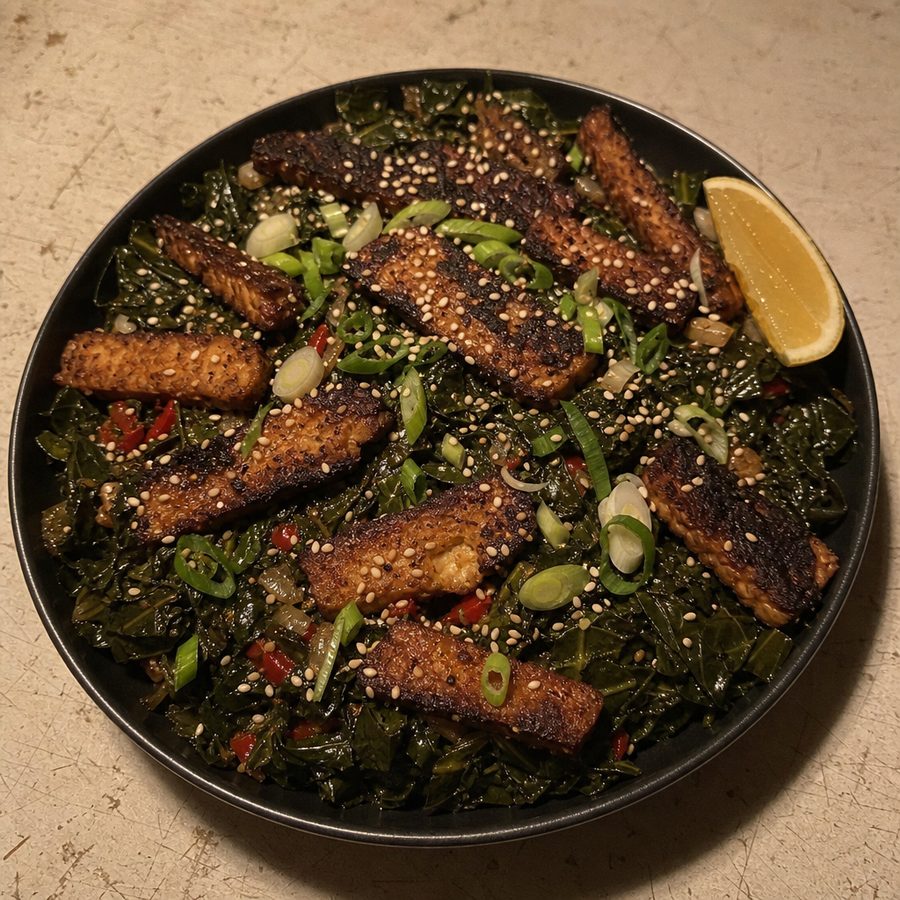
Tempeh planks pressed into a smoked paprika and cayenne rub and seared dark, set over collard ribbons braised soft with onion, sweet pepper, and cider vinegar, with toasted sesame seeds scattered over the top.
Why You'll Love This Recipe
Some nights I want something that tastes like it simmered all afternoon, and I have half an hour. Collards have a reputation for needing hours on the stove, and whole leaves do, but sliced into thin ribbons they go silky in about eight minutes with a splash of broth and a lid. The tempeh sits on top rather than getting stirred through, so the spice crust stays a crust. Everything happens in one skillet, in an order that lets each thing borrow flavor from the last, and the only knife work is a stack of leaves rolled up like a cigar and sliced across.
The eating is the point of blackening. That dark rub is not burnt, it is toasted spice, and smoked paprika and cayenne over a hot dry pan turn deep and slightly bitter in the way coffee is bitter. Against that you get collards that have gone sweet and soft, sweet pepper strips that keep a little bite, and enough cider vinegar to make your mouth water. Tempeh has a firm, nutty chew that holds up to a hard sear, and the sesame seeds scattered at the end give a second, smaller crunch in every forkful. It is a plate with real texture in it.
This belongs on a Tuesday, when the week has already gotten away from you and a bowl of something warm and sharp is what you want. It also travels well to a table with other things on it, since collards and vinegar sit happily beside almost any Southern spread. I usually put a bottle of cider vinegar and a few lemon wedges out, because people season greens to their own taste and it is worth letting them. Leftovers go into a lunch container in layers, greens on the bottom and tempeh on top, and reheat better than most skillet dinners I know.
Ingredients
- 14 oz tempeh, cut crosswise into 1/2-inch planks
- 2 bunches collard greens (about 1 lb of leaves), stems stripped and leaves rolled and sliced into 1/2-inch ribbons
- 1 medium yellow onion, halved and thinly sliced
- 1 red bell pepper, stemmed, seeded, and cut into thin strips
- 5 garlic cloves, thinly sliced
- 1 tbsp smoked paprika
- 1/2 tsp cayenne, or 1/4 tsp for a milder crust
- 2 tsp fresh thyme leaves, from about 6 sprigs
- 1 tsp coarsely ground black pepper
- 2 tbsp apple cider vinegar, plus more at the table
- 1/2 cup vegetable broth
- 2 tbsp olive oil
- 3 tbsp hulled sesame seeds, untoasted
- 4 scallions, thinly sliced on a bias
- 1/2 tsp fine sea salt
Instructions
- Cut the greens and mix the rub: Strip the collard leaves off their stems, stack six or eight at a time, roll the stack into a tight cylinder, and slice across into 1/2-inch ribbons. You want about ten packed cups. In a wide shallow bowl, stir together the smoked paprika, cayenne, thyme, black pepper, and half the salt.
- Coat and sear the tempeh: Press both cut faces of each tempeh plank firmly into the spice mixture so the surface is completely coated. Heat 1 tbsp of the olive oil in a large skillet over medium-high until it shimmers, then lay the planks in without crowding. Sear for three minutes a side, until the crust is very dark brown and smells toasted rather than sharp. Move them to a plate.
- Toast the sesame seeds: Turn the heat to medium and add the sesame seeds to the empty skillet. Stir constantly for about ninety seconds, until they turn from pale to golden and start popping against the pan. Tip them straight into a small bowl, because they will keep browning if you leave them in there.
- Soften the onion, pepper, and garlic: Add the remaining 1 tbsp olive oil, then the onion and bell pepper, and cook for four minutes, stirring, until the edges take on color and the onion goes translucent. Add the garlic and any spice left in the coating bowl and stir for thirty seconds, just until the garlic smells sweet.
- Braise the collards and bring it together: Add the collard ribbons in two handfuls, letting the first wilt before the second goes in, then pour in the broth and the remaining salt. Cover and cook six to eight minutes, stirring twice, until the greens are tender enough to twist around a fork with no squeak to them. Take the lid off, add the cider vinegar, and cook one minute more so the liquid reduces to a glossy film. Lay the tempeh planks back on top, scatter the sesame seeds and scallions over, and bring the skillet to the table.
Variations
- Pot likker style: Double the broth and serve it in shallow bowls so there is a pool of the peppery green liquid under everything, with the tempeh laid across the top.
- Sweet and sharp: Add a diced tart apple with the onion. It softens into the greens and plays against the vinegar in the way stewed greens and sweet things always do.
- Mustard and scallion: Whisk a teaspoon of grainy mustard into the broth before it goes in, which thickens the pan slightly and pushes the whole dish sharper.
- Beans in the pan: Stir a drained can of black-eyed peas into the greens for the last two minutes so they warm through and take on some of the vinegar.
- Charred lemon: Halve a lemon and sear the cut sides in the skillet before the tempeh goes in, then squeeze it over the finished plate for a smoky, sweeter kind of acid.
Storage & Leftovers
Keep this four days in a sealed container in the refrigerator. Store the greens and the tempeh in the same box but in layers, greens underneath, because the crust softens if it sits in the braising liquid overnight. The vinegar keeps working while it sits and the greens taste rounder on day two than they do the night you cook them.
Reheat in a dry skillet over medium-high, greens first for two or three minutes, then the tempeh laid on top for a final minute with the lid on. That brings a little of the crust back. A microwave will heat it through in ninety seconds if you are eating at a desk, and a splash of cider vinegar afterward wakes the whole thing up.
The greens freeze well on their own for up to three months in flat sealed portions, though the tempeh comes back a bit soft, so I usually freeze the collards and sear fresh planks when I want them. Thaw overnight in the refrigerator and reheat in a pan rather than from frozen.
Notes & Tips
- Roll the leaves before you slice: A tight cylinder of stacked collard leaves gives you even ribbons in four or five cuts. Loose leaves slide around and you end up with a mix of shreds and big pieces that cook at different speeds.
- Press the rub on, do not sprinkle it: Pushing the cut face of each plank into the spice puts a real layer on the surface, which is what turns into crust. Sprinkled spice mostly falls off in the pan and burns on the metal.
- Get the seeds out of the pan: Sesame goes from golden to bitter in under a minute, and a hot skillet keeps cooking them after the burner is off. Tip them into a cold bowl the second they start to pop.
- Add the greens in two goes: Ten cups of ribbons will not fit at once. Let the first handful collapse for a minute, then add the rest, and the pan stays hot enough to keep braising rather than steaming.
- Vinegar goes in at the end: Added early, it cooks away and the greens taste flat. Off the boil, in the last minute, it stays bright and coats everything as the liquid reduces.
- Taste the greens before you plate: Collards vary a great deal in how bitter they are depending on the season. If yours are sharp, another splash of vinegar and a minute more under the lid usually settles them.
Nutrition & Mindful Eating
- Tempeh, collards, and sesame are the three things carrying this plate. The tempeh gives it the chew and most of the protein, the greens give it bulk and a great deal of calcium, and the sesame seeds add a toasted crunch along with more iron than their size suggests.
- Tempeh is whole soybeans held together by a culture, which is why it slices into planks and takes a sear the way it does. That whole-bean structure is where its fiber comes from, and it carries protein and iron in the same bite.
- Collard greens cooked down into ribbons are one of the better plant sources of calcium, and the leaves keep their deep color and a little body even after a braise. The vinegar going in at the end is what keeps a pan of greens this soft from tasting heavy.
- Sesame seeds toasted in a dry skillet turn nutty and start popping, and that small handful brings calcium and iron along with the crunch. Toasting is worth the ninety seconds it takes, since untoasted seeds taste of very little.
- Smoked paprika, cayenne, thyme, and black pepper are what make this taste like it cooked all day. The paprika brings smoke, the cayenne brings a slow heat that arrives after you swallow, and the thyme keeps the whole thing smelling green.
- As you eat, notice how the crust on the tempeh gives way to something soft underneath, and let the sharpness of the greens slow you down between forkfuls rather than eating this one standing at the stove.
Frequently Asked Questions
Do I need to steam or simmer the tempeh first?
Not for this. Some cooks steam tempeh for ten minutes to soften its edge, and that is worth doing if you find it strong, but a hard sear does much the same thing by toasting the outside and warming the middle through. If you want to steam it, do it while you cut the greens and pat the planks dry before they go into the spice.
My spice crust burned instead of blackening. What went wrong?
The pan was too hot, or the planks sat too long. Blackening happens fast, and the difference between deep brown and acrid is about forty seconds. Medium-high, three minutes a side, and pull them the moment the crust smells like toasted spice. Paprika has sugar in it and will scorch on a pan that is smoking hard.
Can I use another green?
Mustard greens work beautifully here and bring a peppery bite that stands up to the smoked paprika, though they cook faster, so start checking at four minutes. Kale is fine as well. Whatever you use, slice it thin, since the ribbon cut is what makes a quick braise taste like a long one.
Is there a way to make this less spicy for kids?
Cut the cayenne to a quarter teaspoon and keep the smoked paprika as it is, which leaves you all the smoke and very little heat. You can also sear the planks in a plain paprika and thyme rub and pass hot sauce at the table, which is how greens usually get seasoned in my house anyway.