
Blistered Green Bean and Pork Stir-Fry with Ginger and Black Pepper
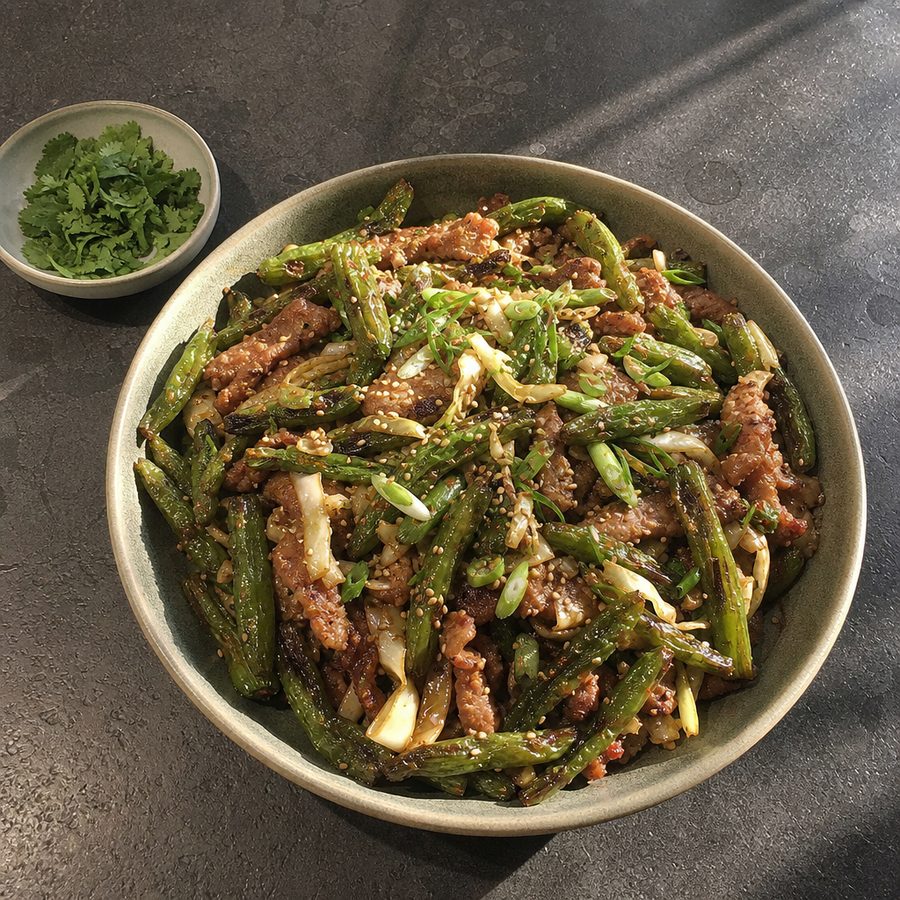
Green beans dry-fried until their skins wrinkle and char, then tossed with strips of pork tenderloin, shredded cabbage, a great deal of ginger, and coarsely cracked black pepper.
Why You'll Love This Recipe
Dry-fried green beans are one of the few restaurant textures that translates honestly to a home stove, and once you have made them this way it is difficult to go back to steaming. The beans go into a hot dry pan with almost no oil and are left alone until the skins pucker and scorch in patches. What happens is that the water cooks out of them and the flavor concentrates, so a bean tastes twice as much like a bean as it did raw. Blistered, not burnt, is the target, and a few genuinely black spots are exactly right.
Pork tenderloin is the cut for this because it is close-grained and cooks in about ninety seconds, so it can go into a screaming pan and come out juicy. Slice it thin across the grain while it is still cold from the refrigerator and the strips will be neat rather than ragged. The seasoning is deliberately spare: ginger, garlic, scallion whites, a lot of cracked black pepper, and just enough soy sauce and vinegar to glaze rather than sauce. Nothing here should pool in the bottom of the pan. A wok is ideal, though the widest heavy skillet in your cupboard does the same job.
This is a twenty-minute dinner that tastes like it took longer, and it is what I cook on nights when the refrigerator is thin and the day was long. It wants to be eaten straight out of the pan, so I bring the whole thing to the table rather than plating. Everything happens in one pan in three short bursts, so what you wash afterward is a skillet and a cutting board. It is also one of the few stir-fries I am happy to eat cold the next day, since the beans keep their chew and the pepper seems to bloom overnight.
Ingredients
- 1 lb pork tenderloin, silverskin trimmed, sliced across the grain into thin strips
- 1 1/2 lb green beans, topped and left whole, dried thoroughly
- 1/4 small head green cabbage (about 9 oz), shredded
- 6 scallions, whites cut into 1-inch lengths, greens sliced thin for the top
- 2 tbsp finely minced fresh ginger, from a 2-inch piece
- 4 garlic cloves, minced
- 1 1/2 tsp black pepper, cracked coarsely in a mortar
- 1/4 tsp cayenne
- 2 tbsp soy sauce
- 1 1/2 tbsp apple cider vinegar
- 1 1/2 tbsp avocado oil
- 2 tsp toasted sesame oil
- 2 tbsp sesame seeds, toasted
Instructions
- Prep everything before the heat goes on: A stir-fry gives you no time to chop. Slice the pork and keep it cold, dry the beans completely on a towel, shred the cabbage, and set the ginger, garlic, and scallion whites together in one small bowl. Stir the soy sauce and vinegar together in another. Crack the pepper coarsely; preground disappears here and cracked pepper does not.
- Blister the beans: Set your widest skillet or a wok over high heat with a teaspoon of the avocado oil and let it get properly hot. Add the beans in one layer and leave them for two minutes without touching them. Toss, then leave again, repeating for eight to ten minutes total, until the skins are wrinkled and dark-spotted and the beans have gone slightly limp. Tip them onto a plate.
- Sear the pork: Add the rest of the avocado oil to the empty pan and spread the pork strips out in a single layer. Leave them for sixty to ninety seconds, until the underside is browned, then toss and cook another minute. The strips should still look barely pink where they fold. Move them to the plate with the beans.
- Fry the aromatics and the cabbage: Lower the heat to medium-high. Add the ginger, garlic, scallion whites, black pepper, and cayenne and stir constantly for thirty to forty five seconds, until fragrant and just starting to color. Burnt garlic is bitter and unfixable, so keep everything moving. Add the cabbage and toss for two minutes, until it wilts but keeps some crunch.
- Bring it back together: Return the beans and the pork with any juices, pour the soy sauce and vinegar down the side of the hot pan so it hisses and reduces on contact, and toss everything hard for one minute until glazed. Take the pan off the heat, add the sesame oil, and toss twice more. Scatter the scallion greens and the sesame seeds over the top and serve out of the pan.
Variations
- Sichuan peppercorn: Crush a teaspoon of Sichuan peppercorn with the black pepper for the numbing, citrusy heat this dish carries in restaurants.
- Chicken thigh: Boneless chicken thigh sliced thin stands in for the pork and wants about a minute longer in the pan.
- Extra greens: Add two big handfuls of shredded mustard greens with the cabbage for a sharper, more peppery pan.
- Sweet and sour edge: Add a teaspoon of grated apple to the soy and vinegar for a rounder glaze that clings a little more.
Storage & Leftovers
This holds three days in a sealed container in the refrigerator and is unusually good cold, straight from the box, which is not true of most stir-fries. The beans keep their chew because the blistering drove the water out of them, and the black pepper tastes rounder on day two than it did on the night.
Reheat in a dry skillet over high heat for two or three minutes, spread out and left alone for the first minute so the beans pick their char back up. Add nothing, since there is enough oil clinging to everything already. A microwave will heat it through but the beans go slack and the pork tightens.
I would not freeze this one. Green beans that have been blistered and then frozen thaw watery and lose the texture that the whole dish is built on, and pork sliced this thin goes dry on reheating. It comes together in twenty minutes from scratch, which is faster than a proper thaw anyway.
Notes & Tips
- Dry the beans like you mean it: Water is the enemy of blistering. Spread them on a towel while you slice the pork and give them a second towel on top. Bone dry beans char in eight minutes; damp ones never do.
- Slice the pork cold: Straight from the refrigerator, or fifteen minutes in the freezer if it has warmed up. Cold meat holds its shape under a knife and gives you thin, even strips rather than torn ones.
- Crack the pepper yourself: A mortar or the bottom of a heavy pan gives you coarse shards that stay distinct in the finished dish. Preground pepper dissolves into the background and this recipe is named for it.
- Pour the sauce down the side of the pan: Hitting hot metal rather than cool food, it reduces on contact and glazes rather than pooling. Poured into the middle it drops the temperature and everything starts to stew.
- Sesame oil goes in off the heat: Its aroma is delicate and cooks straight off. Added last, away from the burner, it perfumes the whole pan; added early it may as well not be there.
Nutrition & Mindful Eating
- The beans, the pork, and the cabbage split the work three ways. The green beans make up the bulk of the plate and carry most of its fiber, the pork brings the protein that turns a pan of vegetables into dinner, and the cabbage adds sweetness and volume without much behind it.
- Green beans dry-fried rather than boiled hold on to what they started with, since nothing leaches out into water. They bring vitamin K, vitamin C, and a steady amount of fiber, and concentrating them over high heat is what makes them taste so strongly of themselves.
- Pork tenderloin is close-grained and quick-cooking, and it is one of the better sources of thiamin, a B vitamin pork carries more generously than almost any other food. Sliced thin and seared fast, it stays juicy in a way that longer cooking would undo.
- Ginger, garlic, and cracked black pepper hit the hot oil for less than a minute, which is exactly long enough to release their aromatic compounds without scorching them. That short bloom is where most of the smell of this dish comes from.
- Toasted sesame seeds scattered at the end add a small crunch along with calcium and a bit of extra fiber, and the toasted sesame oil poured in off the heat carries the nutty aroma that ties the pepper and the ginger together.
- As you eat, look for the beans with the darkest wrinkled skins and notice how much more concentrated they taste than the pale ones, and let a dish that cooked this quickly still be eaten slowly.
Frequently Asked Questions
My beans steamed rather than blistering. What went wrong?
Either they were wet or the pan was crowded. Beans washed and not dried carry enough water to drop the pan temperature below the point where anything browns, so dry them on a towel first. And a pound and a half needs a twelve-inch pan or a wok; in anything smaller, blister them in two batches.
Can I use ground pork?
Yes, and it is the more traditional choice. Brown half a pound of ground pork hard, pressing it flat so it crisps rather than stews, and drain off what renders out before the aromatics go in. Tenderloin strips give you a meatier bite and more even distribution through the beans.
Is there a way to make it less peppery?
Halve the black pepper and leave out the cayenne, and the dish still works because the ginger and the blistered beans are carrying most of the flavor. Going the other way, a teaspoon of Sichuan peppercorn crushed with the black pepper is the version I make for myself.
What can I use rather than green beans?
Long beans if your store has them, which is what this is usually made with, blistered the same way. Asparagus cut into 2-inch lengths works in about half the time, and broccoli stems peeled and cut into batons blister surprisingly well.