
Blistered Peppers and Chickpeas over Couscous with Toasted Walnuts
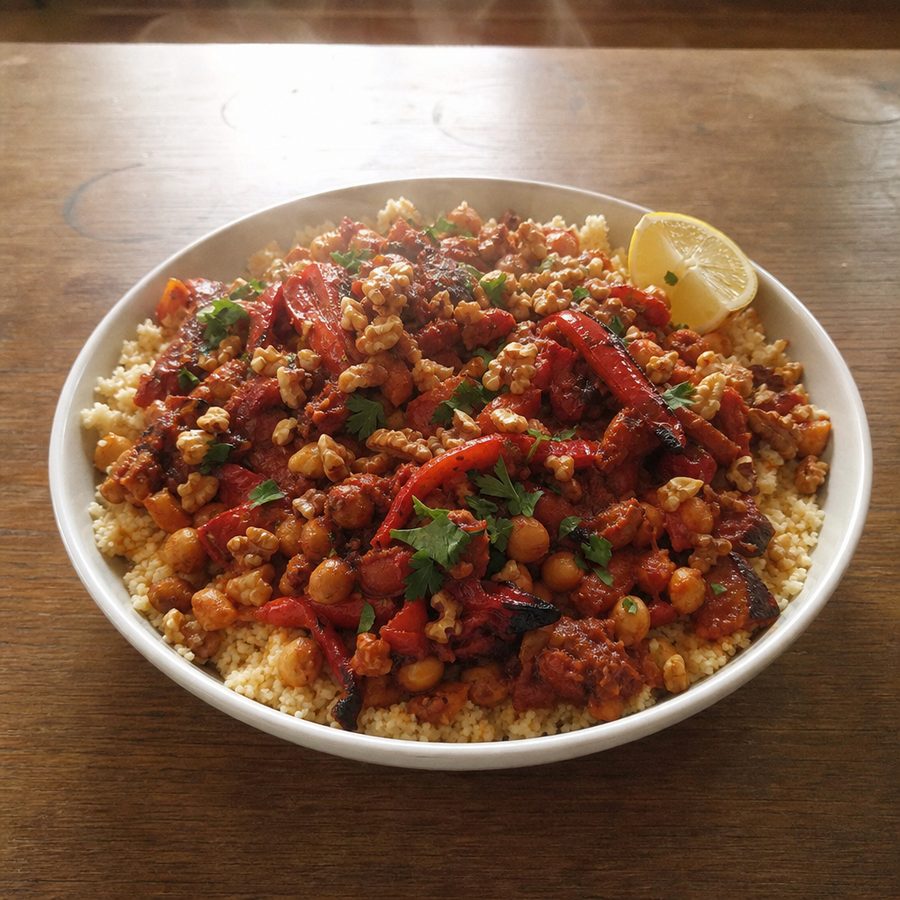
Wide strips of red pepper blistered in a hot skillet with onion, cumin, and paprika, thickened with a spoonful of tomato paste and a handful of chickpeas, piled over couscous and finished with toasted walnuts, parsley, and lemon.
Why You'll Love This Recipe
Peppers get treated as a supporting vegetable most of the time, thrown in with everything else and cooked until they are merely soft. Given a hot pan to themselves they become the dinner. The sugars in a red bell pepper are high enough that the cut faces caramelize and blister, the skins loosen and go silky, and what comes out tastes almost smoky. That is the whole idea here, so I cut them wide rather than in thin strips, because wide pieces sit flat against the metal and take color rather than steaming into each other.
The sauce is a trick worth knowing. Two spoonfuls of tomato paste fried in the hot oil for a minute go from bright red to brick, lose their tinny edge, and turn into a glaze that coats everything in the pan. Cumin and paprika go in at the same moment. Chickpeas roll around in that for a couple of minutes and pick up a little color of their own, and then lemon juice off the heat cuts a line straight through the sweetness of the peppers. Walnuts and parsley land on top, cold and crisp against a warm pan.
This is a weeknight in my house, usually a Wednesday, and it happens because couscous is the fastest grain there is: boiling water poured over it, a lid, five minutes, a fork. While that sits I have time to cut peppers and nothing else. It reheats well enough to be lunch and is honestly better at room temperature the next day, when the peppers have had a night in the tomato and the walnuts have gone soft in a way I have made peace with. I keep a few extra walnuts by to scatter over the second serving.
Ingredients
- 4 red bell peppers, about 1 1/3 lb, seeded and cut into wide 1-inch strips
- 3 cups cooked couscous, from about 1 cup dry
- 1 can (15 oz) no-salt-added chickpeas, drained and rinsed well, about 1 1/2 cups
- 1/2 cup walnut halves, roughly chopped
- 1 medium onion, halved and sliced into thin half-moons
- 4 cloves garlic, thinly sliced
- 2 tbsp olive oil, divided
- 2 tbsp tomato paste
- 2 tsp ground cumin
- 1 1/2 tsp sweet paprika, or Aleppo-style pepper flakes for more heat
- 2 tbsp lemon juice, from 1 lemon, plus wedges to serve
- 2/3 cup flat-leaf parsley, roughly chopped
- 4 scallions, sliced thin on an angle
- 2 tbsp sesame seeds
- 1/4 tsp fine sea salt
Instructions
- Start the couscous and toast the walnuts: If the couscous is not already made, pour an equal volume of boiling water over the dry grain, cover it, and leave it alone. In a dry skillet over medium heat, toast the walnuts and sesame seeds together for three to four minutes, shaking often, until the walnuts smell nutty and the sesame seeds turn pale gold. Tip them onto a plate so they stop cooking.
- Blister the peppers: Return the skillet to medium-high with 1 1/2 tbsp of the olive oil. Add the pepper strips in as close to one layer as you can manage, with the salt, and leave them undisturbed for four minutes, until the undersides are blackened in patches. Toss and cook three or four minutes more. They should be slumped and glossy with dark blisters, not gray and watery.
- Soften the onion and fry the paste: Push the peppers to the edge, add the remaining oil and the onion in the middle, and cook two to three minutes until translucent. Stir in the garlic, cumin, paprika, and tomato paste and keep it moving for a full minute. The paste will darken from red to brick and start to stick, which is exactly what you want.
- Fold in the chickpeas: Add the drained chickpeas and about 1/3 cup water, scraping the bottom of the pan so the stuck paste dissolves into a glaze. Cook two to three minutes, until the liquid has mostly gone and everything is coated. Take the pan off the burner and stir in the lemon juice and half the scallions.
- Build the bowls: Fluff the couscous with a fork, breaking up any clumps, and spread it across four shallow bowls. Spoon the peppers and chickpeas over the top with all the sauce from the pan, then scatter the walnuts, sesame seeds, parsley, and remaining scallions across. Serve with lemon wedges.
Variations
- Pomegranate finish: Scatter a handful of pomegranate seeds over the bowls with the parsley for small sour bursts against the sweet peppers.
- Yogurt on the side: Spoon cold plain yogurt onto each bowl and drag it through the sauce, which cools the chile and makes the dish richer.
- More heat: Trade the sweet paprika for a full teaspoon of Aleppo-style pepper flakes and add a pinch of cayenne with the garlic.
- Mint in place of parsley: Use torn mint leaves in place of the parsley for a cooler, sweeter finish that suits the peppers well.
- Pistachio: Swap the walnuts for chopped pistachios, toasted the same way, for a greener and slightly sweeter crunch.
Storage & Leftovers
The pepper and chickpea part keeps four days in a sealed container in the refrigerator and improves for the first two. The peppers keep softening in the tomato glaze and the cumin settles into everything. Store the couscous separately so it does not turn to paste in the sauce, and keep the walnuts, sesame seeds, and herbs in a small jar on the counter so they stay crisp for the second night.
Reheat the peppers gently in a covered skillet over medium-low with a splash of water, three or four minutes, stirring once. Couscous comes back best with a sprinkle of water and thirty seconds under a lid. Both are also good straight from the refrigerator with a fresh squeeze of lemon, which is how I usually eat the leftovers at my desk.
It freezes for up to three months, though the peppers come back softer than they went in. Freeze the pepper mixture flat in a sealed bag and cook the couscous fresh, since it takes five minutes anyway. Thaw overnight in the refrigerator and reheat in a pan rather than the microwave so the sauce tightens up again.
Notes & Tips
- Cut the peppers wide: Thin strips curl and steam. Inch-wide planks lie flat against the pan and take real color, which is the entire difference between blistered peppers and stewed ones.
- Let the pan get properly hot first: Peppers hold a lot of water. Into a moderate pan they release it and simmer, and into a hot pan they blister before the water has a chance to pool.
- Fry the tomato paste: A minute in hot oil, on its own, is what turns paste from sharp and tinny into sweet and deep. Watch the color rather than the clock.
- Rinse the chickpeas: Tip them into a sieve and run cold water over them until it stops foaming. The can liquid is cloudy and heavily salted, and it dulls everything it touches.
- Toast the nuts and seeds first: Do it while the skillet is still dry and before anything else goes in. Walnuts burn in the time it takes to answer a text, so stay by the pan and use your nose.
- Add the lemon off the heat: Acid boiled into a sauce goes flat and slightly bitter. Stirred in once the burner is off, it stays bright and does its job against the sweetness of the peppers.
Nutrition & Mindful Eating
- Peppers, chickpeas, walnuts, and couscous cover a lot of ground between them. The peppers bring the sweetness and the bulk, the chickpeas add body and a modest amount of plant protein, the walnuts bring fat and crunch, and the couscous underneath soaks up everything the pan gives off.
- Red bell peppers are picked fully ripe, which is where the sugar, the deep color, and a genuinely large amount of vitamin C come from. Blistering them concentrates all of that rather than washing it into the pan.
- Chickpeas hold their shape in a hot glaze and give the bowl its heft, carrying soluble fiber and folate along with the starch that makes them feel like a real component of dinner.
- Walnuts toasted in a dry pan turn from soft to snappy and take on a deeper flavor, and they are one of the few nuts that carry the plant form of omega-3 fats.
- Cumin, paprika, fried tomato paste, and a squeeze of lemon at the end are what make the sauce taste like it simmered for an hour, and the sesame seeds scattered over the top add a quiet toasted note along with a bit of calcium.
- As you eat, notice how differently a blistered pepper reads on the tongue than a crisp one does, and let the crunch of the walnuts be a reason to chew slowly and check in on how full you already are.
Frequently Asked Questions
Can I use green or yellow peppers?
Yellow and orange behave just like red and are equally sweet, so use them freely. Green peppers are picked before they ripen, which makes them grassy and much less sugary, and they blister without ever going sweet. One green pepper among four is good for edge, but a whole panful tastes thin.
Why does my tomato paste taste metallic?
Because it went in with liquid rather than into hot oil. Paste straight from the can carries a tinny, sharp note that only cooks out when it fries. Give it a full minute in the fat, on its own, until the color turns from bright red to brick and it smells sweet, and that flavor disappears.
Is there anything else I can serve this over?
Bulgur is the natural swap and gives you more chew, and warm flatbread torn into the sauce works if that is what is in the house. Couscous is what I reach for on a weeknight simply because boiling water and five minutes is the whole method, and it soaks the tomato glaze up better than a firmer grain.
How do I keep the chickpeas from going mushy?
Add them late and stop stirring so much. They only need two or three minutes to warm through and take on the glaze, and every extra pass with the spoon breaks a few more skins. Draining and rinsing them well first also helps, because the liquid in the can is what makes them taste soft and flat.