
Blistered Shrimp in Ghee
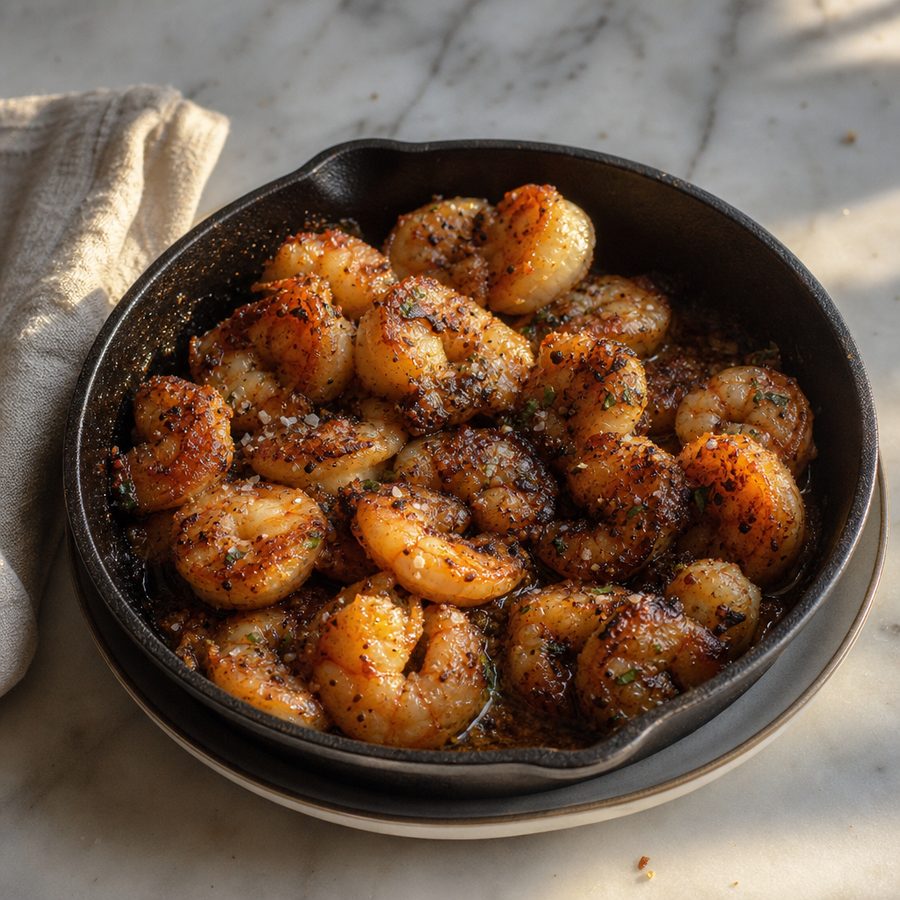
Large shrimp seared in two batches in a smoking cast iron skillet until the edges blister brown, salted at the end and finished with the browned ghee from the pan.
Why You'll Love This Recipe
I keep a bag of large shrimp in the freezer for exactly this, the night when nothing has been planned and there are people in the kitchen asking what is for dinner. Two pounds of shrimp, a spoonful of ghee, and salt, and the whole thing is on the table in under twenty minutes. The only real skill involved is patience with the skillet. Shrimp cook so quickly that a merely warm pan lets them poach in the liquid they give up, and they come out pale and squeaky. A pan that is genuinely hot blisters them in ninety seconds. I wait for the ghee to thin out and send up its first thread of smoke before a single shrimp goes in.
Every piece on the plate has two textures on it. The side that met the metal is browned in patches, almost toasted, with the faint sweetness that only browning creates. The rest stays pale, springy, and briny, and the contrast between those two halves is the entire pleasure of the dish. Ghee tastes more like butter than butter does once it has spent a minute over high heat, nutty and slightly caramelized, and it clings to the shells of the shrimp rather than sliding off onto the plate. The salt goes on after the searing, so the crystals sit on the surface and you taste them separately from the sweetness underneath.
This belongs to the nights when dinner has to be fast and still count as a meal. I make it when I have been on my feet since morning, and I make it when somebody turns up without much warning, because two pounds of shrimp cooked this way feeds four people generously and asks almost nothing of the cook. It is also what I make when I want the kitchen to smell like a good restaurant for ten minutes. The leftovers are genuinely good cold from the container the next day, which I cannot say about most seafood, and they need only seconds in a hot pan if you would rather have them warm.
Ingredients
- 2 lb large shrimp (16/20 count), peeled and deveined, patted very dry
- 3 tbsp ghee, divided
- 1/2 tsp fine sea salt
Instructions
- Dry the shrimp thoroughly: If the shrimp are frozen, run them under cold water in a colander for about five minutes, until they are pliable all the way through. Spread them on a clean towel in one layer, blot the tops, and let them sit while the pan heats. Surface water is the one thing standing between you and a browned shrimp, because it has to boil away before any browning can start, and by the time it does the shrimp are already cooked through.
- Take the skillet past hot: Set a twelve-inch cast iron skillet over high heat and leave it empty for three full minutes. Add half the ghee and watch it closely. It will melt, spread thin, run like water across the surface, and then send up its first thread of smoke. That thread is the signal, and it usually comes within twenty seconds.
- Sear the first batch: Lay half the shrimp into the pan in a single layer, not touching each other, and then leave them completely alone for ninety seconds. They should snap and crackle steadily the whole time, and the noise should not die down. Lift one to check for dark blistered patches, then turn them all and give the second side forty five seconds to a minute, until the flesh has gone from translucent to opaque and each shrimp has curled into a loose C.
- Sear the second batch: Move the first batch to a warm plate, add the remaining ghee, and let the pan come back up for about thirty seconds before the rest of the shrimp go in. This batch tends to run faster because the skillet is already loaded with heat, so start checking the undersides at about seventy five seconds.
- Salt and pour the pan over the top: Tip the second batch onto the plate with the first and scatter the salt over everything while the shrimp are still hot enough to hold it. Scrape the skillet for the last of the ghee, which will have gone the color of dark honey and smell toasted, and pour it over the whole plate. Bring it to the table straight away, while the seared faces still have some crispness on them.
Variations
- Cold butter finish: Take the pan off the burner after the last batch, drop in a tablespoon of cold butter, and swirl it into the ghee until it foams before pouring it over the shrimp.
- Bacon fat: Render four slices of bacon in the skillet first, cook the shrimp in the fat they leave behind, and crumble the bacon over the top at the end.
- Sea scallops: Use twenty large sea scallops in place of the shrimp, dried hard on a towel and seared two minutes on the first side without moving them.
- Fried egg on top: Crack two eggs into the hot ghee after the shrimp come out and fry them until the whites set and the edges frill, then slide them over the plate.
Storage & Leftovers
Cooked shrimp keep three days in a sealed container in the refrigerator, and this is one of the few seafood dishes I am happy to eat cold. Chilled, the flesh firms up and the browned edges take on a slightly chewy quality that works well straight from the container while you are standing at the counter deciding what to do with the rest of the evening.
If you want them warm again, use a skillet over high heat with a small knob of ghee and give them forty five seconds, tossing once. That is enough to take the chill off and wake the seared faces back up. Anything longer and the shrimp tighten into rubber, which is the one failure this dish is prone to, and the microwave takes them there in about fifteen seconds.
I would not freeze them after cooking. Shrimp have already been through a freeze and thaw on the way to most kitchens, and a second round leaves them watery and soft. What does freeze well is the untouched shrimp themselves, so buy the frozen bag, keep it sealed, and thaw only what you plan to put in the pan that night.
Notes & Tips
- Buy the biggest shrimp you can: Large shrimp give you enough thickness that the outside can brown while the inside is still short of done. Small ones cook through before any color appears, and no amount of heat fixes that.
- Two batches, always: Two pounds of shrimp in one skillet drops the pan temperature off a cliff, and everything steams in a gray puddle. Half at a time, in one layer, with space between the pieces.
- Salt at the end: Salt on the surface pulls moisture up out of the shrimp, and that moisture has to boil off before browning starts. Season after the sear and you taste the crystals as crystals.
- Listen to the pan: A loud, steady crackle means the surface is drying and browning. A soft bubbling sound means the shrimp are sitting in their own liquid, and you should turn the heat up rather than waiting it out.
- Pull them at the C: A shrimp that has curled into a loose C is done. One that has closed into a tight O has gone too far. Watch the shape rather than the clock, since pans vary more than recipes admit.
- Warm the serving plate: Shrimp lose heat quickly once they leave the skillet. A plate warmed under hot tap water and dried keeps the first batch hot while the second one cooks.
Nutrition & Mindful Eating
- The shrimp, the ghee, and the salt each have one job on this plate. The shellfish brings the protein and the sweetness, the ghee brings the browning and a richness that clings to every curl, and the salt goes on last so you taste it as crystals rather than as something cooked in.
- Shrimp are firm, sweet, and close-grained, and a plate of them carries a serious amount of protein for something that cooks in ninety seconds. They bring selenium and vitamin B12 along with it, which is part of why a dish this quick still eats like a full dinner.
- Ghee is butter simmered until the water cooks away and the milk solids toast and settle out, and that is what lets it sit in a smoking skillet and stay sweet. It carries vitamin A along with its butterfat, and it tastes nuttier than it did before it was cooked down.
- The browning is where the flavor lives. Shellfish protein colors in seconds at this heat, and that toasted, faintly sweet edge is what separates a shrimp that has been seared from one that has only been warmed through.
- Shrimp this size hold you longer than a plate of shellfish usually suggests. The protein is doing most of that work, and the ghee gives the meal enough fat that it settles in as a real dinner rather than a stop on the way to one.
- As you eat, find the browned face of each shrimp and notice how different it tastes from the pale curl underneath, and let the meal take considerably longer than the ninety seconds it took to cook.
Frequently Asked Questions
My shrimp came out rubbery. What happened?
They stayed in the pan too long, and it is almost always because the pan was not hot enough to begin with. A cool skillet means the shrimp sit there releasing liquid while you wait for color, and by the time they brown they are well past done. Get the pan smoking, work in two batches, and pull them the moment they curl into a loose C. A tight O means they went a minute too far.
Can I use smaller shrimp?
You can, though the window gets narrower. Medium shrimp cook through in about forty five seconds a side, which does not leave much time for browning, so you end up choosing between color and texture. If small shrimp are what you have, get the pan hotter than you think you need and accept a lighter sear. Large shrimp, sixteen to twenty per pound, are worth seeking out for this.
Fresh or frozen?
Frozen, in almost every case. Most shrimp at the counter were frozen on the boat and thawed at the store, so buying the sealed bag means you thaw them yourself the hour you cook them. Look for shell-on or peeled shrimp frozen individually rather than in a solid block, and thaw them under cold running water rather than on the counter.
Do I have to use ghee?
Ghee is doing real work here, because it holds together at the temperature this sear needs. Butter will scorch and go bitter in a smoking pan, so if butter is what you have, drop the heat to medium-high, accept a paler sear, and add the butter for the last thirty seconds. Bacon fat or beef tallow both handle the heat and take the dish somewhere smokier.