
Braised Beef Chuck with Fennel and Orange
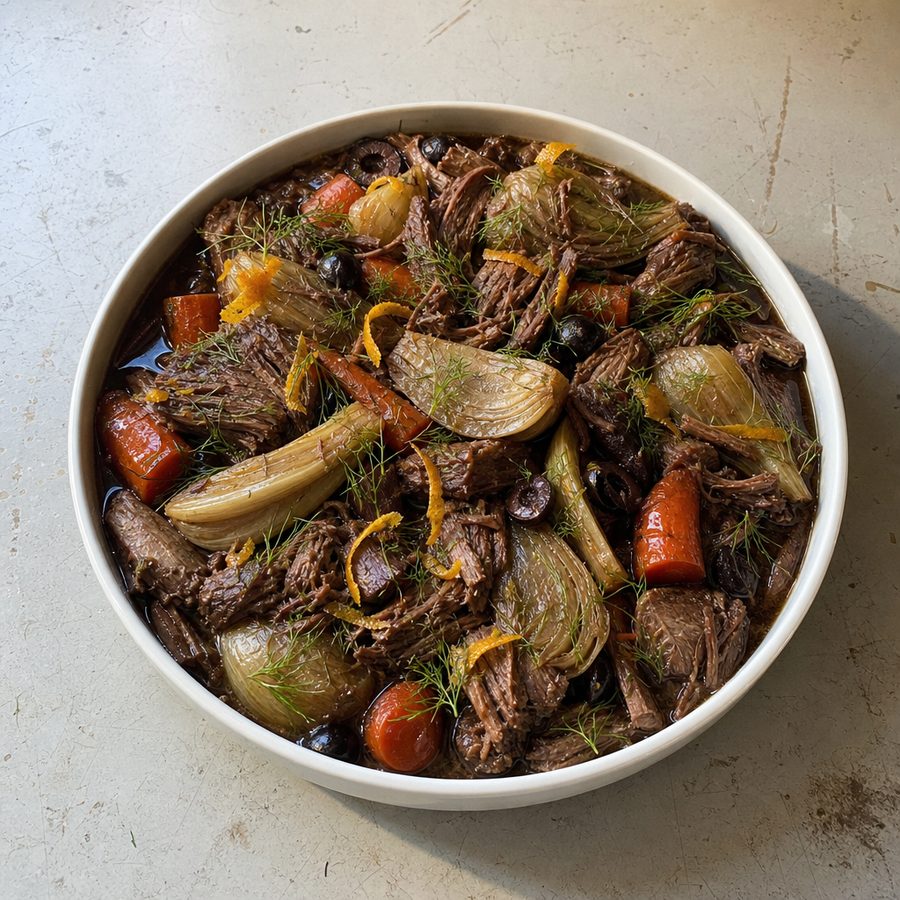
Beef chuck braised until it falls apart in a broth of orange, balsamic, and bay, with fennel wedges and carrots added late so they keep their shape.
Why You'll Love This Recipe
Cooking this on a Sunday afternoon is how I get the week handled. Chuck is not a fast cut and there is no way around that, but almost all of the time belongs to the oven rather than to you. Twenty minutes of browning and slicing at the start, then the pot sits at 325°F (163°C) while you do the laundry and the house slowly fills with the smell of beef, orange peel, and bay. By evening you have four lunches in the refrigerator that only get better. I portion them straight into containers while the pot is still warm, because a braise divides much more neatly before it sets.
The part people get wrong is the fennel. If it goes in with the beef at the start it disappears, and you end up with a pot of stringy threads and no vegetable at all. Cut it into thick wedges through the core so each one holds together, brown the cut faces in the beef fat, and add it for the last hour along with the carrots. The wedges come out tender the whole way through but still recognizably fennel, sweet and faintly of anise, which is what stands up to two pounds of rich meat. The olives go in at the very end so they stay firm and salty rather than dissolving into the sauce.
What you get from a braise that you do not get from a quick pan is depth, and it costs nothing but time. The connective tissue in the chuck melts into the broth and gives it body, so the sauce coats a spoon with no thickener in the pot at all. Reheated on day three it is better than it was on day one. I eat it from a wide bowl with the broth spooned over everything and the fennel fronds torn on top, and it holds me through an afternoon in a way a salad simply does not. If the sauce has set firm in the refrigerator overnight, that gelatin is exactly what you wanted.
Ingredients
- 2 lb boneless beef chuck roast, trimmed and cut into 1 1/2-inch cubes
- 2 large fennel bulbs (about 1 1/4 lb), cored and cut into thick wedges, fronds saved
- 3 medium carrots, cut into 1-inch pieces
- 1 large yellow onion, sliced
- 6 cloves garlic, smashed
- 2 cups beef bone broth
- 1 orange, peel removed in wide strips and the fruit juiced (about 1/3 cup juice)
- 2 tbsp balsamic vinegar
- 1/2 cup pitted kalamata olives, halved
- 2 tbsp olive oil, divided
- 1 tbsp fresh thyme leaves
- 2 dried bay leaves
- 1 1/4 tsp fine sea salt, divided
Instructions
- Season and brown the beef: Pat the chuck cubes dry and season them with 3/4 teaspoon of the salt. Heat 1 tablespoon of the olive oil in a Dutch oven over medium-high until it shimmers, then brown the beef in two batches, about 4 minutes per side, until each piece has a dark crust. Move the browned meat to a plate and heat the oven to 325°F (163°C).
- Build the braising base: Lower the heat to medium and add the onion to the fat left in the pot. Cook for 5 minutes, scraping up the browned bits as the onion releases its water, then add the garlic and thyme and cook 1 minute more. Pour in the balsamic vinegar and let it bubble down for 30 seconds.
- Start the braise: Return the beef and any juices to the pot. Add the broth, the orange peel strips, and the bay leaves, bring it to a bare simmer, then cover and slide it into the oven. Cook for 1 1/2 hours undisturbed. The liquid should never do more than blip at the surface.
- Brown the fennel: While the beef braises, heat the remaining tablespoon of oil in a skillet over medium-high. Lay the fennel wedges cut side down with 1/4 teaspoon of the salt and cook without moving them for 4 to 5 minutes per cut face, until deeply golden. This step is what keeps the fennel from tasting washed out later.
- Add the vegetables and finish the braise: Tuck the browned fennel and the carrots into the pot, cover, and return it to the oven for 1 more hour, until the beef pulls apart under a fork and the fennel gives easily at the core. Pull out the bay leaves and the orange peel.
- Season and serve: Stir in the orange juice, the olives, and the remaining 1/4 teaspoon of salt, and let the pot sit off the heat for 5 minutes so the olives warm through. Break the larger pieces of beef apart with a spoon, then serve in wide bowls with plenty of broth and the fennel fronds torn over the top.
Variations
- Celeriac and lemon: Swap the fennel for a large celeriac cut into chunks and use lemon peel in place of the orange for a more savory, less sweet pot.
- Bison chuck: Bison chuck braises beautifully at the same weight and time, and it tastes a little sweeter under the orange.
- Greens stirred in: Wilt a few large handfuls of chopped kale or swiss chard into the hot broth just before serving for something dark green in the bowl.
- Deeper spice: Add a pinch of ground cloves and a cinnamon stick with the bay leaves for a warmer, more wintry braise.
- Over squash: Serve it over roasted delicata or spaghetti squash when you want the broth to have something to soak into.
Storage & Leftovers
This keeps in a sealed container in the refrigerator for up to 4 days and genuinely improves by the second one, since the orange and the bay work their way through the meat overnight. Cool it for 30 minutes on the counter before you lid it, and store the broth with the beef rather than draining it off.
Reheat a portion in a small saucepan over medium-low for 6 to 8 minutes with a splash of broth or water, stirring once. The sauce sets to a firm jelly when cold because of the gelatin from the chuck, so it will look wrong in the container and loosen back into a glossy sauce the moment it warms.
It freezes better than most braises. Portion it with its liquid into containers, leaving an inch of headroom, and freeze for up to 3 months. Thaw overnight in the refrigerator. The fennel softens further on thawing, so if you are cooking with the freezer in mind, cut the wedges a little thicker.
Notes & Tips
- Dry the meat before it hits the pan: Wet beef steams and stays gray. Blot every cube with a paper towel and give the pot two batches rather than one crowded layer.
- Cut the fennel through the core: The core is what holds a wedge together through an hour of braising. Trim it flat but do not cut it out, or the layers fall apart into threads.
- Peel the orange with a vegetable peeler: You want the colored outer layer and as little of the white pith as possible, since the pith turns the broth bitter over a long cook.
- Keep the oven at 325°F (163°C): Higher than that and the liquid boils rather than simmers, which squeezes the meat tight before the collagen has a chance to melt.
- Add the olives at the end: Twenty minutes of simmering is enough to make them mushy and to salt the whole pot unevenly. Off the heat they stay firm and taste like olives.
- Taste for salt last: The broth reduces and the olives add their own salt, so seasoning at the end rather than the start is the only way to land it right.
Nutrition & Mindful Eating
- Beef chuck, fennel, and a long slow braise are what make this bowl work. The meat brings the body and the richness, the fennel and carrots bring sweetness and fiber, and the broth pulls the two together so nothing on the plate is eating alone.
- Chuck is the cut that makes this dish what it is. Its connective tissue melts into gelatin over the hours in the oven, which is where the silky texture and the glossy broth come from, and the meat carries iron in the form the body absorbs most readily along with zinc and B12.
- Fennel braised in wedges turns sweet and mellow while keeping its shape, and it brings potassium and a gentle sort of fiber along with it. Cooked this long it sits much more easily than raw fennel does on anyone who finds crunchy vegetables hard going.
- Carrots added for the final hour soak up the broth and go soft without falling apart, and their color is the beta-carotene your body converts to vitamin A. They also do quiet work on the seasoning, since their sweetness balances the salt from the olives.
- Orange peel, balsamic vinegar, thyme, and bay are the whole seasoning here, and the acid is what keeps a pot this rich from feeling heavy. Adding the orange juice off the heat at the very end is why the finished bowl still smells bright after three hours of cooking.
- As you eat, notice how completely the beef has given way and how the fennel still holds its shape against it, and let the bowl be a real pause in the middle of your day rather than something you finish standing up.
Frequently Asked Questions
Can I use a different cut of beef?
Chuck is the right one because it is full of connective tissue that melts into the broth, and that is where the body of the sauce comes from. Brisket or short rib behave the same way at the same weight. A sirloin or round roast will go dry and stringy over three hours, so keep those cuts for a hot fast pan.
My beef is still tough after two hours. What happened?
It almost always needs more time rather than less. Tough at that stage means the collagen has not finished breaking down, so put the lid back on and give it another 30 to 45 minutes. The other common cause is a pot running too hot, since a hard boil tightens muscle fiber. You want the surface barely moving.
Can I make it in a slow cooker?
Yes. Brown the beef and build the base in a skillet first, because that step carries most of the flavor, then transfer everything to the slow cooker on low for 7 hours. Add the browned fennel and the carrots for the final 2 hours so they do not collapse.
Does this fit an AIP elimination phase?
It does. There are no grains, legumes, dairy, eggs, nuts, seeds, or nightshades in the pot, and the seasoning is garlic, thyme, bay, orange, and vinegar rather than a spice blend. Read the label on your broth and your olives, since boxed broths often carry pepper and some olive brines carry chili.