
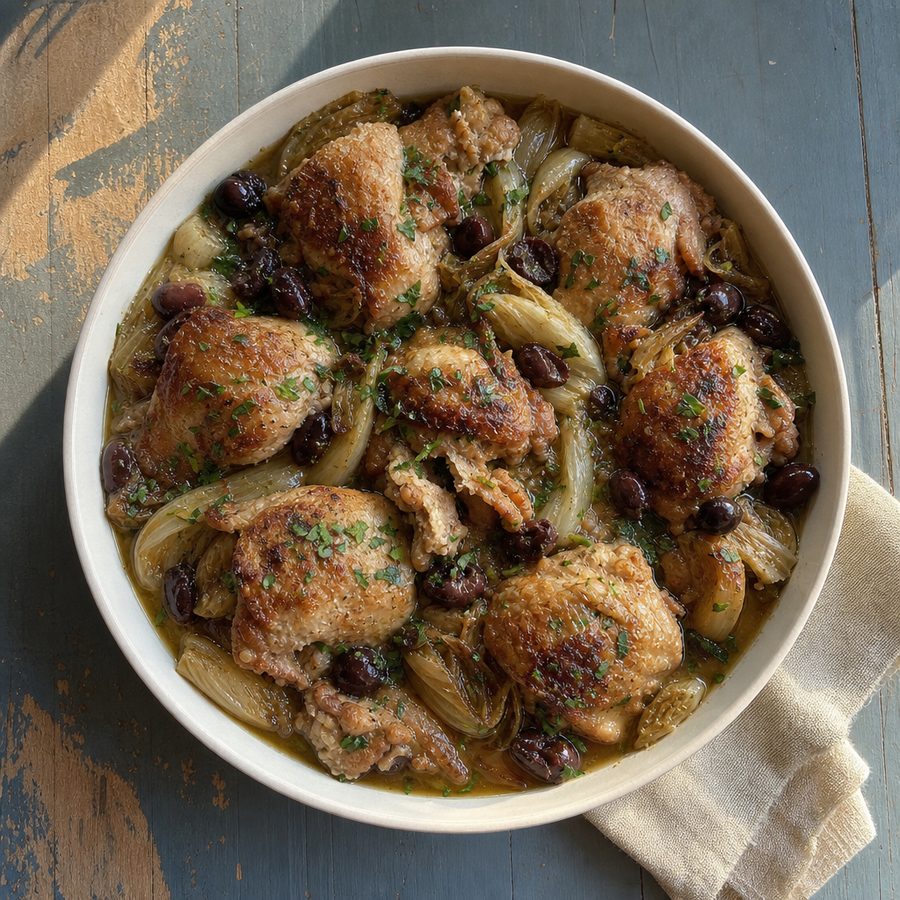
Braised Chicken Thighs with Endive, Olives, and Lemon
Bone-in chicken thighs browned until the skin is deep gold, then braised over halved endive with olives, thyme, and lemon until the meat gives way and the pan becomes a sauce.
Why You'll Love This Recipe
This is the pan I cook on a Sunday so that lunch is handled until Wednesday. A braise sounds like an odd thing to call a lunch recipe, but it is the best kind of leftover there is: the sauce thickens overnight, the endive keeps drinking up the pan juices, and a bowl of it reheats in about five minutes with none of the sadness of reheated chicken breast. Bone-in thighs are what make that possible. Dark meat sits happily at a low simmer for the better part of an hour, and the skin you browned at the start gives its fat and its flavor to everything underneath while the meat loosens from the bone.
Endive is the reason to make this rather than another chicken braise. Most people meet it raw in a salad, where it is crisp and frankly bitter, and never find out what heat does to it. Halved through the root, browned on the cut face, and left under a lid with a spoonful of honey and the juice of a lemon, it collapses into something silky and amber with the bitterness turned down to a low hum that sits behind the olives. Keep the root end intact when you cut, or the leaves separate and you end up with braised shreds rather than tidy halves you can lift out whole.
The browning is not optional and it is where people rush. Put the thighs in skin side down over medium-high and then leave them alone for a full eight to ten minutes, until the skin releases from the pan by itself and comes up deep gold. That sticky layer on the bottom of the pan is the backbone of the sauce and the lemon juice is what lifts it back up. The olives do most of the salting, so there is very little salt in the list, and what you end up with is a bowl with a serious amount of protein in it and soft, savory endive underneath, which is the part I always want more of.
Ingredients
- 8 bone-in, skin-on chicken thighs (about 2 1/4 lb)
- 6 heads Belgian endive (about 1 1/4 lb), halved lengthwise through the root
- 1 large yellow onion, sliced 1/4 inch thick
- 5 cloves garlic, thinly sliced
- 1/2 cup pitted kalamata olives, halved
- 1 cup chicken broth
- 2 tbsp fresh lemon juice, plus the zest of 1 lemon in wide strips
- 1 tsp honey
- 2 tbsp olive oil
- 1 tbsp fresh thyme leaves
- 2 bay leaves
- 3 tbsp chopped fresh parsley
- 1 1/4 tsp fine sea salt, divided
Instructions
- Prep the endive and lemon: Trim a thin slice off the base of each endive and halve them lengthwise straight through the root, which is what holds the leaves together during the braise. Peel two or three wide strips of zest from the lemon with a vegetable peeler, then juice it.
- Brown the chicken: Pat the thighs very dry and season them with 3/4 teaspoon of the salt. Heat the olive oil in a wide braising pan over medium-high, lay the thighs in skin side down, and leave them undisturbed for 8 to 10 minutes, until the skin is deep gold and releases from the pan on its own. Turn them, cook 2 minutes more, and lift them onto a plate.
- Brown the endive: Pour off all but about 2 tablespoons of the fat. Lay the endive halves in cut side down and cook for 4 to 5 minutes without moving them, until the flat faces are browned and smell sweet. Lift them out, add the onion, and cook for 3 minutes until it slumps and turns translucent.
- Build the braise: Stir in the garlic, thyme, olives, and lemon zest strips and cook for 1 minute, until the garlic smells sweet rather than raw. Pour in the broth, the lemon juice, and the honey, add the bay leaves, and scrape the browned bits off the bottom of the pan with a wooden spoon.
- Braise: Set the endive back in cut side up and the thighs on top, skin side up so the skin sits above the liquid. Bring it to a gentle simmer, cover the pan partway, and cook over low heat for 35 to 40 minutes, until the meat pulls back from the bone and reads 185°F (85°C) and a knife slides into the endive with no resistance.
- Finish and serve: Take out the bay leaves and the zest strips. Let the pan sit off the heat for 5 minutes so the juices settle, taste for salt, and scatter the parsley over the top. Serve 2 thighs per bowl with 3 endive halves and the juices spooned over.
Variations
- Rosemary in place of thyme: Use a whole sprig of rosemary for a piney, more assertive pan that stands up to the bitterness of the endive.
- Leeks underneath: Add two sliced leeks with the onion so the sauce comes out sweeter and thicker around the endive halves.
- Turkey thighs: Swap in two bone-in turkey thighs at the same total weight and braise for about an hour, then pull the meat off the bone before serving.
- Greens at the end: Wilt a few handfuls of spinach or swiss chard into the hot juices in the last two minutes for something dark green in the bowl.
- Root vegetables: Add cubed celeriac or turnip with the broth so there is something starchier soaking up the sauce.
Storage & Leftovers
This keeps in a sealed container in the refrigerator for up to 4 days and genuinely improves after a night, since the endive keeps taking up the lemon and the olive brine while it sits. Store the meat and the endive together in the sauce so nothing dries out at the edges.
Reheat a portion in a covered skillet over medium-low for 6 to 8 minutes with a splash of broth or water. The skin will be soft rather than crisp by then, which is simply what braised skin does, so either accept it or slide the bowl under a hot broiler for 2 minutes at the end.
It freezes well, which is unusual for chicken with the skin left on. Portion the meat and endive together with the sauce, freeze for up to 3 months, and thaw overnight in the refrigerator. The endive softens a little further on thawing, though it has already given up its crunch in the braise, so very little is lost.
Notes & Tips
- Dry skin browns, wet skin steams: Pat the thighs with paper towels until they feel almost tacky. Any surface water has to boil off before browning can start, and by then the meat underneath has gone tough.
- Leave the thighs alone: Chicken skin sticks hard at first and lets go by itself once it is properly gold. If it resists the tongs at 6 minutes it is not ready, and pulling at it tears the skin off.
- Cut through the root: The core at the base of each endive is what keeps the halves whole. Halve straight through it and leave the pan unstirred once the lid goes on.
- Skin above the waterline: Set the thighs on top of the endive with the skin up and keep the liquid shallow. Skin left sitting in broth turns slippery rather than tender.
- Salt late, taste twice: Olives give up their salt slowly through a braise, so hold back and season at the end. It is the easiest place in this recipe to overshoot.
- Cook thighs further than you think: White meat is done at 165°F (74°C), but dark meat wants about 185°F (85°C) for the connective tissue to melt. Pulling thighs early is why they sometimes eat rubbery rather than falling apart.
Nutrition & Mindful Eating
- Chicken thighs, endive, and olives work as one thing in this pan. The dark meat gives the braise its body, the endive goes soft and savory as it takes up the fat, and the lemon and olives keep something this rich tasting bright.
- Chicken thighs are the cut that suits a long slow cook, because the connective tissue in dark meat melts rather than tightening, and the meat carries iron and zinc along with a real amount of protein.
- Endive is a chicory, and the compounds behind its bitterness are the same ones that make chicories worth eating, along with folate and a useful amount of fiber for something that cooks down this small.
- Kalamata olives are cured fruit with real olive oil still inside them, and their brine does most of the seasoning work here while a teaspoon of honey and the lemon zest hold the bitterness of the endive in balance.
- The skin browned before any liquid goes into the pan is where the deepest flavor in the bowl comes from, and the sticky brown layer it leaves behind is exactly what the lemon juice lifts back into the sauce.
- As you eat, pull the meat apart with the side of your fork and notice how little effort it takes, then let the softened endive and the lemon underneath slow the meal down to something worth sitting through.
Frequently Asked Questions
I cannot find endive. What else works?
Fennel wedges cut through the core are the closest match in the pan and take about the same time, though they are sweeter and taste of anise. Halved small heads of radicchio work if you want to keep the bitterness, and thick cabbage wedges will do the job for less money.
My endive fell apart into leaves. What happened?
It was cut off the root. That little wedge of core at the base is the only thing holding the layers together through 40 minutes of simmering, so halve each head straight through it and resist stirring the pan once the braise is going.
Is endive too bitter for this?
Raw, it is genuinely bitter. Browning the cut face and braising it with a teaspoon of honey and lemon changes it completely, and what is left reads as a gentle background note against the olives rather than as bitterness. If you are unsure, use five heads and one extra teaspoon of honey.
Does this fit an AIP elimination phase?
It does. There are no grains, legumes, dairy, eggs, nuts, seeds, or nightshades in it, and the seasoning is endive, onion, garlic, thyme, bay, lemon, and olives rather than a spice blend. Check that your olives are cured in salt and vinegar rather than in a brine that carries pepper.