
Braised Endive with Bacon, Eggs, and Toasted Walnuts
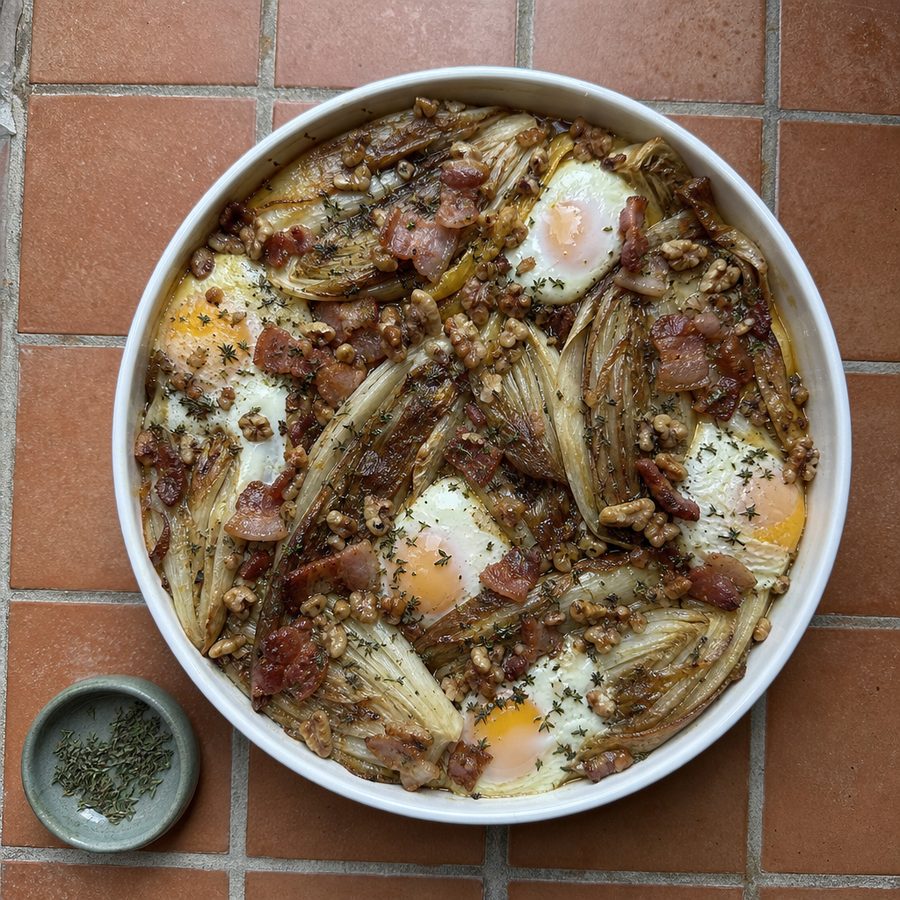
Halved endive braised cut side down in bacon fat until amber and tender, eggs cracked in around them, finished with mustard, cider vinegar, and toasted walnuts.
Why You'll Love This Recipe
I started making this because endive kept turning up in my vegetable box and I had run out of salads to put it in. Cooked, it is a completely different vegetable. The bitterness that makes people wary of it raw turns into something closer to caramel once the cut faces brown, and it collapses into a texture that is almost silky. This pan takes about forty minutes, needs one skillet and a lid, and feeds four people from six heads of endive and a few slices of bacon.
Everything is built on the fat the bacon leaves behind. The pieces go into a cold pan so they render slowly and come out crisp, and then the endive goes in cut side down and is left there, untouched, until you can smell it turning sweet. A splash of water and a lid does the rest of the cooking. The eggs go in last, into the gaps, and cook covered until the whites just firm. Mustard and cider vinegar go in off the heat and pull the pan juices together.
The plate is sweet, sharp, salty, and a little bitter all at once, which is not a combination most breakfasts offer. Walnuts toasted in a dry pan go over the top for crunch against all that softness. It is the sort of thing I would put in front of somebody who says they do not like breakfast, and it is quiet enough for a slow morning and interesting enough that people ask what is in it.
Ingredients
- 6 heads Belgian endive (about 1 1/2 lb), halved lengthwise through the root
- 10 large eggs
- 4 slices bacon (about 2 1/2 oz), cut crosswise into 1/2-inch pieces
- 1/2 cup walnut halves, roughly chopped
- 2 shallots, thinly sliced
- 1 tbsp dijon mustard
- 1 tbsp apple cider vinegar
- 1 tbsp olive oil
- 1 tsp fresh thyme leaves
- 3/4 tsp coarsely ground black pepper
Instructions
- Render the bacon: Put the bacon pieces in a cold 12-inch skillet with a lid and set it over medium heat. Cook eight to ten minutes, stirring now and then, until the pieces are crisp and there is a good film of fat in the pan. Lift the bacon out with a slotted spoon onto a plate and leave every drop of the fat behind.
- Brown the endive: Trim a thin slice off each root end and halve the heads lengthwise. Add the olive oil to the bacon fat, lay the halves cut side down in a single layer, and leave them completely alone over medium heat for seven to eight minutes. Lift one to check: you want a deep amber crust across the whole cut face, not pale gold in patches.
- Braise until tender: Scatter the shallot and thyme around the endive, add 1/3 cup water, cover, and cook over medium-low for ten to twelve minutes. They are ready when the tip of a knife slides into the thick root end with no resistance and the pan liquid has reduced to a couple of tablespoons.
- Add the eggs: Turn the endive halves cut side up and push them apart to open gaps down to the pan. Crack the eggs into the gaps, grind the pepper over everything, cover again, and cook over low heat for seven to nine minutes, until the whites are opaque all the way to the yolk and the yolks still shift when you shake the pan.
- Toast the walnuts: While the eggs cook, toast the chopped walnuts in a dry pan over medium heat for three to four minutes, shaking often, until they darken a shade and smell warm. Tip them straight out of the pan, since they will keep browning in the hot metal and turn bitter.
- Finish the pan: Take the skillet off the burner. Whisk the mustard and cider vinegar into the small amount of liquid at one edge of the pan and tilt it so the sauce runs back through. Scatter the bacon and the walnuts over the top and serve straight from the skillet.
Variations
- Cheese under the eggs: Grate an ounce of gruyere or parmesan over the endive before the eggs go in so it melts into the pan juices.
- Orange and thyme: Add a strip of orange zest to the braise and finish with the juice rather than the vinegar for a sweeter, rounder pan.
- Pork and pepper: Brown eight ounces of cubed pork loin in the bacon fat before the endive and return it with the shallot for a heavier plate.
- Hazelnut: Swap the walnuts for toasted chopped hazelnuts, which suit the sweetness of the browned endive even better.
- Sharper finish: Stir a tablespoon of chopped capers or cornichons in with the mustard for a pan with a real bite to it.
Storage & Leftovers
The braised endive keeps three days sealed in the refrigerator and is worth making on its own for that reason. Store it apart from the eggs, which never reheat well, and keep the bacon and walnuts in a separate container at room temperature so both stay crisp.
Reheat the endive cut side down in a hot dry skillet for three or four minutes, which recovers the caramelized face rather than just warming it through. Then push the halves apart, add fresh eggs, cover, and finish as written. The mustard and vinegar go in at the very end again.
Braised endive does not freeze well. It carries a lot of water and thaws slack and stringy, with none of the silky texture that made it worth braising. This is a dish to make in the quantity you will eat within a few days rather than one to put away in the freezer.
Notes & Tips
- Start bacon in a cold pan: Bacon dropped into hot metal seizes and scorches before the fat renders. A cold start gives you crisp pieces and a clean pan of fat to braise in.
- Do not move the endive: The amber face takes seven or eight uninterrupted minutes. Every lift and check costs you contact with the pan and you end up with pale, bitter halves.
- Trim the root, do not remove it: The root holds each half together through the braise. Shave the very end and cut out a small cone of the core, but leave enough to keep the leaves attached.
- Keep the lid on for the braise: Endive needs steam to soften all the way through the thick root end. Uncovered, the outside collapses while the base stays crunchy.
- Toast the walnuts separately: In the main pan they soak up liquid and go soft. A dry pan and three minutes gives you the crunch the dish is short of otherwise.
- Mustard goes in off the heat: Dijon simmered in a hot pan turns grainy and loses its sharpness. Whisk it into the juices once the burner is off and it stays glossy.
Nutrition & Mindful Eating
- The eggs, the endive, and the walnuts split the work on this plate. The eggs carry nearly all the protein, the endive gives it real volume and fiber for very little weight, and the walnuts add fat and crunch that make a pan of vegetables eat like a full breakfast.
- Endive is a chicory, and slow browning is what turns its bitterness into something close to caramel. The pale leaves bring folate and a surprising amount of fiber for a vegetable that is mostly water.
- Eggs cooked gently in the pan juices keep soft, runnable yolks, and that yolk is where the vitamin D, the choline, and the lutein sit. Cooking them covered over low heat is what keeps them tender rather than rubbery.
- Walnuts toasted in a dry pan smell warm and turn a shade darker, and they carry the plant form of omega-3 fat along with a good amount of fiber.
- Mustard and cider vinegar whisked into the pan at the end are what pull everything together. The acid cuts the bacon fat and stands up to the sweetness the endive picked up in the browning, which is why the last bite tastes as bright as the first.
- As you eat, take a piece of endive on its own first and notice how little bitterness is left in it, then break a yolk over the rest and give yourself the time to finish sitting down.
Frequently Asked Questions
My endive tasted very bitter. What can I do about it?
Two things. Cut a shallow cone out of the root end before browning, since the bitterness concentrates there, and give the cut faces longer in the pan. Browning is what converts that bitterness into sweetness, so pale endive stays sharp no matter how long you braise it afterward.
Can I use radicchio or escarole?
Both are chicories and both work with adjustments. Radicchio browns faster and needs about half the braising time. Escarole is leafy rather than tight, so it wilts in a couple of minutes and never gives you the amber cut face, which is much of what this dish is about.
How do I stop the eggs overcooking under the lid?
Drop the heat as low as it will go the moment the eggs go in, and start checking at seven minutes. Covered eggs cook from above as well as below, so the yolks firm up faster than they would in an open pan. Pull them while they still wobble.
Can I make it without the bacon?
Yes. Use two tablespoons of olive oil or butter for the browning and add a teaspoon of smoked paprika with the shallot to replace some of the smoke. Add the walnuts a little more generously, since they take over as the crunch on top.