
Braised Lamb with Artichokes, Lemon, and Dill
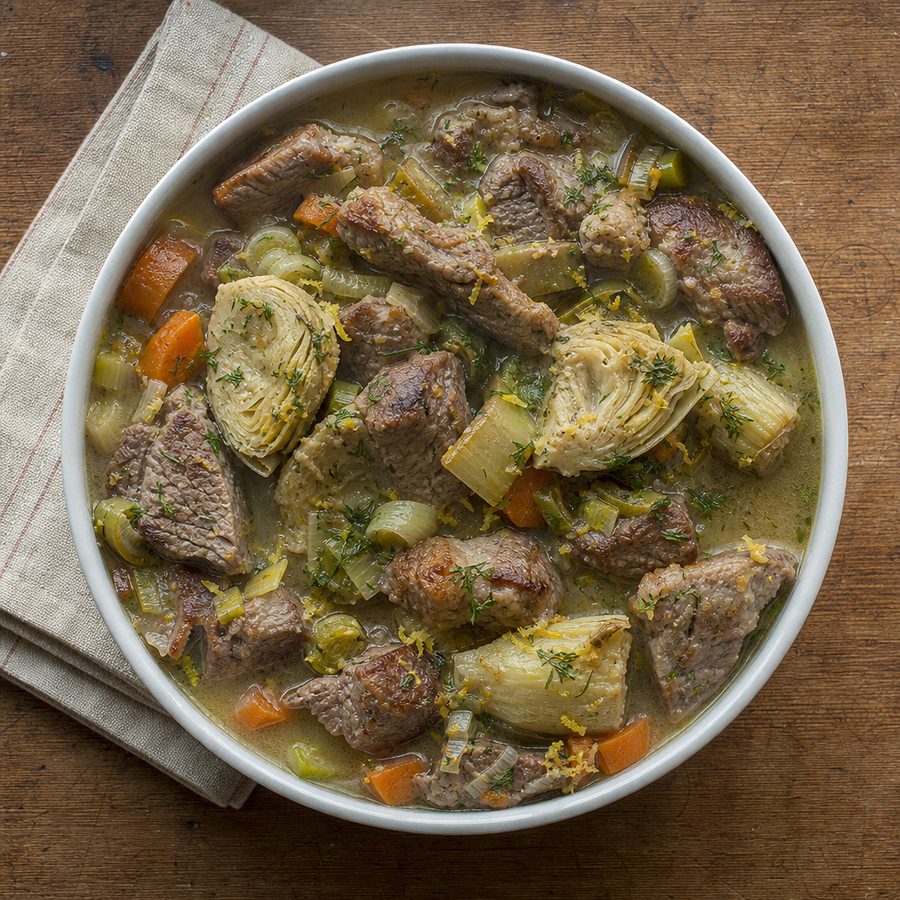
Lamb shoulder braised slowly with leeks and carrots until it gives way, finished with quartered artichoke hearts, a good amount of lemon, and fresh dill.
Why You'll Love This Recipe
One Sunday afternoon buys Monday, Tuesday, and Wednesday back. Lamb shoulder is not a weeknight cut, but it asks almost nothing of you once it is in the pot, and the kitchen smells like lemon and slow lamb for most of the afternoon. I first ate some version of this in the spring, when artichokes and dill turn up together, and canned hearts get you most of the way there in February. Portion it into containers while it is still warm and you have three lunches that reheat better than they cooked, which is the whole argument for braising something on a weekend.
Brown the lamb properly and everything after it is easy. Work in two batches so the pieces sit apart in the pan, and wait for a real crust on at least two sides, because that browning is the only deep savory note in a braise with no tomato, no wine, and no spice blend behind it. After that the liquid barely simmers. You want the surface trembling rather than bubbling, since a hard boil tightens lamb and leaves it dry in the middle of a wet pot. The artichokes go in for the last fifteen minutes only. Any longer and they collapse into the broth, and you lose the one thing on the spoon that holds its shape.
What makes this taste finished is the lemon, and there is more of it than you expect. Three tablespoons of juice plus the zest go in off the heat, so the sharpness stays and the whole pot lifts. Then the dill, a quarter cup of it, stirred through while the broth is still hot. Lamb shoulder is rich, and rich food with no acid and nothing green sits heavy by the third forkful. With both, you get a bowl that is deeply savory and still bright at the end. It eats like a real meal, and the leftovers are honestly better on day two once the meat has sat in that lemony broth overnight.
Ingredients
- 1 3/4 lb boneless lamb shoulder, trimmed and cut into 1 1/2-inch pieces
- 2 cans (14 oz each) quartered artichoke hearts packed in water, drained and rinsed (about 14 oz drained)
- 2 medium leeks, white and pale green parts only, halved and sliced
- 3 medium carrots, cut into 1-inch pieces
- 5 cloves garlic, thinly sliced
- 2 tbsp olive oil
- 2 cups chicken broth
- 3 tbsp fresh lemon juice, plus the zest of 1 lemon
- 1/4 cup chopped fresh dill
- 3 tbsp chopped fresh parsley
- 2 bay leaves
- 1 1/4 tsp fine sea salt, divided
Instructions
- Prep the lamb and vegetables: Pat the lamb pieces dry with paper towels and season them with 1/2 teaspoon of the salt. Halve the leeks lengthwise, fan the layers under cold running water to wash out the grit, and slice them about a quarter inch thick. Drain the artichokes, rinse them, and press them dry in a towel so they do not water down the pot.
- Brown the lamb in two batches: Heat the olive oil in a Dutch oven over medium-high until it shimmers. Add half the lamb in a single layer with space between the pieces and leave it undisturbed for 4 to 5 minutes, until the underside is deep brown, then turn and cook 3 minutes more. Move it to a bowl and repeat with the second batch.
- Soften the leeks and carrots: Lower the heat to medium and add the leeks and carrots to the fat left in the pot. Cook for 5 minutes, scraping the browned bits off the bottom as the leeks release their moisture, until the leeks slump and smell sweet. Add the garlic and cook 45 seconds more, just until it smells sweet rather than raw.
- Braise: Return the lamb and any juices to the pot with the broth, the bay leaves, and 1/2 teaspoon of the salt. Bring it to a bare simmer, cover, and cook over low heat for 75 to 90 minutes, until a piece of lamb gives with no resistance under the side of a spoon. Check once at the halfway point that the surface is only trembling.
- Add the artichokes: Stir in the artichoke quarters, uncover the pot, and simmer for 15 minutes. The liquid will reduce a little and thicken from the gelatin in the lamb, and the artichokes will heat through while keeping their edges. Fish out the bay leaves.
- Finish with lemon and dill: Take the pot off the heat and stir in the lemon juice, the lemon zest, the dill, the parsley, and the remaining salt. Let it sit for 5 minutes so the herbs soften into the broth, then taste and adjust the lemon before spooning it into bowls.
Variations
- Green olive and lemon: Add a handful of halved kalamata olives with the artichokes for a saltier, more assertive pot.
- Spring version: Swap the carrots for a bunch of trimmed asparagus added in the last 6 minutes so it stays firm.
- Fennel for leek: Use one sliced fennel bulb in place of one leek for an anise note that suits the lemon.
- Greens stirred through: Wilt a few large handfuls of spinach or Swiss chard into the hot broth just before the lemon goes in.
- Root-heavy pot: Add cubed celeriac or turnip with the carrots when you want the braise to eat more like a full plate.
Storage & Leftovers
This keeps in a sealed container in the refrigerator for up to 4 days and is one of the few lunches that genuinely improves. Overnight the lemon works into the meat and the broth sets to a soft jelly from the gelatin in the shoulder, which melts back the moment it warms. Cool it uncovered for 20 minutes before the lid goes on.
Reheat gently in a covered saucepan over low heat for 6 to 8 minutes with a splash of broth or water, stirring once. A hard reheat tightens the lamb again and undoes the long cook. A microwave will do it in about 2 minutes at half power, though the artichokes soften more than they do on the stove.
It freezes well for up to 3 months, which is unusual for a dish with artichokes in it. Freeze it flat in bags with plenty of the broth around the meat, thaw overnight in the refrigerator, and add a squeeze of fresh lemon and a little more dill when you reheat it, since both fade in the freezer.
Notes & Tips
- Buy shoulder, not stew meat: Bagged stew meat is usually offcuts from several muscles that cook at different rates. A whole shoulder cut down yourself gives you pieces that finish together.
- Dry the meat before it hits the pan: Wet lamb steams and turns gray rather than browning. Paper towels and a minute of patience are the whole trick.
- Two batches, not one: Crowded pieces drop the pan temperature and release water. Browning in two goes costs about 6 extra minutes and is the difference between a savory braise and a pale one.
- Rinse the artichokes: Canned artichokes carry a metallic brine that will follow them into the pot. A rinse and a squeeze in a towel takes it away.
- Keep the pot at a whisper: If you can hear it bubbling from across the kitchen, it is too hot. A lazy blip every few seconds is what you want.
- Zest before you juice: The zest is doing half the lemon work here, and zesting a lemon that has already been squeezed is miserable.
Nutrition & Mindful Eating
- Lamb, artichokes, and the broth they cook in work as one thing here. The meat gives the bowl its body and its richness, the artichoke quarters give it something firm to chew against, and the lemon stirred in at the end keeps a rich braise tasting light.
- Lamb shoulder is a working muscle full of connective tissue, and that tissue melts into the broth over an hour and a half, which is where the soft coating texture comes from. The meat also carries iron in the form your body takes up most readily, along with zinc and B12.
- Artichoke hearts stay in distinct quarters when they only get fifteen minutes in the pot, and they taste faintly sweet and grassy against the lamb. They are one of the higher-fiber vegetables you can spoon out of a can, and much of that fiber is the kind your gut bacteria feed on.
- Leeks and carrots cooked in the lamb fat go soft and sweet and end up tasting like part of the broth rather than like vegetables sitting in it. The carrots bring the beta-carotene that gives the pot its color, which your body converts to vitamin A.
- Lemon juice, lemon zest, and a quarter cup of dill all go in off the heat, which is the only way to keep them sharp and green. That freshness arriving last is why the bowl tastes finished the moment you stir it.
- As you eat, notice how little chewing the lamb asks of you after that long quiet simmer, and let the lemon and dill at the top of the bowl be your cue to slow down and finish sitting.
Frequently Asked Questions
Can I use a different cut of lamb?
Lamb leg works at the same weight and cooks in about 15 minutes less, though it is drier because there is less connective tissue in it. Bone-in shoulder chops are the best swap of all, since the bones enrich the broth. Beef chuck also braises well here and takes about 30 minutes longer.
Do I have to use canned artichokes?
No, but they are what makes this a weekday-friendly dish. Frozen artichoke quarters go in at the same point and need about 5 extra minutes. Fresh artichokes are wonderful and are also an afternoon of trimming, so save them for a day when the trimming is the point.
My braise came out tough. What happened?
Almost always the heat was too high. Lamb shoulder passes through a stage where it is tighter than it was raw, and the fix is more time at a lower temperature rather than less. If it resists at 90 minutes, cover it and give it another 20 at a whisper of a simmer.
Does this work for an AIP elimination phase?
It does. There are no grains, legumes, dairy, eggs, nuts, seeds, or nightshades in it, and the seasoning is garlic, bay, lemon, and dill rather than a spice blend. Buy artichokes packed in water or brine rather than marinated ones, since the marinades usually carry pepper, and check that your broth is free of paprika.