
Braised Rabbit with Leeks and Carrots
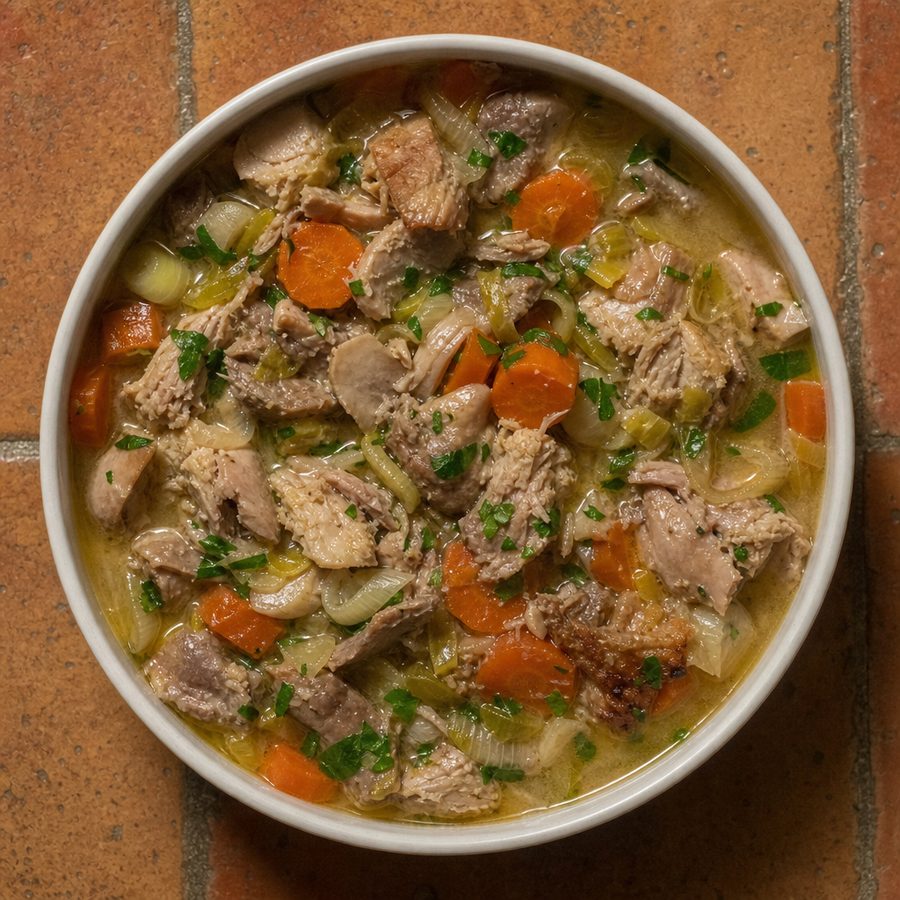
Rabbit pieces browned and braised with leeks, carrots, and thyme until the meat slips off the bone, then pulled into the broth and finished with lemon and parsley.
Why You'll Love This Recipe
I put this in the lunch rotation for the middle of an elimination phase, when chicken has started to taste like nothing and what you want is a bowl of something that took a little time. Rabbit is the meat most people have never bought, so let me be straightforward about where it comes from. You will find it frozen and whole, usually two and a half to three pounds, at Latin and Asian markets, halal butchers, farmers markets, some Whole Foods stores, or online from a game supplier. Thaw it overnight, cut it into six pieces, and the rest is an ordinary braise. It cooks on a Sunday and feeds you Monday, Tuesday, and Wednesday.
The mistake with rabbit is treating it like chicken and pulling it out early. There is very little fat in it to buy you time, so the window between raw and dry is narrow, and the way through is low wet heat rather than a hot oven. Brown the pieces hard first, because the browned bits left in the pan are most of the flavor in the finished broth, then keep the pot at a bare simmer under a lid for the better part of an hour. The leeks melt into the liquid and thicken it slightly, the carrots go sweet all the way through, and the thyme and bay work into the meat while you do something else.
What you end up with is closer to a stew than a roast. The meat comes away from the bone in long fine strands and takes on the sweetness of the vegetables around it, which is why I pull it off the bone before I put it away. Lunch then becomes a bowl I reheat rather than a plate I have to work at with a fork at my desk. It is a real amount of protein for something that tastes this gentle, and the carrots and leeks give it enough body to carry an afternoon. The lemon and parsley go in at the end, off the heat, where they stay sharp and green.
Ingredients
- 1 whole rabbit (about 2 1/2 lb), cut into 6 pieces
- 3/4 lb carrots (about 5 medium), peeled and cut into 1-inch pieces
- 2 large leeks, white and pale green parts only, halved lengthwise and sliced
- 4 cloves garlic, smashed
- 2 tbsp olive oil
- 2 cups chicken bone broth
- 1 tbsp fresh thyme leaves, or 6 sprigs
- 2 bay leaves
- 1 tbsp fresh lemon juice, plus the zest of 1 lemon
- 3 tbsp chopped fresh parsley
- 1 tsp fine sea salt, divided
Instructions
- Cut up the rabbit: Thaw the rabbit overnight in the refrigerator and pat every piece very dry. Cut it into 6 pieces: two hind legs, two front legs, and the saddle halved crosswise. A heavy knife goes through the joints with almost no force. Season all the pieces with half of the salt.
- Brown the pieces: Heat the olive oil in a Dutch oven over medium-high until it shimmers. Brown the rabbit in two batches, 3 to 4 minutes per side, until the pieces are deep gold rather than pale. Move them to a plate. Do not crowd the pot or they will steam.
- Soften the leeks and carrots: Lower the heat to medium and add the leeks, carrots, and garlic with a pinch of the remaining salt. Cook for 5 minutes, scraping the browned bits off the bottom as the leeks release their moisture, until the leeks slump and smell sweet. Stir in the thyme and bay leaves.
- Braise: Return the rabbit and any juices to the pot and pour in the broth. Bring it to a simmer, then lower the heat until the surface is barely moving, cover, and cook for 50 to 60 minutes. The front legs and saddle finish first, so lift them out at 40 minutes if they already give at the bone.
- Pull the meat: Move all the rabbit to a plate and let it sit for 5 minutes, until it is cool enough to handle but still warm. Pull the meat off in strands, running your fingers along each piece to catch the fine rib bones, and return the meat to the pot. Discard the bones and bay leaves.
- Finish and serve: Take the pot off the heat and stir in the lemon juice and zest, the parsley, and the rest of the salt. Taste the broth and adjust it. Serve in shallow bowls with enough of the broth to keep the meat wet.
Variations
- Chicken instead: Bone-in chicken thighs braise the same way in about 35 minutes if rabbit is not sold where you shop.
- Less sweet: Swap half the carrots for turnip or parsnip when you want the pot more savory.
- Olives and lemon: Add a handful of halved kalamata olives in the last 10 minutes for a saltier, sharper braise.
- Rosemary and sage: Use rosemary and a few sage leaves in place of the thyme for a deeper, more autumnal pot.
- Something green: Stir a few handfuls of spinach or watercress into the hot broth right before you serve it.
Storage & Leftovers
Stored in its broth, this keeps in a sealed container in the refrigerator for up to 4 days, and the second day is better than the first. Keep the meat submerged in the liquid rather than drained, since rabbit dries out quickly once the broth around it is gone.
Reheat it gently in a covered pot over low heat with a splash of broth or water, about 6 minutes, stirring once. High heat tightens the strands and turns them stringy, and the microwave does the same thing faster, so give it the extra pan when you have the time.
It freezes well as long as the broth goes with it. Portion the meat into containers with enough liquid to cover, freeze for up to 3 months, and thaw overnight in the refrigerator. The carrots soften a little on thawing, though the meat comes back almost exactly as it went in.
Notes & Tips
- Buy it frozen and thaw it slowly: Almost all rabbit is sold frozen. Thaw it overnight in the refrigerator, then pat it bone dry, because a damp surface will not brown.
- Six pieces, no butchery skill needed: Two hind legs, two front legs, and the saddle cut in half crosswise. The joints separate easily, and any butcher will do it for you if you would rather not.
- Never let it boil: A rolling boil tightens rabbit within minutes and it stays tight. You want the occasional lazy bubble and nothing more.
- The little pieces finish first: Front legs and saddle are done 10 to 15 minutes before the hind legs. Take them out and let them wait on a plate.
- Pull the meat while it is warm: Bones come away clean from warm rabbit and cling to cold rabbit. Run your fingers along each strand to catch the fine rib bones.
- Keep the broth on the meat: This dish lives on its liquid. Store and serve it wet, and add a splash of broth any time it looks dry in the pot.
Nutrition & Mindful Eating
- Rabbit, leeks, and carrots come out of the same pot tasting like one thing. The meat gives the bowl its substance, the carrots give it sweetness, and the leeks break down enough to thicken the broth so every spoonful carries a little of all three.
- Rabbit is fine-grained and mild, closer to chicken thigh than to any red meat, and it is dense in protein with B12 and selenium riding along with it. Cooked slowly in broth it goes tender in strands rather than in slices.
- Carrots simmered this long turn sweet the whole way through, and that deep orange is the beta-carotene your body converts into vitamin A. Cutting them into thick pieces is what keeps them from disappearing into the broth entirely.
- Leeks fall apart into the liquid and give it body with nothing thickening it, and they bring vitamin K and folate along with that sweetness. An hour of slow cooking is also what makes them sit easily on people who find raw onion difficult.
- Thyme and bay go in at the start while lemon and parsley go in at the very end, and that split is what keeps a long braise from tasting flat. The herbs deepen over the hour, and the acid arriving last makes the rabbit taste clearly of itself.
- As you eat, notice how the meat comes away in strands rather than chunks, and let the sweetness the carrots picked up over the hour slow you down enough to finish the bowl sitting rather than standing.
Frequently Asked Questions
What does rabbit taste like, and where do I buy it?
Mild and fine-grained, closer to chicken thigh than to any red meat, with a faint sweetness and none of the strong flavor people expect from game. Nearly all of it is sold frozen and whole. Look at Latin and Asian markets, halal butchers, farmers markets, some Whole Foods stores, or order it online from a game supplier.
My rabbit came out dry and stringy. What went wrong?
The pot boiled rather than simmered, or the small pieces stayed in as long as the hind legs. Rabbit is close-grained and delicate, so a rolling boil squeezes it tight and it does not come back. Keep the surface barely moving and pull the front legs and saddle out early if they are done.
Can I cook it the day before?
Yes, and I usually do. Braise it, pull the meat, and refrigerate it in the broth overnight. The flavor settles and the meat drinks up some of the liquid, so all you do the next day is warm it through and add the lemon and parsley fresh.
Does this fit an AIP elimination phase?
It does. There are no grains, legumes, dairy, eggs, nuts, seeds, or nightshades in it, and the seasoning is thyme, bay, garlic, lemon, and salt rather than a spice blend. Read the label on your broth, since many boxed ones carry pepper or paprika.