
Broiled Ground Lamb Skewers
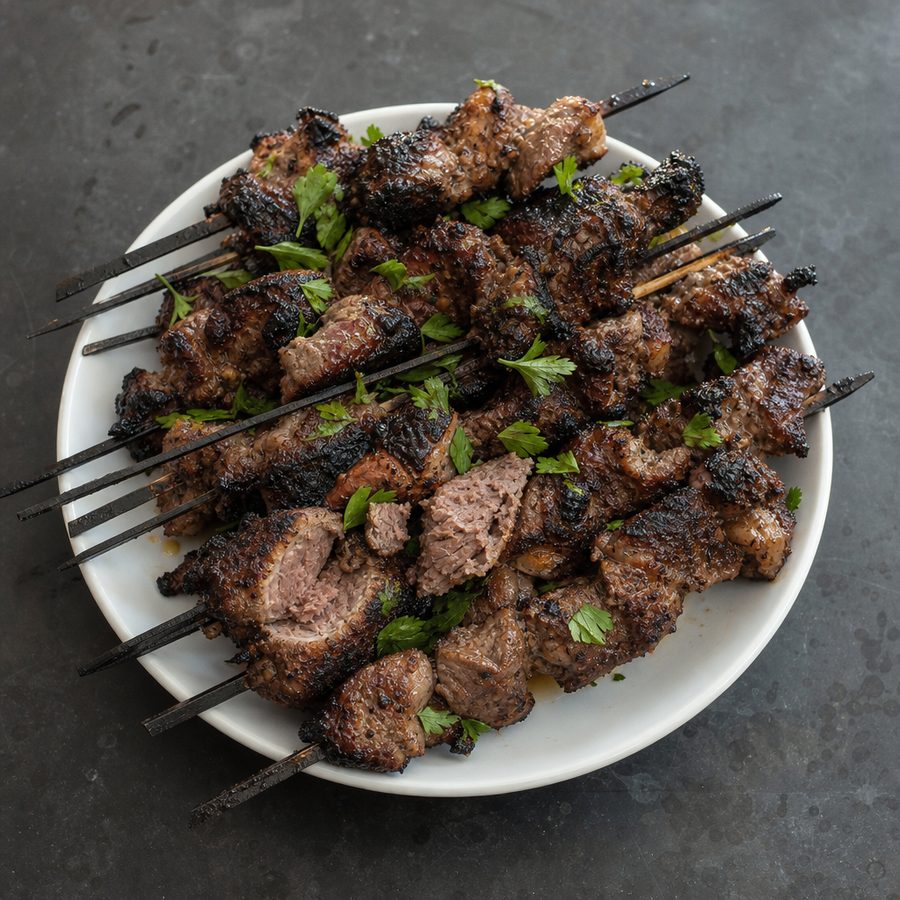
Ground lamb kneaded with salt and an egg until it turns sticky, molded in a long rope around flat skewers, and broiled close to the element until the outside blisters dark and the fat runs.
Why You'll Love This Recipe
Ground meat on a skewer is a technique rather than a recipe, and once you have it, it works with whatever is in the freezer. The part people skip is the kneading. Ground lamb worked hard with salt for a couple of minutes changes texture in your hands. It goes from loose and crumbly to tacky and elastic, sticking to your palms and pulling away from the bowl in one mass, and that is the protein loosening and knitting together. That is what holds the meat on the skewer under the broiler, and it is also what gives you a springy bite rather than a crumbly one.
Lamb is the meat I like best for this because its fat is soft and melts at a low temperature, so it runs out fast under high heat and bastes the surface on its way down. The outside blisters and chars in patches along the ridges you press into the rope, and those dark spots taste sweet and slightly gamey. The middle stays juicy because the whole thing is over in about eight minutes. I press ridges into each skewer on purpose, since the raised parts sit closer to the element and catch first, giving every bite a mix of blistered and tender.
It looks like something you did on purpose. It takes one bowl, one broiler pan, and no pot to scrub, and the skewers come out looking far more considered than the effort behind them. I make them when I want to eat with my hands, standing around the kitchen, pulling meat off the skewer while the next batch goes under. They are also the best cold leftover I know of, sliced off the stick straight from the refrigerator the next day, so I usually cook the full pound and a half even when there are only two of us.
Ingredients
- 1 1/2 lb ground lamb, cold
- 1 large egg
- 3/4 tsp fine sea salt
Instructions
- Knead the lamb: Put the cold ground lamb, the egg, and the salt in a large bowl and work it with one hand for two full minutes, squeezing and folding rather than stirring. It will start loose and grainy and then turn noticeably tacky, clinging to your fingers and coming away from the bowl in one lump. That change is the whole point. Stop as soon as it happens.
- Chill and heat the broiler: Set the bowl in the refrigerator for five minutes while you position an oven rack about five inches under the broiler element and turn it to high. Line a rimmed sheet pan with foil. Cold meat holds its shape on the skewer, and meat that has warmed up in your hands will sag and drop.
- Shape the skewers: Divide the lamb into eight portions. Wet your hands, take one portion, and press it around a flat metal skewer in a rope about seven inches long and an inch thick, squeezing it on firmly so there are no air gaps under the meat. Run your thumb along the length to press three or four shallow ridges into it. Lay them on the foil with space between.
- Broil the first side: Slide the pan under the element and broil for four to five minutes without opening the door. You will hear fat begin to drip and spit within the first two minutes. They are ready to turn when the ridges have gone dark brown with black at the high points and the surface looks dry and set rather than wet.
- Turn and finish: Turn each skewer a half turn with tongs and broil three to four minutes more, until the second side matches and the meat is firm to a press. Firm is a good sign but not the test: open the thickest skewer at its middle and look for no pink at all, which for ground lamb means 160°F. Lift them onto a warm platter and let them sit for three minutes. The fat on the pan is worth spooning back over them before they go to the table.
Variations
- Ground beef or a blend: Use ground beef, or half beef and half lamb, kneaded exactly the same way. Beef holds its shape a little more firmly and blisters less, so give it an extra minute per side.
- Bacon-wrapped: Wind a slice of bacon around each shaped skewer in a spiral before broiling. The bacon crisps as the lamb cooks and bastes the rope the whole way.
- Ground turkey: Ground turkey works with the same kneading, though it holds less fat, so pull the skewers a minute earlier and expect a paler, softer surface.
- Cheese-stuffed: Press a thin batten of hard cheese down the center of each rope before molding it around the skewer, so it melts into a seam inside. This adds dairy.
Storage & Leftovers
These keep four days in a sealed container in the refrigerator, and they are one of the few cooked ground meats I think improves overnight. The salt goes on working through the meat and the flavor gets rounder and more distinctly of lamb by the second day.
Reheat them under the broiler for about ninety seconds a side, close to the element, so the blistered surface tightens back up. A skillet over medium-high works too. Low, slow reheating in a microwave leaves them soft all the way through and drives off the juice that makes them worth eating.
They freeze well for three months, either cooked or shaped and uncooked. Freeze shaped skewers flat on a tray first, then bag them, and broil straight from frozen with an extra two minutes a side. Cooked ones thaw overnight in the refrigerator and reheat under the broiler the same way.
Notes & Tips
- Knead until it sticks to your hand: That is the only test that matters. Turn the bowl upside down for a second, and if the mass hangs on rather than dropping, it is ready to shape.
- Keep everything cold: Cold lamb molds cleanly and holds a ridge. Warm lamb smears, traps air pockets, and slumps off the metal in the first two minutes under the element.
- Wet your hands: A bowl of water beside you and damp palms keep the tacky meat from tearing as you press it on. Re-wet between each skewer.
- Press ridges into the rope: The raised parts sit nearest the element and blister first, so a ridged skewer gives you charred edges and juicy valleys in the same bite. A perfectly smooth rope browns evenly and reads flatter.
Nutrition & Mindful Eating
- Lamb, an egg, and salt is the whole bowl, so texture carries the dish. Kneading turns the meat springy, the egg sets and firms it from the inside, and the salt is what starts that change happening in the first place.
- Ground lamb has soft fat that melts at a lower temperature than beef fat, which is why it runs so freely under the broiler and bastes the surface on the way down, and the meat brings dense protein with iron and zinc riding along inside it.
- The egg is doing structural work rather than flavor work. It coagulates as the skewer cooks and binds the rope together, and it also carries choline and vitamin B12 into a dish built on very few things.
- Salt earns a bullet here for what it does to the meat rather than for taste alone. Worked into ground lamb it dissolves the proteins enough for them to link up, which is the difference between a springy skewer and a crumbly one.
- Blistering is a flavor, not a mistake. The dark patches along the ridges taste sweet and faintly gamey where the fat has caught, and that contrast against the juicy middle is why these eat so much bigger than three ingredients suggest.
- As you eat, pull the meat off the skewer with your fingers, taste the difference between a blistered ridge and the softer valley beside it, and slow down enough to notice when you have actually had enough.
Frequently Asked Questions
My meat slid off the skewer under the broiler. Why?
Either it was not kneaded long enough or it went on warm. Two solid minutes of squeezing turns the mixture tacky and that stickiness is what grips the metal. Chill it before shaping, press it on firmly so no air is trapped underneath, and use flat skewers rather than round ones, since a round skewer lets the rope spin loose.
Can I use wooden skewers?
Soak them for thirty minutes first and keep the pan at least six inches from the element, and even then the exposed ends will darken. Flat metal skewers are better for broiling, and they also conduct heat into the middle of the rope, which helps the center cook at the same rate as the outside.
Can I cook these on a grill instead?
Yes, over direct high heat for about eight minutes, turning a quarter turn every two minutes. Get the grates hot and clean and oil them with a little rendered fat first, since a ground meat rope sticks more readily than a whole cut and tears when you try to turn it too early.
Does the egg change the texture much?
It does. The egg sets as the meat cooks and firms the rope from the inside, which makes the skewer easier to handle and gives it a springier bite. Left out, the lamb still holds if you knead it well, but it is more fragile and eats a little looser.