
Broiled Mackerel and Cucumber Breakfast Plate with Dill
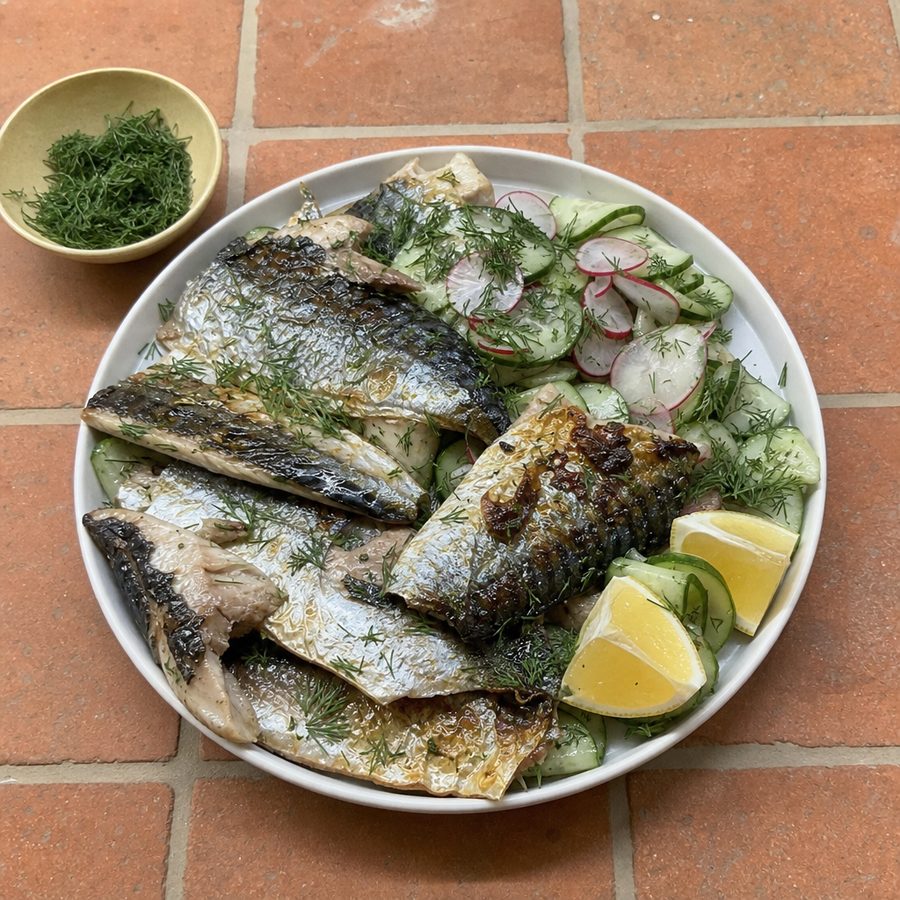
Mackerel fillets broiled until the skin blisters, served against a cold cucumber and radish salad heavy with dill, shallot, lemon, and good olive oil.
Why You'll Love This Recipe
Breakfast fish is normal in half the world and strange in the other half, and this plate is how I introduce people to the idea. It takes under half an hour, most of it slicing cucumber, and the actual cooking is six minutes under a broiler you do not have to watch closely. I reach for it on mornings when I want to eat well without thinking hard, and on the days when a heavy skillet feels like too much. There is something about hot fish against a cold, sharp salad that wakes you up more effectively than another warm bowl of anything ever does.
Mackerel rewards high, direct heat. The broiler crisps and blisters the skin while the flesh underneath is still turning from translucent to pale, so you get contrast in a fish that is otherwise uniformly soft. Score the skin so the fillets stay flat rather than curling, put them close to the element, and leave them alone. Meanwhile the cucumber salad sits and does its own work: sliced thin, salted lightly, and left for ten minutes, it gives up a little water and turns from watery to concentrated, and the shallot rings soften in the lemon at the same time.
Oily fish and acid belong together, which is why almost every culture that eats mackerel eats it with something sharp beside it. The lemon and the raw shallot cut the richness, the dill gives it that clean anise note that makes the whole plate taste Nordic, and the radish adds pepper and snap. It is a substantial breakfast that does not sit heavily, and it holds you a long time on account of both the protein and the fat, so a plate at seven usually gets you comfortably past noon.
Ingredients
- 4 mackerel fillets (about 1 1/8 lb total), skin on
- 1 large English cucumber, sliced into thin half-moons
- 6 radishes, sliced paper thin
- 1 small shallot, sliced into rings
- 1/4 cup chopped fresh dill, fronds and thin stems
- 2 1/2 tbsp fresh lemon juice, divided, plus wedges to serve
- 2 tbsp olive oil
- 1/2 tsp fine sea salt, divided
Instructions
- Salt the cucumber: Slice the cucumber into thin half-moons and toss them with a quarter teaspoon of the salt in a colander set over a bowl. Leave them for ten minutes while you do everything else. They will release water and go from bland and wet to crisp and concentrated.
- Soften the shallot: Put the shallot rings in a small bowl with two tablespoons of the lemon juice and leave them to sit. The acid takes the raw burn out of them within ten minutes and turns them slightly pink and translucent.
- Heat the broiler and prep the fish: Set an oven rack about six inches below the broiler element and turn it to high. Pat the mackerel fillets dry, score the skin three times on each with a sharp knife so they stay flat, and set them skin side up on a foil-lined sheet pan. Season with the remaining salt.
- Broil the mackerel: Broil for five to seven minutes without turning, until the skin is blistered and darkened in patches and the flesh at the thickest point is opaque and flakes easily with a fork. An instant-read thermometer should read about 145°F. Thin tail ends will be done first, so pull the pan if they start to darken too far.
- Dress the salad and plate: Shake the cucumber dry and toss it with the radish, the soaked shallot and its lemon, the olive oil, and most of the dill. Divide the salad among four plates, lay a hot fillet beside each, and finish with the remaining dill, the last of the lemon juice, and a wedge on the side.
Variations
- Fennel and orange: Shave raw fennel into the salad and swap half the lemon for orange juice for a sweeter, more aromatic plate.
- Green and peppery: Fold a few handfuls of watercress or arugula into the cucumber just before serving so it stays crisp under the fish.
- Warm the greens: Wilt spinach or swiss chard in a pan with garlic and serve the fish over that on cold mornings, keeping the cucumber salad on the side.
- Avocado on the side: Add half a sliced avocado to each plate when you want the breakfast to carry you through a long morning.
- Pan instead of broiler: Sear the fillets skin side down in a hot skillet for four minutes, then a minute on the flesh side, if you would rather not run the broiler.
Storage & Leftovers
Broiled mackerel keeps two days in the refrigerator, sealed tightly, and it is worth having as a leftover. Flake the cold fish over greens for lunch the next day, or eat it straight from the container with a squeeze of lemon while you wait for the kettle.
The salad does not keep. Cucumber that has been dressed goes limp within a few hours, so make only what you will eat and slice fresh the next morning. If you want a head start, slice the cucumber and radish the night before and keep them undressed in a sealed box.
Freezing cooked mackerel is not worth doing. The oil that makes it good goes stale in the freezer within weeks and the texture turns woolly on thawing. Buy fillets fresh or frozen raw, thaw overnight in the refrigerator, and cook them within a day.
Notes & Tips
- Score the skin: Three shallow cuts through the skin on each fillet stop it from tightening and curling the fish into a dome under high heat.
- Line the pan: Mackerel oil bakes onto a sheet pan and takes real effort to scrub off. Foil or parchment turns cleanup into folding the sheet in half.
- Watch the tail ends: The thin end of a fillet cooks in half the time of the thick end. Tuck it under itself so the fillet sits at one even depth.
- Buy the freshest fish you can: Oily fish turns faster than white fish does. Look for bright silver skin, firm flesh, and a clean sea smell, and cook it the day you bring it home.
- Use the dill stems: The thin stems near the fronds carry more flavor than the feathery tops. Chop them in with everything else and only discard the thick lower stalks.
- Slice the radish paper thin: Thin coins go peppery and almost translucent against the cucumber. A mandoline is ideal here, though a steady hand and a sharp knife do fine.
Nutrition & Mindful Eating
- Rich fish against a cold, sharp salad is the whole idea of this plate. The mackerel brings the protein and the oil, the cucumber and radish bring water and crunch, and the lemon keeps the two halves talking to each other.
- Mackerel is one of the oiliest fish at the counter, and that oil carries both the long-chain omega-3 fats linked to heart and brain health and a real amount of vitamin D, which very few foods supply at all.
- Cucumber is close to all water, which is exactly what you want beside a fish this rich, and salting the slices briefly concentrates their flavor so they taste of something rather than simply crunching.
- Dill is the herb that makes this plate taste the way it does, clean and faintly anise-like, and it is one of those herbs people reliably notice, so you can lean on it and use a lighter hand with the salt.
- Fish this oily holds you for a long stretch. The protein does much of that work and the fat does the rest, which is why a plate that looks light at seven in the morning is still with you at noon.
- As you eat, notice how the cold sharp salad resets your mouth between bites of the rich fish, and let that back and forth keep you eating slowly.
Frequently Asked Questions
Mackerel is too strong for me. What else works?
Trout and salmon both broil the same way and are milder, and either will take about the same time. Sardines are stronger, not milder, if you were hoping to go the other direction. If it is the oiliness rather than the flavor, arctic char sits neatly in the middle.
Can I use smoked mackerel and skip the broiler?
You can, and it makes this a five-minute plate. Flake the smoked fillets cold over the salad and add a little extra lemon, since smoked fish is saltier and needs more acid to balance. It is a different dish, but a good one on a rushed morning.
Why salt the cucumber first?
Cucumber is mostly water, and salting draws some of it out so the slices stay crisp and taste of cucumber rather than diluting the dressing. Ten minutes is enough. Shake the slices dry before dressing them and do not rinse, or you will wash the seasoning away.
Does this suit an AIP elimination phase?
Yes. Fish, vegetables, herbs, lemon, and olive oil are all in bounds, and there is no pepper or seed-based spice in the seasoning. If you swap in smoked fish, read the label, since some cures include sugar and spice blends worth checking.