
Broiled Salmon with Warm White Beans, Kale, and Almond Gremolata
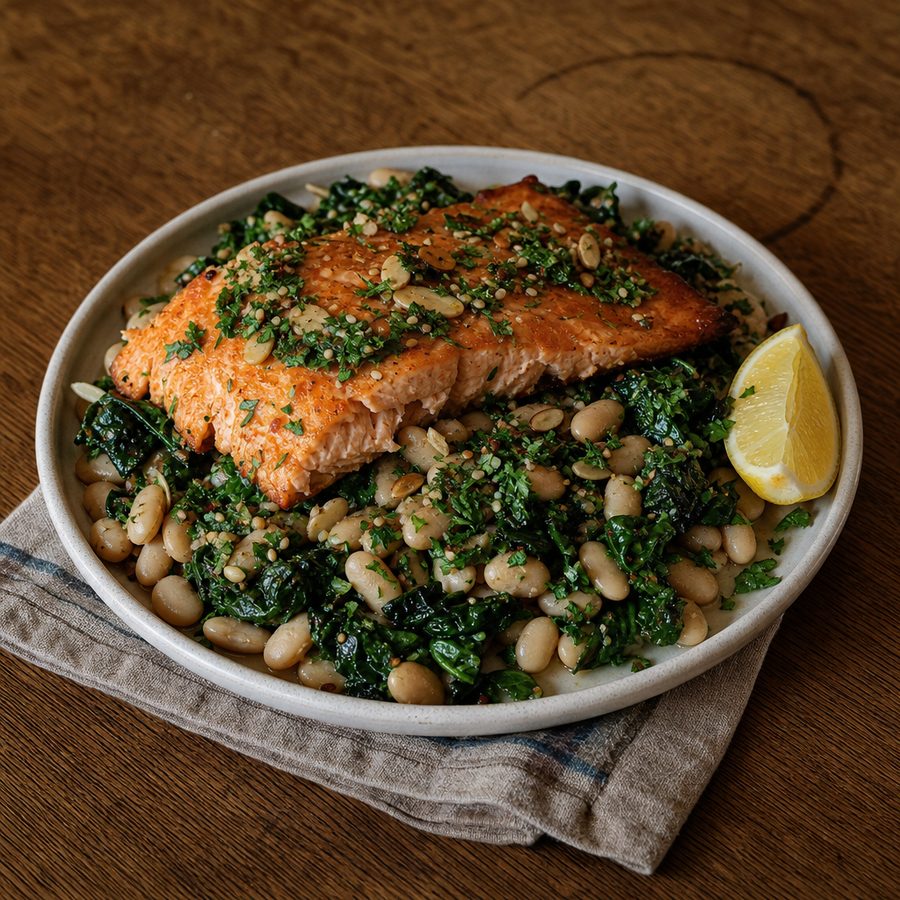
Salmon fillets broiled until the edges catch, spooned over navy beans crushed into wilted kale, with a raw gremolata of parsley, lemon zest, garlic, almonds, and sesame.
Why You'll Love This Recipe
This is my Saturday breakfast when there is salmon in the refrigerator and nothing planned before noon. It takes about half an hour and most of that is hands off under the broiler, and it comes out looking like something you would be served rather than something you threw together. The beans are what make it a breakfast rather than a dinner in disguise. Crushed into the greens they go soft and starchy and give the plate a base, so a modest piece of fish sits on something substantial rather than on a bare plate. It is the sort of breakfast that makes the rest of the morning feel unhurried.
The broiler does a better job on salmon than a skillet does, and it is easier. High heat from above browns the top edges and the ridges of the fillet while the inside stays translucent in the center, which is where salmon tastes best. Seven to nine minutes is the whole window, and the way to know is to press the thickest part with a fingertip and feel it just start to separate into flakes. Pull it there. Salmon left until it is uniformly opaque has gone one stage too far and the fat has already started to weep out white.
The gremolata is what pulls the plate together, and it is raw on purpose. Parsley, lemon zest, and one clove of garlic grated fine, with toasted almonds and sesame seeds stirred through at the last second so they stay crunchy. Scattered over hot fish it releases immediately and smells like a completely different dish. Make more than you need. It keeps three days in the refrigerator and it is very good over eggs, roasted vegetables, or a bowl of beans on their own the next morning.
Ingredients
- 4 skin-on salmon fillets (about 3 1/2 oz each), pin bones removed
- 1 can (15 oz) navy beans, drained and rinsed
- 1 large bunch lacinato kale (about 12 oz), stems stripped out, leaves torn
- 1/3 cup raw almonds (about 1 1/2 oz), finely chopped
- 1/4 cup sesame seeds
- 1/2 cup finely chopped flat-leaf parsley
- 4 cloves garlic, 3 thinly sliced and 1 grated for the gremolata
- Juice and finely grated zest of 1 large lemon
- 1 1/2 tsp olive oil
- 1 tsp fresh thyme leaves
- 1/2 tsp coarsely ground black pepper
Instructions
- Toast the almonds and sesame: Put the chopped almonds in a dry skillet over medium heat for three minutes, shaking often, then add the sesame seeds and cook two minutes more, stirring constantly, until the seeds start hopping and both smell nutty. Tip them onto a cold plate right away and let them cool, since they keep browning in a hot pan and sesame turns bitter quickly.
- Make the gremolata: Stir the chopped parsley, the lemon zest, and the grated garlic clove together in a small bowl with a pinch of salt and the black pepper. Leave the almonds and sesame out for now. Adding them at the last moment is the only way to keep them crunchy, since the parsley will soften them within about twenty minutes.
- Broil the salmon: Heat the broiler with a rack about five inches beneath it. Set the fillets skin side down on a foil-lined sheet, brush the tops with a little of the olive oil, and season. Broil seven to nine minutes without turning, until the surface is browned in patches and the thickest part just begins to separate into flakes when pressed. Rest them while you finish the greens.
- Start the beans and garlic: Warm the rest of the olive oil in a large skillet over medium heat and cook the sliced garlic and thyme for forty seconds, until fragrant and barely colored. Add the drained beans and 1/3 cup water and cook three minutes, crushing about a third of them against the side of the pan with a spoon so the liquid turns creamy.
- Wilt the kale into the beans: Add the torn kale a handful at a time, tossing each addition until it collapses before adding the next. Cook three to four minutes total, until the leaves are dark, glossy, and tender but still holding their shape. Take the pan off the heat and stir in half the lemon juice.
- Build the plates: Spoon the beans and kale onto four warm plates and set a salmon fillet on each. Stir the toasted almonds and sesame into the gremolata, then scatter it generously over the fish and the greens. Finish with the rest of the lemon juice squeezed over the top.
Variations
- Chili and fennel seed: Add a crushed dried chili and half a teaspoon of fennel seed to the garlic for a warmer, more aromatic bean base.
- Trout or mackerel: Use trout or mackerel fillets in place of the salmon, broiling them four to five minutes since they are thinner.
- Tomato in the beans: Stir a handful of halved cherry tomatoes into the beans for the last two minutes so they collapse into the sauce.
- Tahini finish: Loosen two tablespoons of tahini with lemon and water and spoon it under the fish for a creamier, richer plate.
- Poached rather than broiled: Poach the fillets in barely simmering water for eight minutes for a softer, silkier texture on a cold morning.
Storage & Leftovers
The beans and kale keep four days in a sealed container in the refrigerator and get better as they sit, since the garlic and thyme work their way into the crushed beans. They reheat beautifully in a skillet with a splash of water, and they make a fine breakfast on their own with an egg on top.
Cooked salmon keeps two days. Store it separately from the greens and eat it cold rather than reheating it if you can, flaked over the beans with fresh lemon. Reheated salmon dries out and its flavor turns strong, so a gentle warm-through at 300°F for six minutes is the most I would do to it.
The gremolata base of parsley, zest, and garlic keeps three days in a covered jar in the refrigerator, but keep the toasted nuts and seeds in a separate container at room temperature. Combined, they go soft overnight. Neither the fish nor the greens are worth freezing, since both come out watery.
Notes & Tips
- Line the sheet with foil: Broiled salmon sticks and the sugars in the skin burn onto the metal. Foil turns cleanup into folding a parcel.
- Crush a third of the beans, not all: You want a creamy background with whole beans still in it. Mash everything and the plate turns to paste.
- Strip kale stems by hand: Hold the base of the stem and pull the leaf away in one motion. The stems are what make kale chewy no matter how long you cook it.
- Keep the nuts out of the gremolata until serving: Chopped parsley is wet, and anything crunchy stirred in early will be soft by the time it reaches the plate.
- Pull the salmon early: It carries on cooking off the heat. A fillet that looks perfect under the broiler will be overdone by the time it is on the plate.
- Zest the lemon before you juice it: Zesting a squeezed half is a miserable job. Take the zest off first and the rest follows easily.
Nutrition & Mindful Eating
- Salmon, navy beans, kale, and the almond gremolata are each carrying a different part of this plate. The fish brings the protein and the fat, the beans bring the fiber and the body, the kale brings a real measure of calcium, and the almonds and sesame on top bring more of it along with the crunch.
- Salmon is an oily fish, which is what keeps it moist under a broiler and where its long-chain omega-3 fats sit. It is also one of the few foods that carries meaningful vitamin D, and the coral color comes from astaxanthin, a pigment in the same family as beta-carotene.
- Kale wilted into the bean liquid goes dark and silky in about four minutes, and the calcium in it is the well-absorbed kind. It brings vitamin K and vitamin C along with the dark color.
- Navy beans crushed against the pan turn the cooking water creamy, and their soluble fiber is doing that thickening. They are also where a good share of this plate's plant protein comes from.
- Parsley, lemon zest, and raw garlic hit the hot fish and release all at once, and the toasted sesame stirred through that gremolata adds a serious amount of calcium for something scattered on with a spoon.
- As you eat, catch the moment the raw garlic and lemon zest come up off the hot fish, and take the plate slowly enough to notice when the beans underneath have done their work.
Frequently Asked Questions
How do I know when the salmon is done?
Press the thickest part with a fingertip. When the flesh just begins to separate into flakes under light pressure and the very center still looks slightly translucent, it is ready, and it will carry on cooking for a minute or two off the heat. If you prefer a thermometer, pull it at 125°F (52°C) for a moist center, which is medium-rare. The FDA figure for seafood is 145°F (63°C) if you would rather cook it through.
Can I use a different bean?
Cannellini are the obvious swap and crush even more readily. Chickpeas work but stay firm rather than going creamy, so mash more of them if you go that way. Whatever you use, rinse them well and crush about a third against the pan, since that is what turns the water into a sauce.
Is curly kale fine in place of lacinato?
Yes, though it needs an extra minute or two and a firmer hand. Curly leaves are tougher and hold more water in their ruffles, so strip the stems carefully, tear the leaves smaller, and let them cook until they have gone properly dark rather than pulling them while they are still bright.
Can I prep this the night before?
Most of it. Make the parsley base of the gremolata, toast the nuts and seeds, strip the kale, and rinse the beans the night before. In the morning the broiler does the fish while the beans and greens cook in one pan, and you are eating in about fifteen minutes.