
Broiled Salmon with Crackling Skin
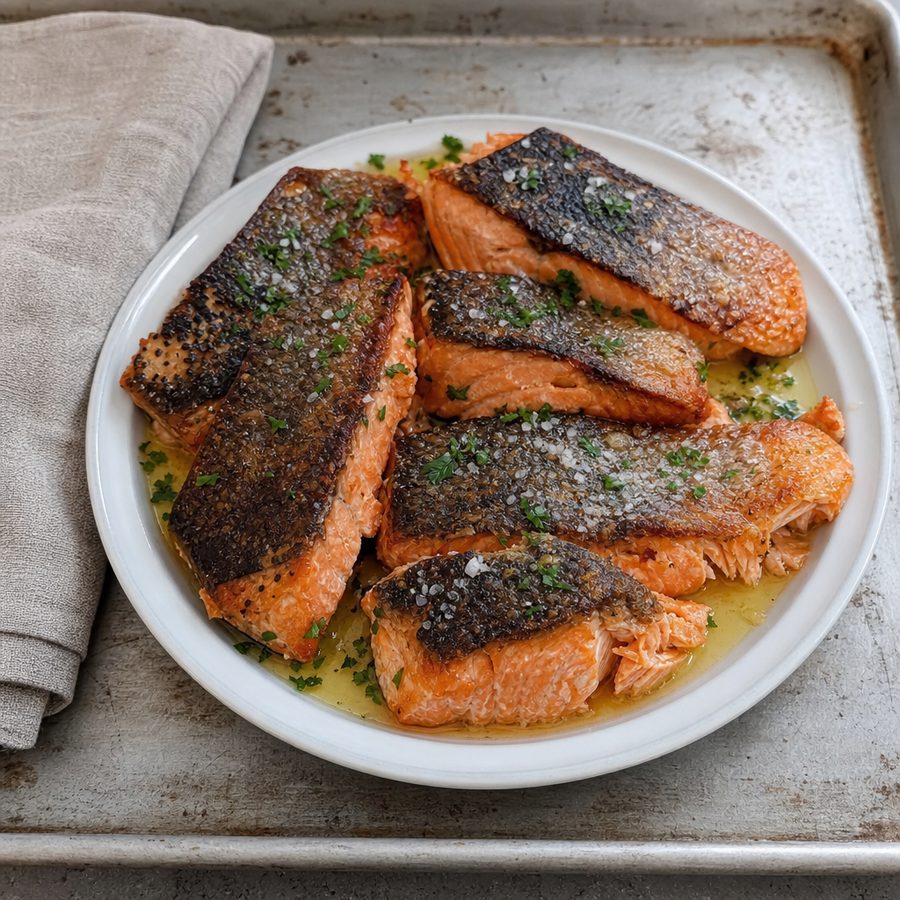
Salmon fillets broiled skin side up until the skin blisters and shatters, brushed with ghee, salted before and after, and served straight from the pan.
Why You'll Love This Recipe
Fifteen minutes, one pan, and no interest in washing a second one. The broiler is the most underused setting on most stoves, and salmon is the fish it was made for. All that overhead heat hits the skin directly and drives the moisture out of it fast, which is the only way skin ever goes properly crisp, and the thick fillet underneath insulates itself so the middle stays soft while the top is doing something dramatic. Three things go on the pan and dinner comes off it eight minutes later, still hissing.
Eating it is a study in contrast. The skin shatters, the way the top of a good custard does under a spoon, and then you are into flesh that is still slightly translucent at the center and slides apart in wide flakes. Salmon is rich enough that it makes its own sauce as it sits, and the ghee you brushed on beforehand mixes with the fat rendering out of the fish into something you will want to spoon back over the fillet. The salt at the end is not the same as the salt at the start, because flakes on a hot surface stay crunchy and land in bright, sharp spots.
This belongs on a weeknight, and specifically on the kind of weeknight where dinner has to happen between one thing and another. It scales up without complaint, since a sheet pan holds four fillets as easily as two, and it does not care whether your salmon is a thick center cut or a thinner tail piece as long as you watch the fish rather than the clock. I also make it when I want something that eats like an occasion without any of the work of one, which is most of the time. The only real skill involved is knowing when to stop, and a thermometer settles that argument in about three seconds. Everything else the broiler handles by itself while you stand there and watch it happen through the oven door.
Ingredients
- 4 skin-on salmon fillets (about 6 oz each), patted very dry
- 2 tbsp ghee, melted
- 3/4 tsp fine sea salt, divided
Instructions
- Get the broiler screaming: Set an oven rack so the top of the fish will sit about four inches below the element, and turn the broiler to high. Give it a full five minutes to come up. A broiler that has not preheated browns nothing, it only steams, and steamed skin is flabby skin.
- Dry the fillets hard: Blot both sides of each fillet with paper towel, then go back over the skin a second time and press until the towel comes away nearly dry. Water on the skin has to boil off before any browning starts, and by the time it does, the flesh is overcooked. This is the step that decides the whole dish.
- Salt and oil the skin: Line a sheet pan with foil and set the fillets on it skin side up, spaced apart so heat can move between them. Brush the skin all over with the melted ghee and scatter half the salt across it. Salt the flesh sides too, tucking a pinch under each fillet.
- Broil until the skin blisters: Slide the pan under the element and leave it alone for six minutes, then look. The skin should be tightening, bubbling up in places, and turning from silver to deep brown and gold in uneven patches. Give it one to two minutes more if it is still pale. You will hear it spitting, and it will smell toasted rather than fishy.
- Check the middle and finish: Press the thickest part with a finger; it should give and start to separate into flakes. An instant-read thermometer at the center reads 125°F for a soft, coral middle or 135°F (57°C) for firm all the way through. Both are below the 145°F (63°C) the FDA gives for seafood, which is worth knowing if you would rather not cook it pink. Move the fillets to plates, scatter the remaining salt over the hot skin, and spoon the ghee and rendered fat from the pan back over each one.
Variations
- Butter rather than ghee: Brush the skin with melted butter for a milkier, sweeter finish; the milk solids will freckle dark under the broiler, which some people love.
- Trout or arctic char: Both take the same treatment and the same rack position, though thinner fillets need only four to five minutes, so start checking early.
- Bacon fat: Brush the skin with warm rendered bacon fat in place of the ghee for a smoky edge that suits salmon better than it has any right to.
- Salmon collars: Broil collars or bellies the same way for eight to ten minutes; they are the fattiest part of the fish and the skin goes crisper than anywhere else.
- A soft egg on top: Slide a fried egg onto each fillet so the yolk runs into the flakes and thickens the ghee into something like a sauce.
Storage & Leftovers
Cooled leftovers keep two days in a sealed container in the refrigerator, and cold broiled salmon is genuinely good eating. The flesh firms up overnight into something dense and sliceable, and the fat that rendered out sets into soft white beads along the flakes.
The skin will not stay crisp in the refrigerator, so peel it off before you store the fish and eat it standing at the counter, which is what happens in my kitchen anyway. Reheat the fillet gently in a covered skillet over low heat with a knob of ghee for three or four minutes.
I would not freeze cooked salmon. The texture goes grainy and dry on thawing, and the whole point of this fillet is how it flakes. Buy what you will eat within two days and broil the rest of the batch fresh, since the entire cook is under ten minutes anyway.
Notes & Tips
- Preheat the broiler properly: Five minutes with the door shut, no shortcuts. A cold element is the single most common reason skin comes out chewy rather than crisp.
- Foil, not parchment: Parchment scorches this close to a broiler element. Foil takes the heat, catches the rendered fat, and means the pan needs nothing more than a wipe.
- Buy thick pieces: Center-cut fillets an inch or more at the thickest point give you the widest margin between crisp skin and dry flesh. Thin tail pieces cook through before the skin has done anything.
- Leave the pan alone: No turning, no basting partway through. Every time the door opens the broiler cools and the browning stalls, so open it once at six minutes and look.
- Use a thermometer: Fillet thickness varies more than recipes admit. 125°F reads soft and coral in the middle, 135°F reads firm and opaque, and the difference between them is about ninety seconds.
- Save the salt for last: Half goes on before, half goes on the hot skin at the table. Salt that hits a crisp surface after cooking stays as distinct crunchy flecks rather than dissolving in.
Nutrition & Mindful Eating
- Salmon, ghee, and salt are the entire recipe, and each is doing one job. The fish brings the richness and the substance, the ghee helps the skin brown and carries that flavor back over the top, and the salt sharpens both so the fillet tastes of more than fish.
- Salmon is an oily fish, and that oil is where its character lives. It is what keeps the flesh moist under a very hot element, what makes the flakes slide apart in wide sheets, and where the omega-3 fats and the vitamin D in a fillet like this sit.
- The skin is worth eating rather than pushing to the side of the plate. Crisped under the broiler it turns thin and glassy, and the layer of fat directly beneath it renders down into the fish, basting the flesh from above as it cooks.
- Ghee is butter with the water and milk solids taken out, so it holds up under broiler heat without burning the way butter would. It brushes on in a thin film, browns evenly, and brings the fat-soluble vitamin A that butterfat carries.
- A fillet this rich holds you for a long stretch, with the protein and the natural fat in the salmon doing that work together. Salt is the last thing that touches it, landing on hot skin where it stays crunchy and brings the sweetness of the fish forward.
- As you eat, break through the skin first and listen for it, then notice how the flakes underneath come apart in wide soft sheets, and give the fish the few minutes it took to cook before you reach for anything else.
Frequently Asked Questions
Why skin side up? Every other recipe says skin side down.
Skin side down is for a skillet, where the heat comes from below. In a broiler the heat comes from above, so the skin has to face it. Turn the fillets over and you will brown the flesh, dry it out, and end up with skin that has poached in its own steam.
My broiler runs hot and the skin burned before the fish cooked.
Drop the rack one level, so the fish sits five or six inches down instead of four, and give it a couple of extra minutes. Very thick center-cut fillets sometimes want that anyway. If the skin is browning fast and the middle is still cold, lay a piece of foil loosely over the top for the last two minutes.
Can I use frozen salmon?
Yes, but thaw it completely in the refrigerator overnight first, and then dry it even more aggressively than you would fresh fish. Frozen fillets hold a surprising amount of water, and any of it left on the skin will keep the skin from crisping. Never broil a fillet from frozen.
The ingredient list is only three things. Is that right?
It is. The fish, the fat, and the salt are the whole recipe, and the broiler does the rest. If you are keeping your meals to animal foods, this is built that way from the start, and if you are not, it still works as written.