
Broiled Salt Salmon Bites with Ginger Napa Cabbage Pickle
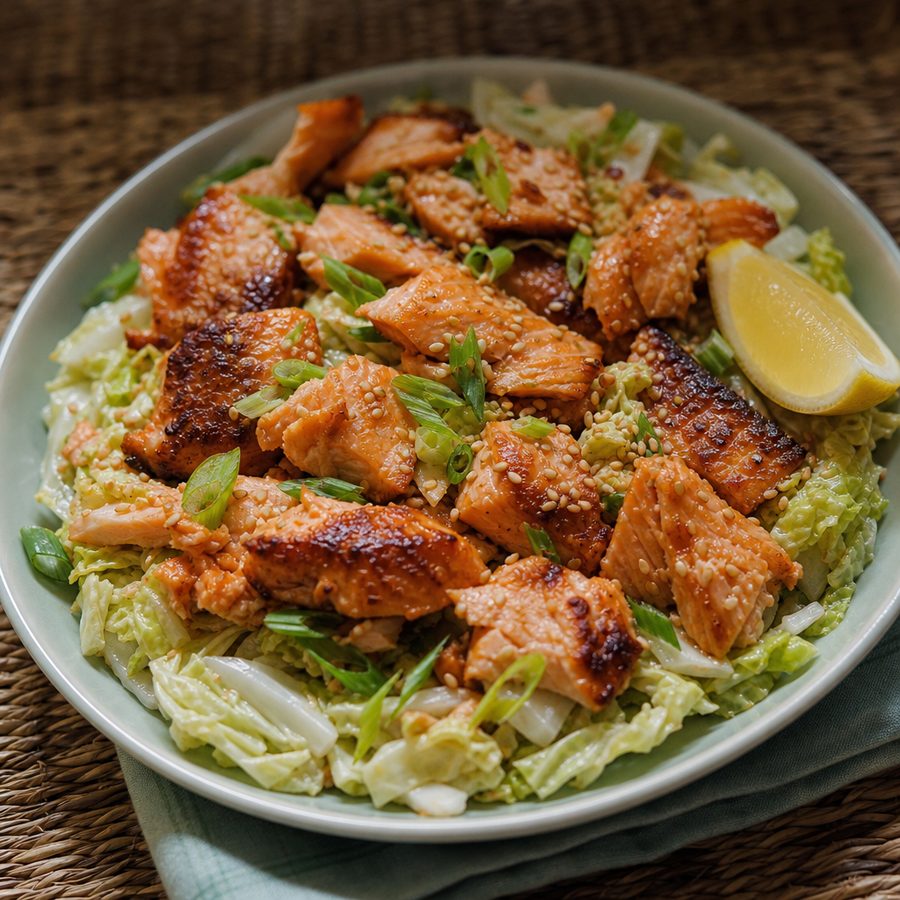
Japanese salt-grilled salmon cut into bites and broiled until golden, served hot over a quick ginger and lemon napa cabbage pickle with toasted sesame seeds.
Why You'll Love This Recipe
Shioyaki, salt-grilled fish, is one of the plainest and most loved things in Japanese home cooking. It turns up at breakfast, in bento boxes and beside rice at dinner, usually as one fillet with a wedge of lemon and a little pile of pickles. I cut it into bites and serve it on a small plate because it makes one of the best afternoon snacks I know: something warm and savory at four o'clock, done in under half an hour, that feels like real food rather than a handful of whatever happens to be in the pantry.
The whole method is salt and time. Ten minutes of salt on the salmon pulls moisture to the surface, and that liquid carries the strongest fishy notes away with it when you pat it off. The flesh firms, the seasoning reaches all the way through, and the dry surface browns properly under the broiler. Skip the rest or the patting and the fish steams in its own juices and comes out pale and soft. The cabbage gets the same idea in miniature: salt, ginger and a minute of squeezing, which is all an asazuke, a shallow Japanese pickle, really is.
The cabbage is what makes the salmon taste finished. Rich, savory fish wants something cold, crisp and a little sharp beside it, and napa that has been squeezed with ginger and dressed with lemon and sesame oil does that job completely. Every bite goes back and forth between warm and cool, soft and crunchy, sesame and citrus. A few pieces of salmon over a heap of cabbage satisfies the way a meal does, and I have made this on more weekday afternoons than I can count when dinner was still hours away.
Ingredients
- 12 oz skinless salmon fillet, pin bones removed, cut into 1 1/2-inch pieces
- 3/4 teaspoon salt, divided
- 4 cups napa cabbage (about 1/2 small head), sliced crosswise into 1/2-inch ribbons
- 1 tablespoon finely grated fresh ginger
- 2 scallions, thinly sliced
- 2 tablespoons fresh lemon juice (about 1 lemon), divided
- 1 teaspoon toasted sesame oil
- 1 tablespoon sesame seeds
- 1 teaspoon avocado oil, for the pan
Instructions
- Salt the salmon and let it sweat: Sprinkle the salmon pieces on all sides with 1/2 teaspoon of the salt and leave them on a plate for 10 minutes while you make the cabbage. The salt draws a thin film of moisture to the surface, and that liquid carries the strong fishy notes with it. It is ready when you can see small beads of liquid shining on the fish.
- Massage the cabbage: Put the napa ribbons in a bowl with the remaining 1/4 teaspoon salt and the grated ginger, and squeeze and toss them with your hands for about a minute. Bruising the leaves lets the salt pull out water quickly, which is what turns soft napa crisp. Stop when the pile has shrunk by about a third and a little pool of liquid sits in the bottom of the bowl, then let it rest while the salmon finishes its 10 minutes.
- Toast the seeds and heat the broiler: Set an oven rack about 4 inches below the broiler and turn it to high. Toast the sesame seeds in a dry small skillet over medium heat, shaking often, for 2 to 3 minutes, until they turn light gold and smell nutty, then tip them onto a plate so they stop cooking. Line a sheet pan with foil and brush it with the avocado oil so the fish releases cleanly.
- Dry the fish well: Press the salmon pieces firmly with paper towels until the surface feels tacky rather than wet, and set them on the pan about an inch apart. Dry fish browns under the broiler; wet fish steams and stays pale. Spacing them out lets the heat reach every side so the corners caramelize.
- Broil until golden at the edges: Broil for 6 to 8 minutes without turning, until the tops are golden with a few darker spots at the corners and the thickest piece flakes when pressed with a fork, or reads 145°F on an instant-read thermometer. Smaller pieces finish first, so lift them off as they are done so they stay moist while the larger ones catch up.
- Squeeze the cabbage and serve: Lift the cabbage out by the handful and squeeze it hard over the sink, letting the liquid run off. Toss it with the sesame oil, the scallions and 1 tablespoon of the lemon juice, then pile it on plates. Set the hot salmon on top, drizzle with the remaining lemon juice and scatter the sesame seeds over everything. Serve right away, while the fish is hot and the cabbage is cold, because that contrast is the whole pleasure of the plate.
Variations
- Mackerel shioyaki: Use skin-on mackerel fillets cut into pieces and broil them skin side up until the skin blisters and crackles.
- Cucumber and radish pickle: Swap half the napa for thinly sliced cucumber and radish, salted and squeezed the same way, for a crunchier, peppery pickle.
- A little heat: Toss a small pinch of cayenne into the cabbage with the ginger for a slow warmth that builds as you eat.
- Edamame on the side: Add a handful of steamed, salted edamame to the plate when you want the snack to stretch toward a light lunch.
- Fresh herb finish: Tear cilantro or mint leaves over the top at the end for a cool, green note against the sesame.
Storage & Leftovers
The broiled salmon keeps in a covered container in the refrigerator for up to three days and is genuinely good cold, flaked straight over the cabbage. Store the cabbage separately. Once dressed it holds its crunch for about a day, then slowly softens and gives off more liquid; drain it and it is still pleasant on the second day.
This one is not worth freezing. The cabbage comes back limp and watery with every bit of its snap gone, and salmon cut this small dries out and picks up a stale taste once thawed. If you bought extra salmon, freeze it raw and whole, then salt and broil it fresh on the day you want it.
Cold is the best way to eat the leftovers. If you want the salmon warm, set the pieces on a foil-lined pan in a 275°F oven for about 8 minutes, just until heated through. A microwave turns the golden edges rubbery and fills the kitchen with fish smell. Keep the cabbage cold either way.
Notes & Tips
- Check for pin bones: Run your fingertips along the fillet before cutting; any small bones you feel pull out easily with tweezers.
- Cut evenly: Aim for pieces close to the same size so they finish together, and save the thin tail end for pieces you can pull off early.
- Respect the resting time: Ten minutes is enough for the salt to draw out moisture; much longer and the salmon starts to taste cured.
- Squeeze harder than you think: The cabbage should feel almost dry in your fist when it goes on the plate, or it will puddle under the hot fish.
- Watch the sesame seeds: They go from golden to bitter in seconds, so move them off the hot pan the moment they smell toasty.
- Use a thermometer once: Checking the thickest piece the first time you make this teaches you what done looks like under your own broiler.
Nutrition & Mindful Eating
- Hot salmon and cold, crunchy cabbage work as a pair on this plate. The fish brings richness and real staying power, the cabbage brings snap and a gentle ginger warmth, and lemon over both keeps every bite tasting clean.
- Salmon is the heart of the dish, and broiling it hot and fast keeps the center moist while the corners turn golden. It carries the omega-3 fats the fish is known for, and the protein in a few pieces is why this small plate holds you well into the evening.
- Napa cabbage is mild, sweet and full of water, which is exactly why a minute of salt and squeezing turns it so crisp. It brings vitamin C and fiber along with that crunch, plus a seasoned, almost-pickled bite that wakes up the fish.
- Fresh ginger and toasted sesame are what you smell first when the plate comes together. The ginger gives the cabbage a quick, bright heat at the back of your mouth, and the seeds add a nutty crackle that tastes faintly of popcorn.
- The salt on the salmon does more than season it. It draws out moisture that you pat away, so the flesh firms, the flavor tastes cleaner and sweeter, and the surface caramelizes under the broiler with a faint crackle at the edges.
- As you eat, notice the moment hot salmon meets cold cabbage, the ginger warming and the lemon cutting through, and let this small plate be a real pause in your afternoon rather than something eaten on the way to the next thing.
Frequently Asked Questions
Can I use a different fish?
Yes. Mackerel is the classic shioyaki fish in Japan and works beautifully here; it is richer, so broil it skin side up for the same 6 to 8 minutes until the skin blisters. Trout fillets are thinner and usually need only 4 to 5 minutes. Keep the salting step the same for any of them.
Why did my salmon come out pale and soft?
Almost always the surface was still wet or the broiler was not fully hot. Pat the fish until it feels tacky, give the broiler a few minutes to heat, and keep the rack about 4 inches from the element. Crowded pieces also steam each other, so leave an inch between them.
Can I make this ahead for the week?
Broil the salmon up to three days ahead and keep it chilled. Salt the cabbage the day before if you like, but store it undrained and undressed, then squeeze it and add the sesame oil, scallions and lemon just before eating so it stays crisp.
Does this fit an anti-inflammatory way of eating?
It does. The plate is built on oily fish, a fresh vegetable, ginger, lemon and sesame, which are the foods that pattern is built around, and nothing is fried. It is also a satisfying, protein-rich snack that is naturally grain-free.