
Broiled Sardines with Lemon Gremolata and Blistered Tomatoes in Radicchio Cups
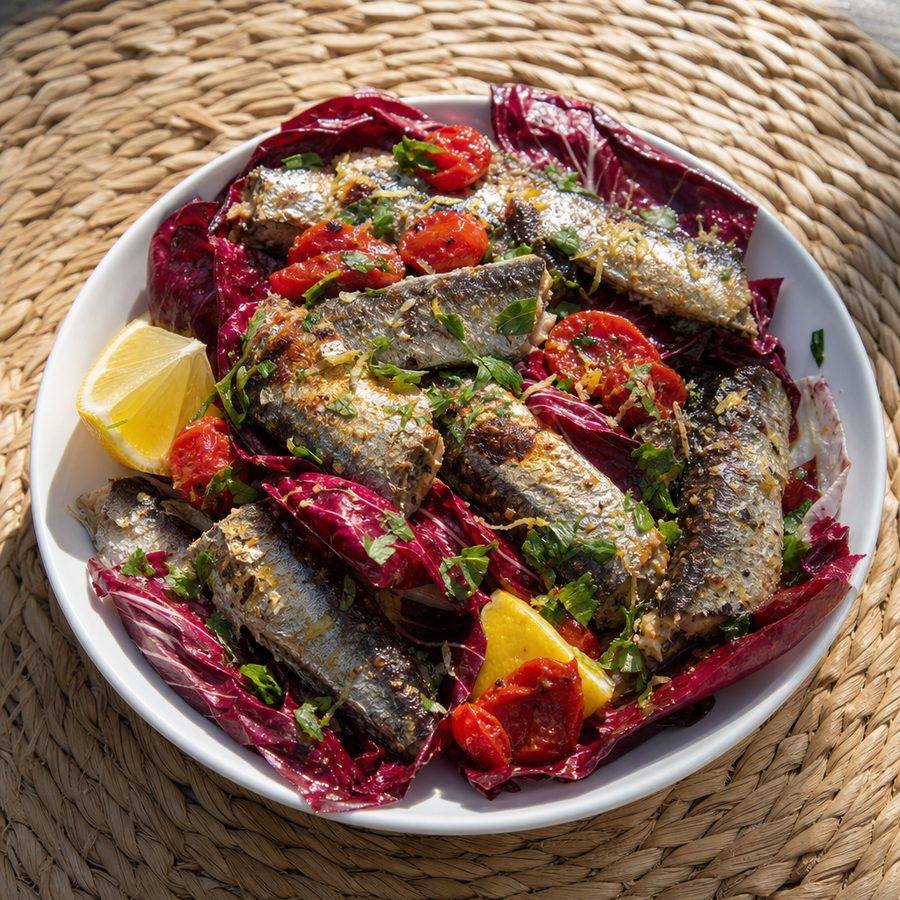
Canned sardines and cherry tomatoes blistered under the broiler, spooned into crisp radicchio cups, and finished with a sharp lemon, garlic, and parsley gremolata. A warm, bright, savory snack.
Why You'll Love This Recipe
Four in the afternoon, with dinner still a long way off, is when these earn their place. Sardines get eaten like this all along the Mediterranean and the Atlantic coast, hot off a grill with a squeeze of lemon, and a tin from the cupboard gets surprisingly close to that in about eight minutes. The surprise for most people is how mild sardines turn once the skin blisters. Under the broiler they lose that straight-from-the-can taste and eat like fish that was just cooked, rich and a little smoky, and that is usually the moment a skeptic reaches for a second cup.
The method is a broiler and a head start. The tomatoes go in first, on their own, because they need a few minutes for the skins to split and the juice to start running. The sardines are already cooked in the can, so all they need is enough heat to crackle the skin and warm them through the middle. Put them in at the start with the tomatoes and they dry out and crumble into the pan. Give them three or four minutes at the very end and they come out glossy and whole, sitting in a puddle of hot tomato juice and olive oil that becomes the sauce.
Each part on this plate is there to answer something about the others. The sardines are rich and soft, so the radicchio is cold, crunchy, and bitter, and that bitterness is what keeps the oil from sitting heavy on your tongue. The gremolata is raw on purpose: garlic, lemon zest, and parsley chopped together right at the end, so it lands on the warm fish sharp and green. I like eating these standing at the stove, picking each leaf up like a little taco, and three of them make a snack that feels like you actually sat down to a plate of food.
Ingredients
- 3 cans (3.75 oz each) sardines in olive oil, drained
- 2 cups cherry tomatoes (about 10 oz)
- 1 medium head radicchio (about 7 oz), leaves separated
- 3/4 cup lightly packed fresh flat-leaf parsley leaves, finely chopped
- 2 garlic cloves, finely grated
- 1 lemon, zested, then cut into wedges
- 1 1/2 tbsp olive oil, divided
- 1/2 tsp coarsely ground black pepper
- 1/8 tsp salt, for the tomatoes
Instructions
- Get the broiler hot: Set an oven rack about 4 inches below the broiler element and heat the broiler on high for 5 minutes. Line a small rimmed sheet pan with foil. The sardines only need a short, fierce blast of heat to blister without drying out, so the broiler has to be fully hot before anything goes under it. You are ready when the element is glowing.
- Give the tomatoes a head start: Toss the cherry tomatoes on the pan with 1/2 tablespoon of the olive oil and the salt, spreading them into a single layer. Broil for 4 minutes. They go first because they need longer than the fish to soften and release their juice. Pull the pan when most of the skins have split and a few have blackened in spots.
- Blister the sardines: Pat the drained sardines dry with a paper towel so the skin can crisp. Nestle them skin side up among the tomatoes, keeping them whole. Broil 3 to 4 minutes, watching closely. They are done when the skin has bubbled, the edges are spotted dark, and the oil in the pan is spitting. Any longer and the flesh starts to dry and break apart.
- Make the gremolata while they broil: Pile the chopped parsley on your board, grate the garlic and the lemon zest over it, and chop everything together for 30 seconds. Scrape it into a small bowl and stir in the remaining 1 tablespoon olive oil and the black pepper. Making it at the last minute keeps the parsley bright and the zest fragrant. It should smell sharply of lemon and raw garlic.
- Build the radicchio cups: Choose the 12 most cupped leaves from the inner part of the head, rinse them in cold water, and shake or spin them dry. Cold, dry leaves give you the crisp snap against the warm fish, and wet leaves will water down the pan juices. Save the outer leaves for a salad. The leaves are ready when they feel firm and snap rather than bend.
- Fill and finish warm: Break each sardine into two or three large pieces with a fork and divide them among the leaves along with the tomatoes. Spoon a little of the hot pan juice into each cup, top with the gremolata, and squeeze a lemon wedge over everything. Serve right away, while the fish is warm and the leaf is still cold.
Variations
- Smoky tomatoes: Toss the tomatoes with a pinch of smoked paprika before broiling for a flavor closer to the grilled sardines of the Portuguese coast.
- Orange gremolata: Swap half the lemon zest for orange zest, which plays sweetly against the bitter radicchio.
- A little heat: Add a pinch of cayenne to the gremolata if you like a slow warmth under the garlic.
- Mint and parsley: Chop a small handful of fresh mint in with the parsley for a cooler, brighter finish.
- Endive boats: Use the leaves from two heads of endive for milder, crisper scoops that hold a neat line of fish and tomato.
Storage & Leftovers
Leftover broiled sardines and tomatoes keep in a covered container in the refrigerator for up to two days. The fish smell gets stronger by the second day, so a glass container with a tight lid is worth using. Cold, they are good flaked over a salad of the leftover radicchio with a squeeze of lemon, which is how I usually finish them.
This is not a dish to freeze. Broiled sardines go soft and mushy once they thaw, the blistered skin loses its crackle, and the tomatoes collapse into a watery pool. The real make-ahead here is the tin itself: keep a few cans of sardines in the cupboard and the whole snack is eight minutes away whenever you want it.
The gremolata is the part that suffers soonest, darkening and losing its bite within a few hours, so make it fresh each time. Radicchio holds well: separate, wash, and wrap the leaves in a damp towel and they stay crisp for three days. To rewarm sardines, slide them back under the broiler for about two minutes rather than microwaving.
Notes & Tips
- Dry the fish: Patting the sardines dry is what lets the skin blister; oily, wet fish just steams.
- Zest before you cut: Zest the lemon while it is whole, then cut it into wedges; it is nearly impossible the other way round.
- Watch, do not walk: A broiler goes from blistered to burnt in under a minute, so stay at the oven for the sardine step.
- Use the inner leaves: The smaller leaves toward the heart of the radicchio are the most cupped and hold the filling best.
- Keep the pan juices: The tomato juice and oil left on the foil is the sauce, so spoon a little into every cup.
- Chop the gremolata together: Chopping the garlic and zest into the parsley on the board blends them better than stirring in a bowl.
Nutrition & Mindful Eating
- Warm sardines, juicy blistered tomatoes, and cold radicchio work together here. The fish brings the richness and the protein, the tomatoes turn into a quick sauce, and the bitter leaf keeps every bite bright.
- Sardines are small, rich fish eaten whole, soft bones and all, which is where their calcium comes from, and they carry omega-3 fats and vitamin D in the same tender, smoky bite.
- Cherry tomatoes blistered in olive oil go sweet and jammy as their skins split, and cooking them with a little fat makes their lycopene easier for your body to take up.
- Radicchio brings crunch and a pleasant bitterness that cuts straight through the oily fish, and its deep wine-red color comes from anthocyanins, plant pigments studied for their antioxidant role.
- Raw garlic, lemon zest, and a heap of chopped parsley make the gremolata, and that sharp green hit landing on warm fish is what makes the whole plate taste awake.
- As you eat, notice the cold snap of the radicchio giving way to warm, soft fish and sweet tomato, and take a few slow bites before deciding whether another cup is what you really want.
Frequently Asked Questions
Can I use sardines packed in water or tomato sauce?
Water-packed sardines work well. Drain them, pat them very dry, and brush them lightly with olive oil so the skin still blisters. Sardines in tomato sauce will not crisp and the sauce tends to scorch under the broiler, so save those for eating straight from the tin.
My sardines fell apart under the broiler. What happened?
Usually they stayed under too long or got moved around while hot. Keep them skin side up, leave them alone, and pull them as soon as the skin bubbles. If a few break anyway, nothing is lost, since you are flaking them into the cups at the end.
Do I need to remove the bones?
No. The bones in canned sardines are softened during canning and you will barely notice them, especially in a warm bite with tomato and parsley. If you prefer, buy skinless and boneless sardines, though the skin is what blisters so nicely here.
Can I make these ahead for a party?
Prep the parts, then broil at the last minute. The radicchio leaves can be washed and chilled hours ahead, and the parsley can be chopped and kept covered. Make the gremolata no more than an hour before, and broil the tomatoes and sardines just before guests arrive so the fish is still warm in the cups.
Does this fit an anti-inflammatory way of eating?
Yes. It is built around oily fish, olive oil, tomatoes, and a bitter leafy green, with no processed meat, nothing fried, and no added sugar. It works as a snack or, with a couple more cups, as a light lunch.