
Broiler-Blistered Chicken Thighs
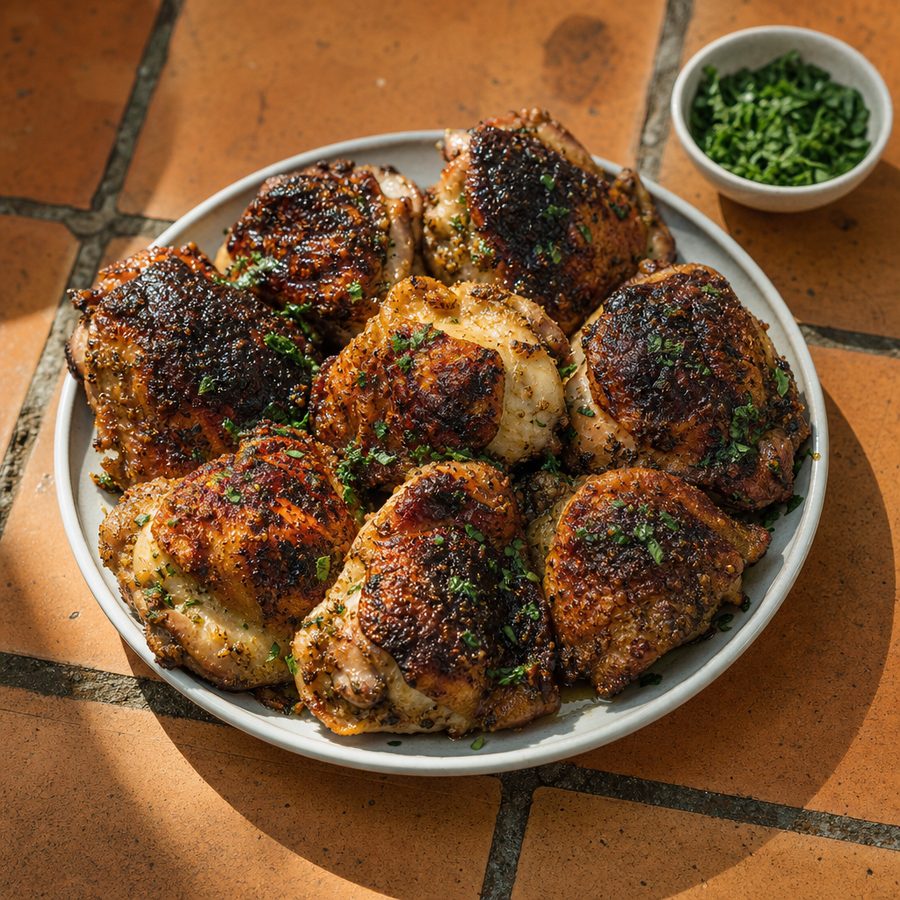
Salted chicken thighs set skin side up close under the broiler element, where the skin bubbles, blisters, and goes mahogany while the fat underneath renders down into the pan.
Why You'll Love This Recipe
The broiler is the most underused burner in an American kitchen, and chicken skin is the thing it does best. Direct radiant heat from a few inches away drives the water out of the skin faster than the meat can dry out, so you get that popping, blistered surface long before the thigh is anywhere near overcooked. An oven set to roast will get there eventually, but by then the meat has given up more of its juice than I want. Eight thighs go under and come out in about fifteen minutes with skin that genuinely crackles.
Thigh meat is the right cut for this because it is forgiving. It runs darker and looser than breast meat, threaded with connective tissue that softens as it cooks, so it tastes better a few degrees past done than it does exactly at done. That matters when you are cooking under an element hot enough to blister skin. You get to chase the skin all the way to the color you want, and the meat simply keeps getting more tender while you do it. The juice that comes out when you cut into one is the whole argument for the cut.
This is the plainest dinner I make and one of the ones I return to most, usually on a night when I have eight minutes of attention and no more. Two thighs is a proper serving for most people, the pan cleans up in a minute if you line it, and the rendered fat left in the bottom is worth pouring into a jar and keeping in the refrigerator. Salt goes on early enough to do something and nothing else goes on at all, which puts every bit of the outcome on the heat and on where you set the rack.
Ingredients
- 8 boneless, skin-on chicken thighs (about 2 lb)
- 3/4 tsp fine sea salt
Instructions
- Dry the skin thoroughly: Take the thighs out of the package and blot both sides hard with paper towels, paying most attention to the skin. Any surface water has to boil off before the skin can begin to blister, and that wasted time is what leaves you with skin that is pale and rubbery. Stretch each thigh out flat so the skin covers as much of the meat as it can.
- Salt and let them sit: Sprinkle the salt evenly over the skin side of all eight thighs and leave them uncovered on a plate while the broiler heats. Five minutes is enough. The salt draws a film of moisture up, and the dry air of the kitchen carries it off, which leaves the surface drier than it was when you started.
- Heat the broiler and set the rack: Turn the broiler to high and position an oven rack so the top of the chicken will sit about six inches below the element. Give it a full five minutes. Line a sheet pan with foil and set a wire rack inside it, so the fat that renders drops away rather than pooling around the skin and stewing it.
- Broil skin side up: Arrange the thighs skin side up on the rack with a little space between them and slide the pan under the element. Broil for twelve to sixteen minutes without turning them over. Somewhere around minute eight you will hear them start to pop and hiss, and the skin will lift into bubbles that darken from the top down. Rotate the pan front to back once if your broiler runs hot on one side.
- Check and rest: Pull them when the skin is deep copper with a few nearly black blisters and an instant-read thermometer in the thickest part reads 175°F. Rest five minutes on the rack rather than on a plate, because sitting in their own juices will soften the underside of the skin. Serve with the rendered fat from the pan spooned over the meat.
Variations
- Butter finish: Drop a thin slice of cold butter onto each thigh as it comes out and let it slide down into the blistered skin.
- Bone-in and slower: Use bone-in thighs, drop the rack to eight inches, and give them twenty five to thirty minutes, watching the skin closely near the end.
- Chicken drumsticks: Broil drumsticks the same way, turning them a quarter turn every five minutes so the skin blisters all the way around.
- Save the schmaltz: Pour the rendered fat from the pan through a fine sieve into a jar and refrigerate it for cooking eggs and steaks later in the week.
Storage & Leftovers
Cooked thighs keep three to four days sealed in the refrigerator. Store them skin side up in a single layer if you have the room, since stacking presses the skin into the meat below and it goes soft where the two touch. Cool them for fifteen minutes before the lid goes on.
To reheat, put them skin side up on a rack and run them under the broiler for two to three minutes. That is enough to melt the fat under the skin again and bring the crackle back. Reheating in the microwave warms the meat perfectly well, but the skin turns soft and chewy and is not worth eating afterward.
They freeze for up to three months. Wrap each thigh individually so you can pull out one at a time, thaw overnight in the refrigerator, and finish under the broiler for three or four minutes. Freezing from cooked holds the meat better than freezing beforehand, because the juice has already set into the muscle.
Notes & Tips
- Use a rack, not the bare pan: Thighs sitting directly on foil sit in their own rendered fat, and the skin at the edges goes soft where it touches the puddle. A wire rack lets the fat fall away and the hot air move underneath.
- Preheat the broiler properly: Five minutes with the element on before the chicken goes in. A broiler that is still climbing gives you the first two minutes at half power, which is exactly the moisture-driving-off phase you cannot afford to lose.
- Stay in the kitchen: The gap between deep copper and burned is roughly ninety seconds. This is not a dish to walk away from, and the popping sound is a better timer than the clock is.
- Pull the skin flat before it goes in: Thigh skin shrinks as it renders. Stretching it out to cover the whole thigh at the start means it still covers most of it at the end, rather than pulling back into a strip down the middle.
Nutrition & Mindful Eating
- Chicken thighs and salt is the entire list, so the cut and the heat are carrying the whole dish. Thigh meat brings the juice and the deeper flavor, the skin brings the fat and the crackle, and the salt sitting on the outside is what makes both of them taste like more of themselves.
- Thigh meat is darker and richer than the rest of the bird because those muscles work harder, and that hard-working muscle is where the iron and the zinc in chicken are concentrated, alongside protein enough to make two thighs a full plate.
- The skin is not an afterthought here. It renders into fat that bastes the meat from above as it cooks, and it carries the browning that gives the dish its roasted smell, which is the reason a skinless thigh tastes so much flatter.
- Salt drawn over the surface early does two things at once. It pulls a little moisture up so the air can carry it away, which is what lets the skin blister, and it stays sitting on the outside where it hits your tongue first.
- A plate of thighs eats heavy in the best sense and holds you well into the evening, with the protein doing most of that and the rendered fat giving the meal a richness that keeps a simple dinner from feeling thin.
- As you eat, listen for the crack when the knife goes through the skin and notice how much juice runs out of the meat underneath, and give yourself the few minutes it takes to eat sitting down while it is still hot.
Frequently Asked Questions
Bone-in or boneless thighs?
Boneless, for the timing. Skin-on boneless thighs lie flat and cook through in the same twelve to sixteen minutes it takes to blister the skin. Bone-in thighs are excellent but need twenty five minutes or more, by which point the skin has usually gone past copper and into black.
How far from the element should the rack sit?
About six inches from the top of the chicken. Closer than four and the skin chars before the meat is through; farther than eight and you are roasting rather than broiling, and the skin never really blisters. Every broiler is different, so watch the first batch and adjust from there.
Should I flip them halfway?
No. The underside cooks perfectly well from conducted heat and the pan, and every flip costs you skin. The one thing worth doing is turning the pan front to back once, since most home broilers have a hot spot and one corner will run ahead of the rest.
Is 175°F not too high for chicken?
For thighs, no. Dark meat is full of connective tissue that only softens above about 170°F, so a thigh pulled at 165°F is safe but noticeably chewier. Take thighs to 175°F and they come out looser and juicier, which is the opposite of what happens to breast meat.