
Brothy Sardine and White Bean Stew with Fennel
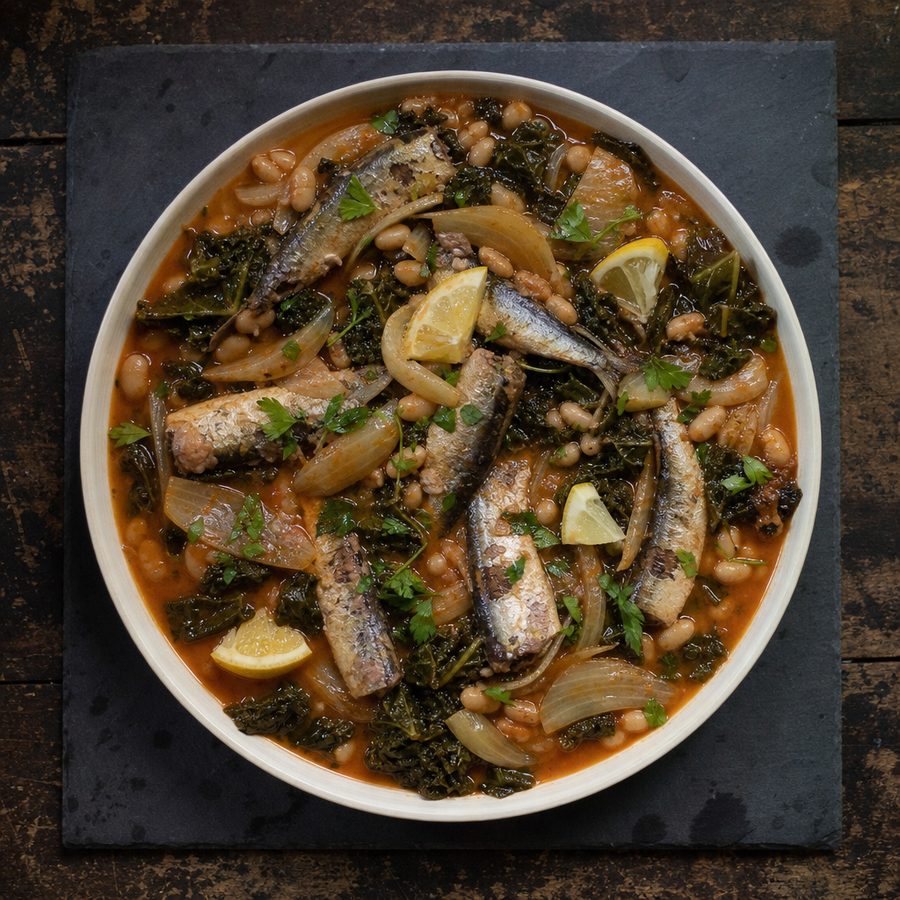
Sliced fennel softened into a loose tomato broth with white beans and kale, with whole sardines laid over the top and lemon squeezed on at the table.
Why You'll Love This Recipe
I keep sardines in the cupboard for exactly this kind of lunch, the one where I want something hot and substantial and I have not been to the store in four days. Everything here except the fennel and the kale comes off a shelf, and the whole pot takes under an hour with barely any knife work. It is a fisherman's kind of stew, loose and brothy rather than thick, the sort of thing you want a spoon and a piece of bread for. I make it most often in February.
The fennel is the ingredient that changes character most. Raw it is crunchy and aggressively anise-flavored, and after twenty minutes in tomato and broth it goes limp, sweet, and gentle, closer to a soft onion than to the bulb you sliced. Cooking the onion and fennel together at the start, slowly, is what builds that sweetness, so give them the full ten minutes before anything wet goes in. The beans then simmer long enough that some of them break down and thicken the broth slightly, which is why this never tastes watery even though it is genuinely brothy.
The sardines go in whole and go in last. Stirring them through the pot turns them into gray shreds, and laid on top instead they stay intact, bronze, and glossy, and you break them up yourself with the side of your spoon as you eat. That is the difference between a stew that looks like something and a stew that looks tired. Lemon squeezed over at the table cuts the oil from the fish and lifts the tomato, and the whole bowl tastes brighter for a squeeze you do yourself.
Ingredients
- 3 cans (3.75 oz each) sardines in olive oil, drained, bones left in
- 2 cans (15 oz each) cannellini beans, drained and rinsed
- 1 large fennel bulb, halved, cored, and sliced 1/4 inch thick, fronds reserved
- 1 1/4 cups canned crushed tomatoes
- 3 cups vegetable broth
- 4 packed cups lacinato kale, stems removed, leaves torn
- 1 medium yellow onion, diced
- 5 cloves garlic, thinly sliced
- 2 tbsp extra virgin olive oil
- 1 tbsp dried oregano, crumbled between your palms
- 1 lemon, half juiced and half cut into wedges
- 1/3 cup flat-leaf parsley, roughly chopped
Instructions
- Soften the fennel and onion: Heat the olive oil in a wide heavy pot over medium. Add the sliced fennel and onion with a pinch of the oregano and cook for ten minutes, stirring every couple of minutes, until both have gone translucent and floppy and the fennel has lost its bright white edges. Do not rush this into browning, since color at this stage would push the pot darker and sweeter than a broth this delicate wants.
- Bloom the garlic and oregano: Add the sliced garlic and the rest of the oregano and stir for ninety seconds, until the garlic smells sweet rather than raw and the oregano has darkened slightly in the oil. Dried oregano crumbled between your palms first will give you far more flavor than shaking it straight from the jar.
- Build the broth: Pour in the crushed tomatoes and let them bubble and darken for three minutes, stirring to lift anything from the bottom. Add the broth and the drained beans, bring it to a simmer, and cook at a lazy bubble for twenty minutes, so the beans have time to give up some of their starch into the broth. Some of the beans will start to break down and the broth will thicken a little.
- Wilt the kale: Add the torn kale a handful at a time, pushing each one under the surface. Simmer for five minutes, until the leaves are dark green and silky and the stems' worth of chew has gone. Stir in the juice from the lemon half and taste the broth. It should be sweet from the fennel with a sour edge behind it.
- Warm the sardines: Lay the drained sardines gently on the surface of the stew in a single layer, cover the pot, and turn off the heat. Two minutes of residual steam is all they need to warm through. Any longer or any stirring and they will fall apart into the broth.
- Serve: Ladle the broth, beans, and greens into four shallow bowls, then lift the warm sardines over with a spoon so each bowl gets two or three. Scatter over the parsley and the reserved fennel fronds and put a lemon wedge on the side of every bowl.
Variations
- Chili and garlic: Add a teaspoon of chili powder with the garlic for a pot that runs hot underneath the sweetness of the fennel.
- Chickpeas: Swap the cannellini for chickpeas, which stay firmer through the simmer and give the stew more chew and less body.
- Over grains: Spoon it over a scoop of cooked farro or barley in the bottom of each bowl for a heavier, more filling lunch.
- Green olive and orange: Add a handful of chopped kalamata olives with the beans and a wide strip of orange peel to the broth, both fished out or left in as you like.
- Herb heavy: Finish with a mix of parsley, dill, and the fennel fronds rather than parsley alone, so the top of the bowl tastes almost like a salad.
Storage & Leftovers
The stew base keeps four days in the refrigerator and gets better on days two and three as the fennel and tomato settle into each other. Store it without the sardines if you can, since fish that has been reheated in a pot loses its shape entirely and gives the whole thing a stronger flavor.
Reheat the base on the stove over medium until it steams, about seven minutes, then lay fresh sardines on top and cover the pot off the heat. The beans will have absorbed broth overnight, so add a splash of water or broth as it warms to bring it back to a loose consistency.
The base freezes well for up to three months, though the kale softens further on thawing. Freeze it in flat sealed portions before the greens go in if you are planning ahead, then wilt fresh kale into the reheated pot. Never freeze it with the sardines in.
Notes & Tips
- Buy sardines packed in olive oil: Water-packed tins taste washed out and the flesh is drier. Drain the oil off if you like, but the fish that sat in it will always taste better.
- Slice the fennel with the grain: Halve the bulb through the root, cut out the solid core, and slice from root to tip. Cut that way the pieces hold together through a long simmer rather than falling into threads.
- Rinse the beans: The starchy liquid in the can tastes tinny and will cloud your broth. A minute under running water in a colander is worth it here, since the broth is meant to be clear enough to see through.
- Crumble dried oregano in your palm: Rubbing it between your hands breaks the leaf and releases the oils. Oregano shaken straight from the jar into a pot tastes dusty by comparison.
- Sardines go on last, off the heat: Two minutes under a lid is enough. Simmering them, or stirring them in, turns three good-looking fish into gray threads through the broth.
- Keep it loose: This is meant to be brothy. If it tightens up while it sits, thin it with water or broth until a ladle of it still runs off the spoon.
Nutrition & Mindful Eating
- The sardines, the beans, and the kale each bring something the others cannot. The fish carries the protein and most of the calcium, the beans give the stew its body and its fiber, and the greens stack more calcium and a good deal of vitamin K on top of both.
- Sardines are small, strong-flavored fish meant to be eaten whole, and the soft bones you barely notice are where their calcium sits. They also carry the long-chain omega-3 fats and vitamin D that oily fish are known for, which is a lot from three fish laid across a bowl.
- Cannellini beans break down slightly over a twenty minute simmer and thicken the broth as they go, and that soft starchy texture comes with the kind of fiber that ferments slowly in the gut. They are also where a large share of this pot's plant protein comes from.
- Fennel loses its anise sharpness entirely over a long cook and turns sweet and silky, and it brings potassium and a little vitamin C along with that sweetness. The fronds scattered raw at the end put a small hit of the fresh flavor back.
- Olive oil, garlic, and a tablespoon of crumbled dried oregano are what make this taste Mediterranean rather than merely tomato-flavored. Dried oregano is remarkably concentrated, and even a spoonful of it carries real polyphenols along with the flavor.
- As you eat, break the sardines apart with the side of your spoon and notice how the lemon changes the broth the moment it goes in, and give the bowl the ten minutes it deserves rather than eating it over the sink.
Frequently Asked Questions
Do I have to eat the bones?
They are the best part of a sardine and you will not notice them. Canned sardines are cooked in the tin until the skeleton is soft enough to break under a fork, which is where nearly all of their calcium sits. Boneless fillets are sold, but they leave that behind.
Can I use a different fish?
Canned mackerel works the same way and is milder, and smoked trout flaked over the top is excellent though it changes the stew's direction entirely. Fresh fish is a different recipe, since it needs to poach in the broth rather than sit on top of it.
What if I do not like fennel?
Use two ribs of celery and a second onion in its place, which gives you the same soft aromatic base without the anise. You will lose the sweetness that fennel brings after a long cook, so add a strip of orange peel to the broth to make up for it.
Can I make this in the morning for lunch?
That is how it works best. Cook it through the kale, cool it, and refrigerate. At lunch, bring it back to a simmer, lay the sardines on top, and cover. The stew is better for the wait and the fish is better for being added fresh.