
Brothy Split Pea and Kale Breakfast Bowl with Soft Eggs
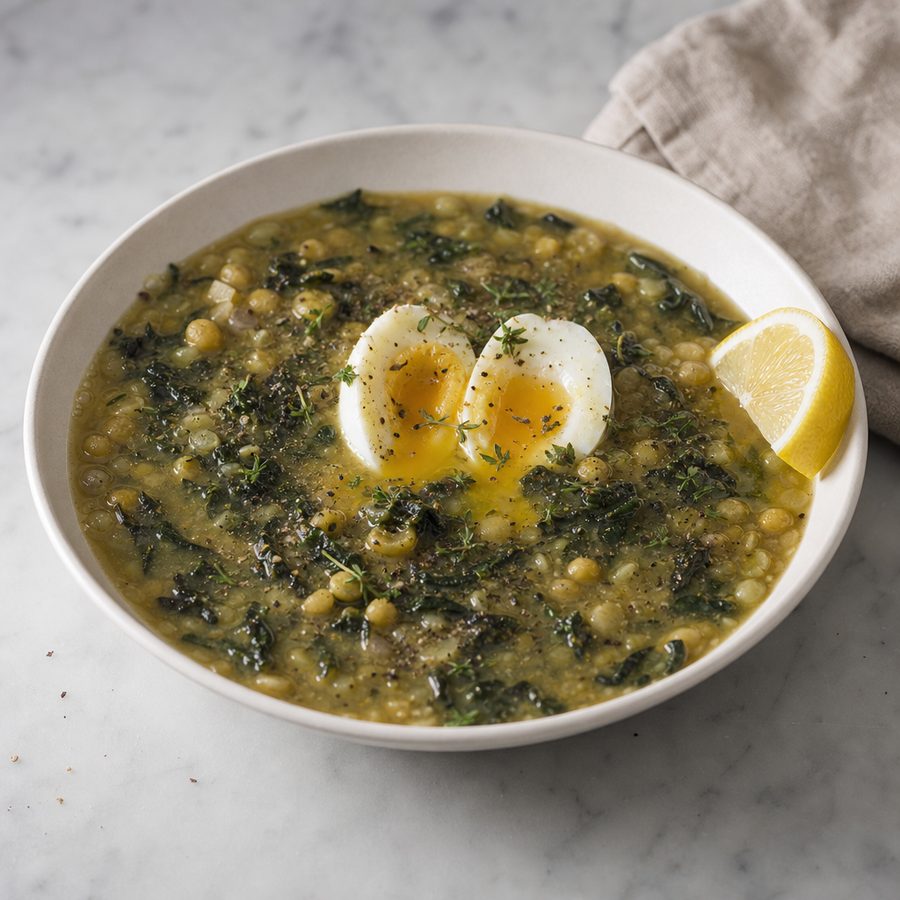
Cooked split peas loosened into a thin, savory broth with carrot, thyme, and shredded kale, finished with lemon, cracked pepper, and a halved soft-boiled egg in each bowl.
Why You'll Love This Recipe
Soup for breakfast is normal in most of the world and strange in this country, which I have never understood. A bowl of hot broth first thing is one of the gentlest ways I know to start a day, and this one takes twenty five minutes from a cold stove. I keep cooked split peas in the refrigerator through the winter for exactly this. They break down just enough at the edges to cloud the broth and give it body while the rest stay whole, so you get soup and something to chew at the same time.
Everything here is about restraint until the very end, and then a lot happens at once. The pot itself is quiet: onion, carrot, garlic, thyme, and broth, cooked until the vegetables are soft and the kitchen smells green. Then two tablespoons of lemon juice go in off the heat and the whole thing wakes up, the pepper goes on coarse, and a soft egg cut in half sits in the middle of each bowl. Break the yolk with the back of your spoon and stir it through and the broth turns silkier and slightly richer in about three seconds.
I make this on cold mornings and on the mornings after a heavy night, when eggs and toast sound like too much work to chew. It reheats perfectly, which is unusual, because there is no starch to go gluey and the kale is already cooked down as far as it is going. The eggs are the only part that has to be fresh, and six minutes and thirty seconds in boiling water is not a lot to ask before coffee.
Ingredients
- 1 1/2 cups cooked green split peas
- 3 cups vegetable broth
- 1 small bunch lacinato kale (about 7 oz), stemmed and cut into thin ribbons
- 4 large eggs, cold from the refrigerator
- 1 medium carrot, cut into small dice
- 1/2 medium yellow onion, finely diced
- 3 cloves garlic, minced
- 2 tbsp olive oil, divided
- 1 tbsp fresh thyme leaves
- 2 tbsp fresh lemon juice, plus wedges to serve
- 1 tsp coarsely cracked black pepper
- 1/4 tsp fine sea salt
Instructions
- Soft-boil the eggs first: Bring a small pot of water to a full rolling boil. Lower the cold eggs in on a spoon and set a timer for six minutes and thirty seconds. Move them straight into a bowl of ice water for three minutes, which stops the cooking and makes them peel. Peel them under a thin stream of cold water and set them aside.
- Sweat the vegetables: Warm 1 tbsp of the olive oil in a saucepan over medium heat. Add the onion and carrot with the salt and cook six to seven minutes, stirring now and then, until the onion is translucent and the carrot has lost its raw edge. Do not let anything brown here; you want the broth clean and pale, not caramelized.
- Add garlic, thyme, and broth: Stir in the garlic and thyme and cook forty five seconds, just until you can smell them. Pour in the broth, add the split peas, and bring it to a bare simmer. Cook ten minutes, pressing a few of the peas against the side of the pan with a spoon so they break down and cloud the liquid slightly.
- Wilt the kale: Stir in the kale ribbons and cook ninety seconds to two minutes, no longer. They should go dark and silky while still holding their shape. Take the pot off the heat, stir in the lemon juice and the remaining tablespoon of olive oil, and taste. It will want more lemon more often than it wants more salt.
- Build the bowls: Ladle the broth into four wide bowls, making sure each gets a fair share of peas and kale. Cut the eggs in half lengthwise and set two halves on top of each bowl, cut side up so the yolk shows. Crack the black pepper over everything and put lemon wedges on the table.
Variations
- Smoky: Add a teaspoon of smoked paprika with the garlic for a deeper, redder broth that tastes like there is bacon in it.
- Ginger and scallion: Swap the thyme for a tablespoon of grated ginger and finish with sliced scallions and a few drops of sesame oil.
- Poached instead of boiled: Slide the eggs directly into the simmering broth for three minutes at the end and serve them poached in the bowl.
- Herb-heavy: Stir a large handful of chopped parsley and dill in off the heat with the lemon for something much greener and fresher.
Storage & Leftovers
The broth keeps five days in a sealed container in the refrigerator and reheats better than most soups, since there is no starch in it to turn gluey and the kale has already cooked as far as it will go. It thickens as it sits, so add a splash of water or broth when you warm it.
Keep the eggs separate and cook them fresh each morning, or soft-boil four at once and store them unpeeled in the refrigerator for up to three days. A peeled soft egg goes rubbery and picks up refrigerator smells within a day, so leave the shells on until you need them.
It freezes for up to three months, though the kale softens further and loses its bite. Freeze the broth and peas alone in flat portions, thaw overnight, and stir fresh kale ribbons in during the last two minutes of reheating. Fresh lemon juice goes in at the very end either way.
Notes & Tips
- Six minutes thirty, then ice: That is the window for a set white and a yolk that still runs. Thirty seconds longer and it goes jammy, which is fine but different, and the ice bath is what stops the clock.
- Do not brown the vegetables: Color in the pan means color in the broth. Keep the heat at medium and stir, and the finished bowl stays clean and pale green rather than muddy.
- Mash a few peas on purpose: Press five or six against the side of the pot with the back of a spoon. That small amount of starch is what gives the broth body without making it a puree.
- Kale goes in last and briefly: Two minutes is plenty. Longer and the ribbons turn olive-drab and slippery, and you lose the one bit of texture in the bowl.
- Lemon off the heat: Acid boiled into a broth goes dull and slightly bitter. Added after the pot comes off the burner, it stays bright and you taste it in every spoonful.
- Warm the bowls: A thin broth in a cold bowl is lukewarm by the third spoonful. A minute of hot tap water in each bowl, poured out and dried, keeps it hot to the bottom.
Nutrition & Mindful Eating
- The split peas, the greens, and the egg each cover different ground in this bowl. The peas give the broth its body and most of its fiber, the kale brings the dark green bite and the color, and the egg on top adds the protein and the richness that a thin broth on its own would not have.
- Split peas break down at the edges and hold together in the middle, which is what makes this brothy rather than thick. They are unusually high in fiber for a legume and carry folate and potassium along with plant protein.
- Kale cut into thin ribbons wilts in under two minutes and goes silky without turning slimy. It carries vitamin K and vitamin C in real quantity, and the brief cooking is what keeps both the color and the bite intact.
- A soft-boiled egg is doing more than sitting on top. The yolk stirred through the broth turns it silkier and slightly richer, and it carries choline and vitamin D, two things that are genuinely hard to find elsewhere on a breakfast table.
- Thyme, garlic, lemon, and a lot of cracked pepper are what keep a pot this simple from tasting like hot water. The lemon goes in after the heat is off so the sharpness survives, and that acid is the single biggest reason the last spoonful still tastes like something.
- As you eat, break the yolk into the broth and watch it change color and thickness before you take the next spoonful, and let the warmth of the bowl in your hands slow the whole meal down.
Frequently Asked Questions
Can I use dried split peas and cook them in the soup?
You can, though the broth changes character. Cooked in from dry, split peas break down almost completely and you end up with a thick puree rather than something brothy. If you go that way, use half the peas and twice the broth, and expect a much heavier bowl.
My eggs will not peel.
Very fresh eggs are the usual culprit, and eggs a week or two old peel far more easily. Beyond that, a full ice bath for three minutes and peeling under running water make the biggest difference. Start peeling at the fat end where the air pocket sits.
Can I use a different green?
Yes. Swiss chard, mustard greens, or spinach all work. Spinach needs about thirty seconds rather than two minutes, and chard stems are worth dicing and adding with the carrot. Kale holds its texture best if you are planning to reheat the pot later in the week.
Is it supposed to be this thin?
It is. This is a brothy bowl rather than a thick pea soup, and the thinness is what makes it easy to eat first thing. If you want it heavier, mash more of the peas against the side of the pan, or use half a cup less broth.