
Buffalo-Style Chicken Skillet with Celery, Carrot, and White Beans
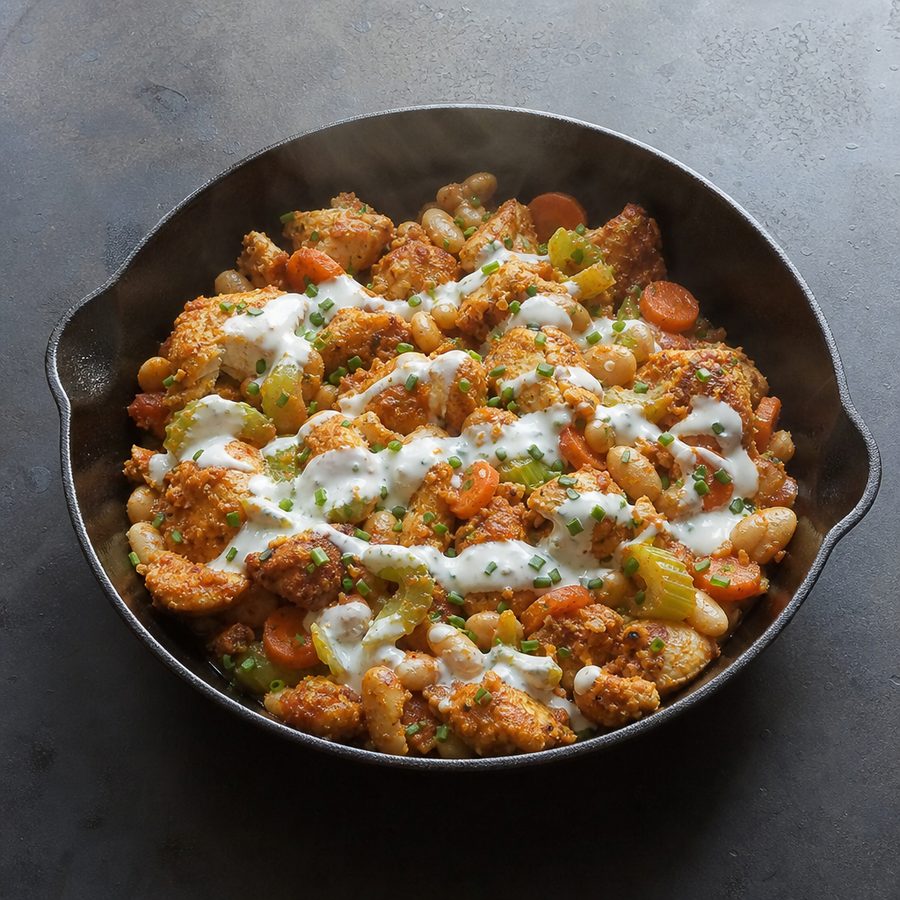
Chicken breast seared in cayenne and paprika, deglazed with cider vinegar until the pan turns glossy and hot, then tossed with browned celery, carrot, and cannellini beans and drizzled with chive yogurt.
Why You'll Love This Recipe
The flavor everybody knows from a plate of wings is really only three things: cayenne, vinegar, and enough fat to carry them. Once you know that, you can build it straight into a skillet and skip the deep fryer entirely. I toss the chicken with paprika, cayenne, and black pepper before it goes near the pan, sear it hard in olive oil so the spices toast, then splash cider vinegar in while the pan is still roaring. It comes up in a cloud, catches everything stuck to the bottom, and reduces down into a glossy orange glaze in about 40 seconds.
Celery is the part I would ask you not to skip or shrink. It is usually a cold thing sitting next to the sauce, and cooking it changes what it is: cut on a steep angle and browned at high heat, it goes sweet and grassy at the edges while the center keeps its snap. Carrot coins go in with it and turn candy-sweet against all that heat. Cannellini beans come in at the end, break slightly at the edges, and thicken whatever glaze is left in the pan into something that coats rather than pools.
A Friday when nobody wants to think calls for this, and it makes the house smell like a bar in the good way. It is hot but not punishing at a teaspoon and a half of cayenne, and half that makes a pan small children will eat. The chive yogurt is not decoration; you want something cold and thick going over the top, and it should hit the plate in broad stripes so some bites are cooled and some are not. Leftovers are excellent stuffed into a lettuce leaf the next day.
Ingredients
- 2 tbsp olive oil
- 1 1/4 lb boneless skinless chicken breast, cut into 1-inch pieces
- 2 tsp sweet paprika
- 1 1/2 tsp cayenne, or 3/4 tsp for a gentler pan
- 1 tsp coarsely ground black pepper
- 1/4 tsp fine sea salt
- 1 small yellow onion, cut into thin wedges
- 8 celery stalks, cut on a steep angle into 1/2-inch pieces, pale leaves saved
- 2 carrots, sliced into thin coins
- 4 garlic cloves, thinly sliced
- 2 tbsp apple cider vinegar
- 1 1/2 cups canned cannellini beans, drained and rinsed
- 1/2 cup plain Greek yogurt
- 3 tbsp chives, finely snipped
Instructions
- Season the chicken: Pat the chicken pieces dry, then toss them in a bowl with the paprika, cayenne, black pepper, and salt until every piece is evenly coated and stained orange. Let them sit while you cut the vegetables. Dry meat and a dry rub are what give you a crust rather than a steam bath.
- Make the chive yogurt: Stir the Greek yogurt with two thirds of the chives and a splash of water, enough to loosen it to the thickness of pourable cream. Keep it in the refrigerator until the moment you serve, since it wants to be genuinely cold against a hot pan.
- Sear the chicken: Heat the olive oil in a large cast iron skillet over medium-high until it shimmers. Add the chicken in a single layer and leave it alone for three minutes, until the undersides are deeply browned and the spices smell toasted. Turn and cook two to three minutes more, until the pieces are firm and cooked through to 165°F. Move them to a plate.
- Brown the celery and carrot: Add the onion wedges, celery, and carrot coins to the same pan and cook over medium-high for five to six minutes, stirring only every minute or so, until the celery is browned in patches but still snaps when you bite it. Add the sliced garlic and cook 30 seconds more.
- Deglaze with vinegar: Pour the cider vinegar straight into the hot pan and stand back for a second. Scrape hard with a wooden spoon as it bubbles and let it reduce for about 40 seconds, until what is left is syrupy and coats the vegetables in orange.
- Bring it together: Add the cannellini beans and return the chicken with any juices on the plate. Toss for two minutes over medium heat until everything is hot and glazed and the beans have softened at their edges. Take the pan off the burner, drizzle the chive yogurt over in wide stripes, and scatter the remaining chives and the pale celery leaves on top.
Variations
- Cauliflower version: Swap the chicken for a whole head of cauliflower cut into small florets, seasoned the same way and roasted at 450°F for 20 minutes before it joins the pan.
- Shrimp: Use a pound and a quarter of large shrimp, seared for 90 seconds a side and added back only at the very end so they do not tighten.
- Smoky: Swap the sweet paprika for smoked paprika, which turns the whole pan darker and more barbecue-leaning.
- Ranch-style herbs: Add a tablespoon each of chopped dill and parsley to the yogurt along with the chives for something closer to a ranch drizzle.
Storage & Leftovers
This keeps four days in a sealed container in the refrigerator. Store the chive yogurt separately, since it thins out and loses its point once it has been sitting in a warm pan. The celery softens a little overnight but keeps more of its snap than you would expect.
Reheat in a skillet over medium-high for three minutes, spread flat rather than stirred constantly, which lets the glaze tighten up again. Add a teaspoon of vinegar at the end to sharpen it back up, then spoon the cold yogurt over once it is off the heat.
I do not freeze this one. Celery and carrot both go watery and limp after thawing, and the texture is most of what makes the dish. If you want a head start instead, cut all the vegetables and mix the spice rub up to two days ahead and keep them in the refrigerator.
Notes & Tips
- Coat the chicken while the pan heats: The spices need a few minutes on the surface of the meat to stick. Rub them on first thing, then cut vegetables, and by the time the oil shimmers the chicken is ready to give you a real crust.
- Cut the celery on a steep angle: Long diagonal pieces give you far more cut surface to brown than straight coins do, and they hold their crunch better because the center stays thick.
- Let the vinegar reduce: Poured in and stirred straight through, it tastes sour and thin. Given 40 seconds in a hot pan it turns syrupy and its sharpness rounds into something that clings. Watch for the bubbles going from wide to small.
- Keep the yogurt cold: Stir it, then put it back in the refrigerator until the pan is off the heat. Warm yogurt slides into the glaze and disappears; cold yogurt sits in stripes and cools every second bite.
Nutrition & Mindful Eating
- Chicken, celery, and cannellini beans each pull their weight here. The chicken carries the protein, the celery and carrot bring the crunch and the bulk, and the beans give the pan fiber along with a soft creamy texture that thickens the glaze around everything else.
- Chicken breast is a close-grained cut that cooks quickly and takes on a spice rub better than almost anything, and it delivers a large amount of protein along with selenium and niacin.
- Cannellini beans are the quiet workhorse of this skillet. They soak up the vinegar and cayenne, they carry both fiber and plant protein, and their soft edges are what turn a pan sauce into something that coats a spoon.
- Celery cooked hot and fast is a different vegetable from celery on a crudite plate, sweeter and grassier at the browned edges, and it brings water, potassium, and enough crunch to keep every bite interesting.
- Cayenne, paprika, and cider vinegar are the three notes doing the flavoring, and the heat is the part you feel building. Capsaicin, the compound behind that warmth, has been studied for a long list of things, but at the table its job is simply to make you eat slowly.
- As you eat, pay attention to the way the heat builds across two or three bites and then the cold yogurt resets it, and let that rhythm keep you at the table rather than racing to the bottom of the bowl.
Frequently Asked Questions
How hot is a teaspoon and a half of cayenne?
Warm and steady rather than sharp, closer to a medium wing than a hot one. Cayenne builds across a few bites rather than hitting all at once. Start at three quarters of a teaspoon if you are cooking for a mixed table and pass extra at the table for anybody who wants it.
Can I use chicken thighs?
Yes, and they are more forgiving. Cut boneless thighs into the same one-inch pieces, sear them the same way, and cook them through to 175°F, which takes a couple of minutes longer. The pan will carry a little more rendered fat, which is no bad thing with a glaze like this.
Why cider vinegar rather than a bottled hot sauce?
Because it is what a hot sauce mostly is. Cayenne, vinegar, and salt in a hot pan give you the same flavor with the heat set exactly where you want it. If you keep a bottle you like, use two tablespoons of it in place of the vinegar and cut the cayenne in half.
What can I use in place of the chive yogurt?
Sour cream loosened with lemon juice, or crumbled blue cheese stirred into yogurt if you want the classic pairing. Whichever you use, keep it cold and thick, and put it on after the pan is off the heat so it stays in stripes.