
Bulgogi-Style Sirloin with Mushrooms, Snow Peas, and Edamame
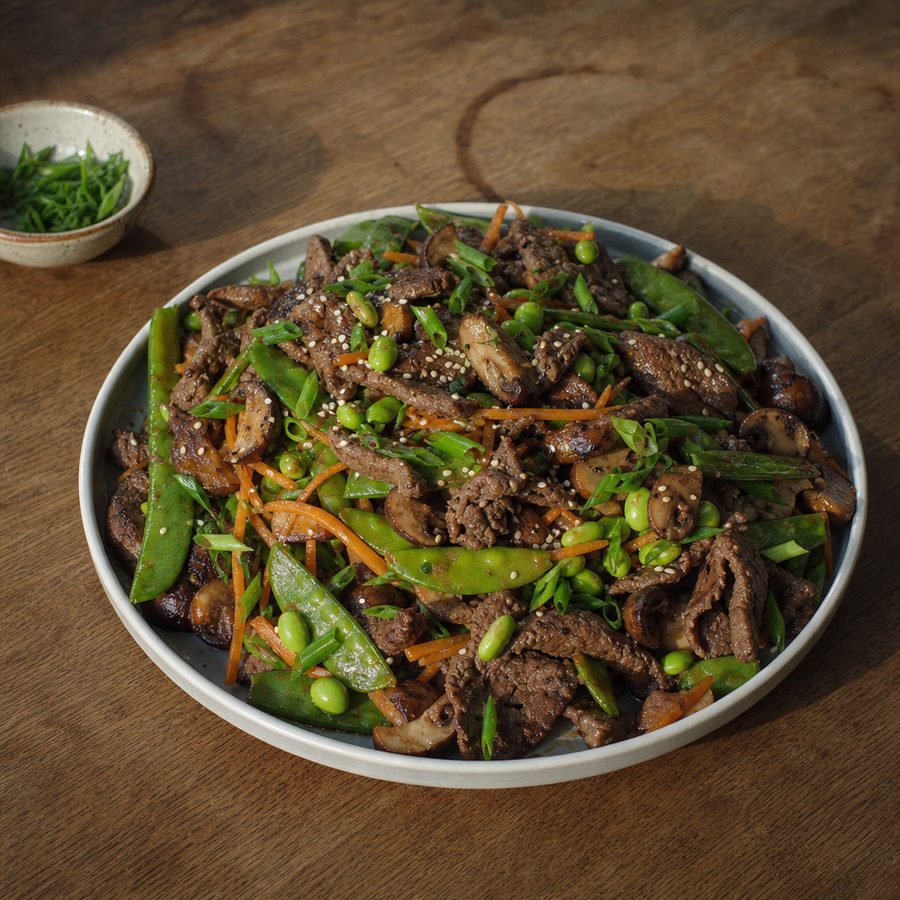
Paper-thin sirloin marinated in grated pear, soy, sesame, and garlic, seared hard in a dry pan and tossed with browned mushrooms, snow peas, carrot matchsticks, and shelled edamame.
Why You'll Love This Recipe
When I want dinner to taste like it took longer than it did, this is what I reach for. The marinade is the whole trick: grated pear, soy, sesame oil, a lot of garlic, and enough black pepper to notice. Pear does something soy alone cannot, softening the meat while it sits and then caramelizing the second it meets metal, which is where that dark lacquered edge comes from. Twenty minutes in the bowl is enough, and if you slice the beef while it is still half frozen you will get slices thin enough to cook through in the time it takes to count to sixty.
The vegetables are not an afterthought here, and I put in as much of them by weight as beef. Mushrooms go in first and alone, because they need a hot dry pan and room to release their water and then brown in it. Snow peas and carrot matchsticks go in near the end and stay crisp, which the plate needs against all that soft meat. The edamame is the piece people are surprised by. It holds its shape, it takes on the marinade that pools at the bottom of the pan, and it turns a stir-fry into something that eats like a full plate.
This belongs on a weeknight when everyone is arriving at a different hour, because it is just as good at room temperature as it is straight out of the pan. I slice and marinate the beef in the morning, cut the vegetables while the pan heats, and the actual cooking is about fourteen minutes of standing at the stove. Leftovers go into a bowl the next day with a spoonful of the pan juices poured over, and the scallions and sesame get replaced fresh so the whole thing tastes made rather than reheated.
Ingredients
- 1 lb beef sirloin steak, firmed up in the freezer for 20 minutes and sliced across the grain as thinly as you can
- 1/2 firm pear (Bosc or Anjou), peeled and grated on the coarse side of a box grater
- 2 tbsp soy sauce
- 1 tbsp toasted sesame oil
- 5 garlic cloves, grated
- 1 tbsp grated fresh ginger
- 1/2 tsp coarsely ground black pepper
- 1 tbsp avocado oil, for the pan
- 10 oz cremini mushrooms, halved and thickly sliced
- 1 large carrot, cut into thin matchsticks
- 7 oz snow peas, strings pulled off
- 2 cups frozen shelled edamame, thawed
- 6 scallions, cut into 2-inch lengths, white and green parts kept separate
- 2 tbsp sesame seeds, toasted in a dry pan until they smell nutty
Instructions
- Slice the beef thin: Put the sirloin in the freezer for 20 minutes, until it is firm at the edges but not frozen through, since a cold piece of meat holds still under the knife and a room-temperature one rolls away from it. Lay it flat, find the direction the muscle fibers run, and slice across them at a slight angle into pieces no thicker than a quarter inch. Thin is the entire point, and half-frozen meat is the only easy way to get there with a home knife.
- Marinate: Grate the pear on the coarse side of a box grater straight into a bowl, catching the juice. Add the soy sauce, sesame oil, grated garlic, ginger, and black pepper, then the beef, and work it through with your hands until every slice is coated. Leave it 20 minutes at room temperature while you cut the vegetables, or up to four hours in the refrigerator.
- Brown the mushrooms: Set your widest skillet over high heat with the avocado oil. Add the mushrooms in one layer and leave them alone for three minutes, because mushrooms moved early sit in their own water and never brown at all. They will release water and look wrong, then the water cooks off and they start to squeak and brown. Toss, cook two minutes more until the edges are deep brown, and tip them onto a plate.
- Sear the beef in batches: Return the pan to high heat. Lift half the beef out of the marinade, letting the excess drip back, and lay the slices in a single layer. Leave them 45 seconds without touching, until the undersides are dark and glossy, then turn and give them 30 seconds more. Move to the plate with the mushrooms and repeat with the second half. A crowded pan steams the meat gray, so two batches is not optional.
- Bring it together: Add the scallion whites, carrot matchsticks, and snow peas to the empty pan with any marinade left in the bowl and stir hard for 90 seconds, until the snow peas turn bright and the carrots lose their stiffness. Add the edamame and cook one minute more, so they warm through without losing the snap that makes them worth having in here.
- Finish: Return the beef, mushrooms, and every drop of juice on the plate to the pan and toss for 30 seconds, just long enough to heat through and coat everything in the glaze that has collected. Take it off the heat, fold in the scallion greens, and shower the toasted sesame seeds over the top.
Variations
- Ground beef version: Skip the slicing and use ground beef, browned hard and crumbled, with the marinade added at the end and cooked down for a minute until it glazes.
- Mushroom only: Double the mushrooms, marinate them the same way, and leave the beef out entirely. Portobello slices hold up best and take the glaze beautifully.
- With a fried egg: Set a runny fried egg on each bowl and break it into the beef, which is closer to how this gets eaten at home.
- Hotter: Add a teaspoon of cayenne or a spoonful of chile flakes to the marinade for the kind of heat that builds slowly rather than hitting all at once.
Storage & Leftovers
This keeps four days in a sealed container in the refrigerator, and it is one of the few stir-fries I am happy to eat cold. The beef stays tender because it was cooked fast and sliced thin, and the marinade goes on working overnight, so day two often tastes rounder than day one.
Reheat it in a hot skillet for two or three minutes, spread out rather than piled, so the moisture cooks off rather than stewing the vegetables. If the snow peas have gone soft, I skip reheating altogether and eat it at room temperature with the pan juices spooned over.
It freezes for up to three months, though the snow peas come back limp. If you know you are freezing half, hold the snow peas back and add them fresh when you reheat. Thaw overnight in the refrigerator and warm it in a pan rather than a microwave, with a fresh scattering of scallion and sesame at the end.
Notes & Tips
- Freeze the beef before you slice it: Twenty minutes in the freezer firms the muscle enough that a knife glides through it. A room temperature steak squashes under the blade and gives you thick, chewy slices no matter how careful you are.
- Let the marinade drip off: Wet meat steams. Lift each batch out with tongs and give it a second over the bowl before it goes in the pan, then pour whatever is left into the vegetables later so nothing is wasted.
- Cook the mushrooms first and alone: They release a surprising amount of water, and if that water is in the pan when the beef arrives, the beef boils. Get them browned, get them out, and the pan is dry and hot for the meat.
- Toast the sesame seeds yourself: Three minutes in a dry pan over medium heat, shaking constantly until they turn tan and start popping. The difference between those and the ones straight from the jar is the difference between the dish smelling of sesame and not.
Nutrition & Mindful Eating
- Sirloin, mushrooms, and edamame divide the work in this pan. The beef brings the protein and the deep savory backbone, the mushrooms add body and their own quiet meatiness, and the edamame gives the bowl fiber and something to chew on so it eats like a full plate rather than a pile of meat.
- Sirloin is a close-grained cut that stays tender when it is sliced thin and cooked fast, and it carries iron in the form your body takes up most easily, along with the zinc and B12 that beef is generous with.
- Edamame are soybeans picked young, which is why they are sweet and firm rather than starchy, and they bring plant protein and fiber together in the same spoonful. They also hold their shape in a hot pan, so they stay distinct rather than disappearing into the glaze.
- Snow peas and carrot matchsticks go in for the last 90 seconds so they keep their snap, and that short cooking is what preserves their color and the vitamin C that comes with it. The crunch against the soft beef is half of why this dish works.
- Toasted sesame seeds and grated ginger are doing more than seasoning. Sesame gives the finish its nutty perfume and a little calcium, and ginger sharpens the marinade so a pan this savory still tastes bright at the last bite.
- As you eat, notice the difference between the glossy dark edges of the beef and the snap of a snow pea in the same mouthful, and let that contrast slow you down enough to feel when you have had enough.
Frequently Asked Questions
Can I use a different cut of beef?
Yes. Flank, skirt, and top round all slice thin and take this marinade well, and any of them will work as long as you cut across the grain. Ribeye is delicious here but throws a lot of fat into the pan, so pour some off before you add the vegetables if you go that way.
What does the pear actually do?
Two things. It carries enzymes that soften the meat while it sits, which is why bulgogi marinades in Korean kitchens so often start with grated pear or apple, and its sugars caramelize on contact with the hot pan, which is where the dark glaze comes from. A firm pear grates better than a ripe one, which collapses to mush.
My beef came out gray rather than browned. What went wrong?
The pan was either not hot enough or too full. High heat, a single layer, and 45 seconds of stillness are what give you color. If you hear a hiss when the meat lands, you are in good shape. If you hear nothing, take the meat out, let the pan come back up, and start again.
Can I make it without soy sauce?
Coconut aminos work in the same quantity and give a slightly sweeter, gentler result, and tamari matches the flavor of soy sauce almost exactly. Whichever you use, taste the marinade before the beef goes in, since brands vary a great deal in how salty they are.