
Butter-Basted Ribeye Steak
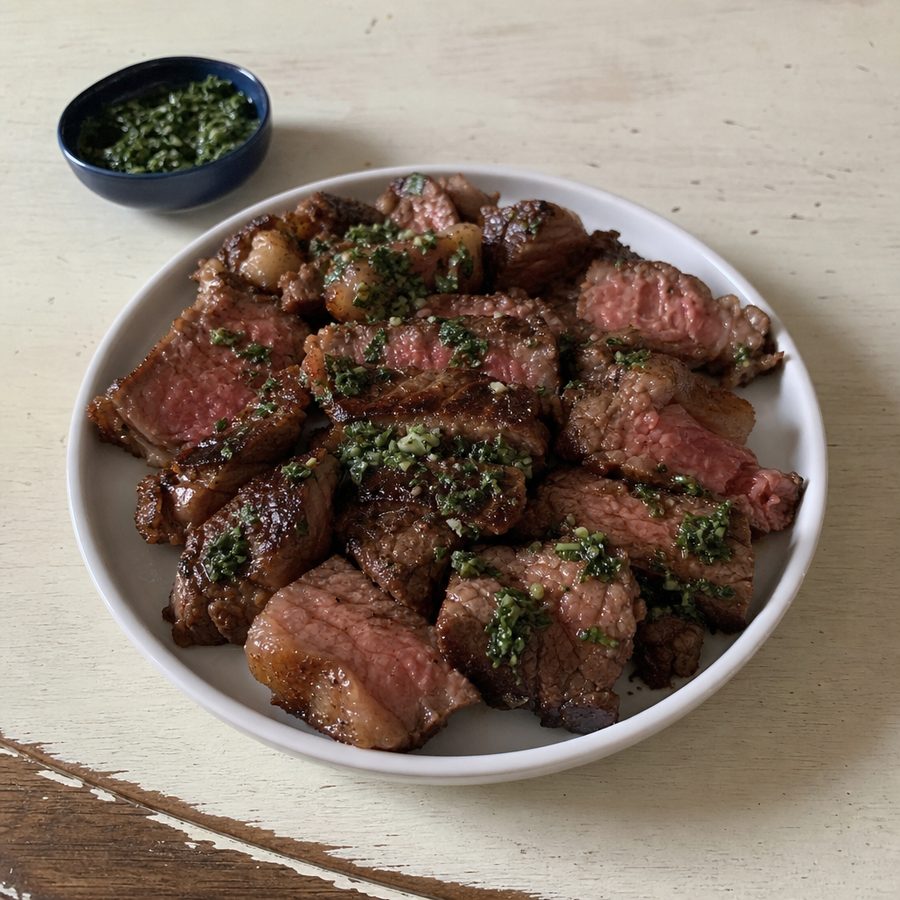
A thick-cut steak seared hard and basted in foaming butter until deeply browned, then rested and sliced.
Why You'll Love This Recipe
A ribeye needs salt, a very hot pan, and someone paying attention for eight minutes. Nothing else improves it, and most of what usually gets added is covering for one of those three being wrong. The cut has enough fat marbled through it to baste itself from the inside as it cooks, which is exactly why it is the steak worth buying when what you want is steak. The butter at the end is not there for richness. It is there because spooning hot fat over the top cooks the surface that is facing away from the pan.
Buy the steaks thick, an inch and a quarter at least, even if that means cutting two large ones into four portions rather than buying four thin ones. Thickness is what gives you a choice at all: browning the outside takes longer than the middle needs, so on a thin steak you get a crust or a pink center and not both, while on a thick one the two finish at about the same moment. Take them out of the refrigerator twenty minutes ahead as well, since a cold center pulls the cooking time out and the crust pays for it.
Rest them five minutes, slice against the grain, and dinner is essentially protein and fat with nothing else asked of it, which is why a green salad and something starchy on the side finish the plate rather than competing with it. A six ounce portion of ribeye carries the meal on its own, so the sides can stay simple. For the same pan treatment on a different cut, there is our Bacon-Wrapped Pork Tenderloin.
Ingredients
- 1 1/2 lb ribeye steak, in 4 portions
- 4 tbsp butter
- 3/4 tsp coarse salt
Instructions
- Dry the steaks, then salt them: Pat the steaks completely dry with paper towels, both faces and around the edges, then season them generously with the coarse salt. Surface water has to boil away before any browning can start, and every second that takes is a second the inside spends cooking, which is how a wet steak ends up gray and overdone at the same time. If you have forty minutes to spare, salt them and leave them uncovered on a rack in the refrigerator; the surface dries further and the salt works inward.
- Get the pan properly hot before the steak goes near it: Heat a heavy skillet, cast iron if you have one, over high heat until a drop of water skitters across the surface and the pan is just short of smoking. Lay the steaks in away from you and then leave them alone for three to four minutes a side, because a steak that gets moved never holds contact long enough to brown. Medium-rare is 130 to 135°F in the center. The USDA guidance for whole cuts of beef is 145°F with a three-minute rest, so cook to whichever of those you prefer and use a thermometer rather than the clock.
- Butter goes in at the end, and keeps moving: Add the butter in the last minute, tilt the pan toward you so it pools along the low edge, and spoon it over the tops of the steaks steadily for about a minute. Butter burns fast at searing heat, which is why it goes in at the end rather than the start, and why the spoon has to keep moving so the milk solids never sit still long enough to catch. What this actually does is cook the top of the steak with hot fat while the bottom stays on the pan, so the middle arrives evenly done.
- Take the temperature before you take it out: Slide an instant-read thermometer into the side of the thickest steak, aiming for the center rather than pushing down through the top, and take the pan off the heat about five degrees below the temperature you are after. Steak keeps cooking while it rests and five degrees is roughly what it climbs. Judging by feel works for people who cook steak every week, and for everyone else a thermometer is the difference between the steak you paid for and one you did not.
- Rest five minutes, then cut across the grain: Move the steaks to a board or a warm plate and leave them five minutes, uncovered, because foil traps steam and softens the crust you just spent eight minutes building. Resting lets the juices settle back through the meat instead of running out at the first cut. Then look for the direction the muscle fibers run and slice across them at a slight angle. A ribeye holds more than one muscle and the grain changes direction between them, so it is worth checking before the knife goes down.
Variations
- Skip the dairy: Baste with beef tallow or olive oil in place of the butter. The steak still gets the benefit of being spooned over.
- Add more vegetables: Once the steaks are resting, drop halved cherry tomatoes or a fistful of watercress into the hot pan. Seconds are all either one needs.
- Add aromatics to the butter: A smashed garlic clove and a sprig of thyme go in with the butter and perfume everything you spoon over the steak.
- Turn it into a steak salad: Slice leftovers cold and lay them over arugula with lemon and olive oil. Cold ribeye is better than reheated ribeye.
- Reverse sear a thick cut: For steaks over an inch and a half, warm them in a low oven first and then sear fast at the end. You get an evenly pink center instead of a gray band.
Storage & Leftovers
Refrigerate leftovers in an airtight container for three to four days, and wrap the steak whole rather than slicing it first. Every cut face is another surface losing moisture in the cold, so a piece kept whole is noticeably juicier two days later than the same piece sliced on the night. Slice it when you actually want it, straight from the refrigerator, which is also when it cuts thinnest.
Reheating a rested steak is damage control at best, because it was cooked to a particular temperature and any second visit to the heat takes it past that. If you are going to do it, put the slices in a skillet over low heat with a small knob of butter and keep them moving for no more than a minute. A microwave takes medium-rare to gray and leaves most of the juice on the plate underneath.
Cold ribeye is better than reheated ribeye, and it is worth planning the leftovers that way from the start. Slice it thin against the grain straight out of the refrigerator and lay it over a salad with something sharp alongside, a mustard dressing or a few pickled onions, and the fat that firms up in the cold works in your favor. A sandwich with horseradish does the same job.
Notes & Tips
- Cook one or two at a time: A crowded pan drops in temperature and you lose the crust.
- Render the fat cap first: Stand the steak on its fat edge in the hot pan for a minute before you lay it down. That fat renders into the pan and the edge stops being rubbery.
- Salt early or salt right before: Either salt a good half hour ahead so it has time to draw in, or salt just as the steak hits the pan. The window in between leaves the surface wet.
- Butter goes in late: Butter added at the start burns long before the steak is done. It goes in only once both sides are seared.
- Use a thermometer: Ribeye thickness varies a lot. Pull at 130°F (54°C) for medium-rare and let carryover finish it during the rest.
- Rest, then slice against the grain: Five minutes lets the juices settle, and cutting across the muscle fibers is what makes each slice tender.
Nutrition & Mindful Eating
- The beef, the butter and the salt work as three parts of one thing. The meat gives the flavor and the body, the butter carries that flavor back over the surface as you spoon it, and the salt makes both of them taste more like themselves.
- Ribeye is marbled the whole way through, so the fat sits inside the muscle and melts as it cooks, basting the steak from within while the meat delivers complete protein along with the iron, zinc and B12 that beef is known for.
- Butter foams, then quiets, then starts to smell like toasted nuts, and that is the moment you are tipping over the steak with a spoon. Vitamin A comes along inside that fat rather than arriving separately.
- The crust comes from a dry surface meeting a very hot pan, which is why patting the steak and salting it well ahead does more for the finished flavor than any late seasoning could.
- Resting the steak before you slice it stops the juices from running out onto the board, and a portion of beef this rich holds you for a long stretch, with the protein doing most of that work.
- As you eat, pay attention to the browned edge against the softer center and to how much the butter still smells of toasting, and let yourself stop once the plate has done its job.
Frequently Asked Questions
What cut works best?
Ribeye is ideal for its marbling, but strip or sirloin work too.
How long does it keep?
Three to four days, wrapped whole rather than sliced. It does not reheat especially well, since it was cooked to a temperature and going back on heat takes it past that, so plan the leftovers cold: thin slices over a salad, or in a sandwich with something sharp.
Can I make it ahead?
Not really. A basted steak is at its best in the few minutes after it leaves the pan, so cook it when you plan to eat it. Leftover slices are still good cold over a salad.
Why baste with butter instead of just searing?
Spooning hot butter over the steak cooks the top surface while the bottom is searing, so the center finishes evenly instead of the pan side racing ahead of it. The butter browns as it foams too, and that nutty flavor goes onto the crust. There is no garlic or herb in this version, but a smashed clove and a sprig of thyme dropped in with the butter is the classic addition if you want it.