
Cacik Plate with Hard-Cooked Eggs, Tomatoes, and Toasted Almonds
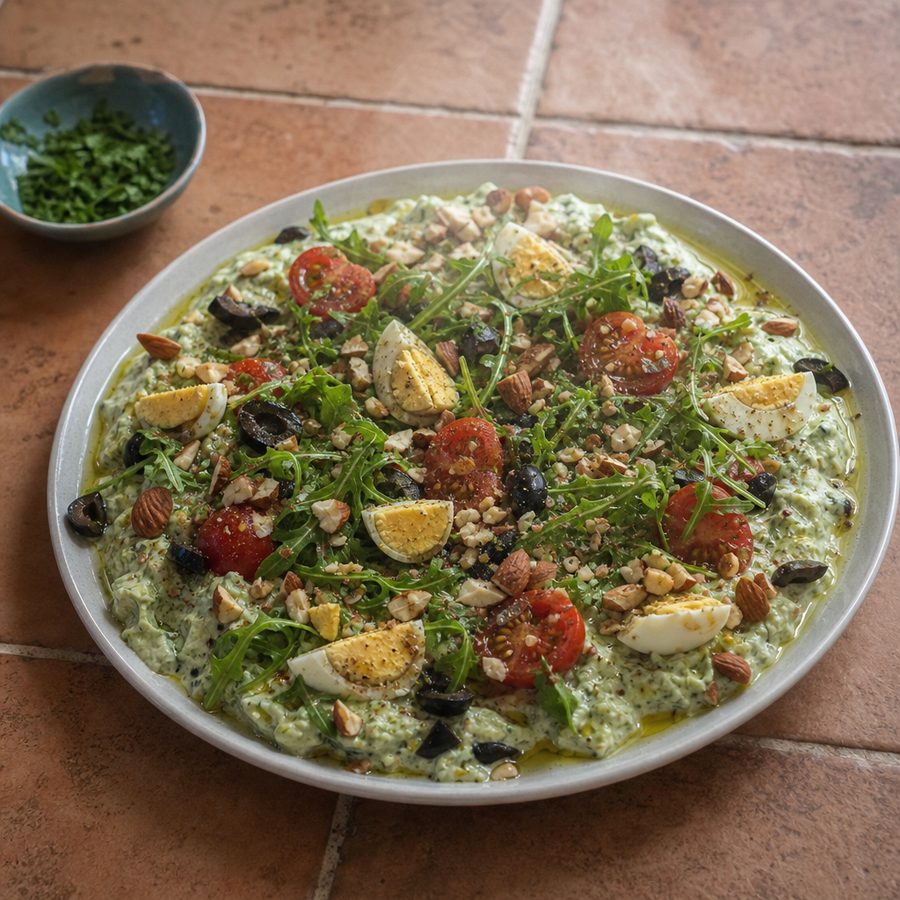
Grated cucumber stirred into thick yogurt with mint and dill, spread under halved hard-cooked eggs, cherry tomatoes, torn olives, arugula, and a heavy scatter of toasted almonds.
Why You'll Love This Recipe
This is the breakfast table I miss most, the one that arrives in eight little dishes with tea in tulip glasses and stays out for two hours. I have pulled it onto one plate so it can happen on a Tuesday. Cacik, the cucumber and yogurt that usually sits in a bowl of its own, becomes the base instead, and everything else lands on top of it. Nothing is cooked except the eggs and the almonds, which means the whole thing depends on good tomatoes, good olive oil, and yogurt with some tartness to it. Buy the best of those three and the recipe more or less makes itself.
The one step people skip is salting the grated cucumber and squeezing it out, and it is the step that decides whether you get cacik or cucumber soup. Cucumbers are mostly water and that water will leave them within about ten minutes of meeting salt, so let it, then wring the shreds out in your hands over the sink. What is left tastes intensely of cucumber and keeps the yogurt thick enough to hold the eggs. The other half of the cucumber stays in half moons for crunch, because a plate that is soft all the way through gets dull.
Hard-cooked eggs are the quiet workhorse. Eleven minutes gives you a firm, pale yellow yolk that crumbles into the yogurt rather than running through it, which is what you want on a plate that is already this loose. Time them, because eggs are unforgiving in both directions: nine minutes and the center is still glossy, fifteen and you get a gray ring and a chalky yolk. Toasting the almonds properly is the other thing worth the timer. I make this in summer when the tomatoes are worth eating and in February with the best cherry tomatoes I can find, and it is just as good either way because the yogurt and olives carry it. It is also the rare breakfast that travels, packed in a jar with the almonds kept separate.
Ingredients
- 2 1/4 cups plain Greek yogurt
- 2 medium cucumbers (about 1 lb), half coarsely grated and half cut into half moons
- 6 large eggs
- 10 oz cherry tomatoes, halved
- 4 oz whole almonds, toasted and roughly chopped
- 4 packed cups arugula
- 1/4 cup kalamata olives, pitted and torn in half
- 1 1/2 tbsp extra-virgin olive oil, plus 1 tsp for the eggs
- 1 1/2 tbsp lemon juice
- 1/2 cup chopped flat-leaf parsley
- 1/3 cup chopped fresh dill
- 1/4 cup chopped fresh mint
- 1 small clove garlic, grated
- 1/4 tsp fine sea salt
- 1/2 tsp coarsely ground black pepper
Instructions
- Hard-cook the eggs: Lower the eggs into boiling water with a spoon and cook for eleven minutes at a steady simmer. Move them straight into a bowl of ice water and leave them five minutes, since the cold shrinks the egg back from the shell and is most of what makes them peel cleanly, then crack and peel under a thin stream of cold water. The yolks should be pale, dry, and fully firm through the middle.
- Salt and squeeze the cucumber: Coarsely grate half the cucumber into a sieve, toss it with a pinch of the salt, and leave it over a bowl for ten minutes. Then gather it in your hands and squeeze hard over the sink. You should get a surprising amount of water out, and what is left should feel almost dry.
- Stir the cacik: Beat the yogurt smooth with the grated garlic, the lemon juice, half the dill, half the mint, and the rest of the salt. Fold in the squeezed cucumber. Taste it and adjust the lemon. It should be tart, garlicky enough to notice, and thick enough to hold a spoon upright for a second.
- Toast the almonds: Toast the almonds in a dry skillet over medium heat for five to six minutes, shaking the pan often, until they smell nutty and are golden inside when you break one open. Tip them onto a board straight away, because almonds left in a hot pan go on toasting until they are bitter, then cool them for a minute and chop them coarsely.
- Dress the tomatoes and greens: Toss the halved tomatoes with the 1 1/2 tbsp olive oil, the black pepper, and the remaining half moons of cucumber, and let them sit five minutes so the tomatoes release a little juice into the oil. Add the arugula and the parsley and turn everything over twice, lightly.
- Build the plates: Spread the cacik across four wide plates, going right to the edges. Halve the eggs and set three halves on each plate, yolk side up, and brush them with the last teaspoon of olive oil. Pile the dressed tomatoes and greens over, tear the olives on, and finish with the almonds and the last of the herbs.
Variations
- Walnuts and paprika oil: Swap the almonds for toasted walnuts and drizzle the plate with olive oil warmed briefly with sweet paprika.
- Roasted tomatoes: Roast the cherry tomatoes at 400°F for fifteen minutes until they burst, then let them cool slightly before they go on the cold yogurt.
- Radish and scallion: Add thinly sliced radishes and scallion for a sharper, more peppery plate that suits early spring.
- Smoked trout: Flake a fillet of smoked trout over the yogurt alongside the eggs for a saltier, more substantial version.
- Dried mint: Rub a teaspoon of dried mint between your palms over the finished plate, which is how cacik is most often seasoned in Turkish homes.
Storage & Leftovers
The cacik keeps three days in a sealed container in the refrigerator and gets sharper each day as the garlic keeps working. It will loosen slightly and may weep a little liquid, which you can pour off before stirring. Do not freeze it, since yogurt splits on thawing and the cucumber turns to threads.
Hard-cooked eggs keep a week in their shells in the refrigerator and peel more easily after a day or two, so cooking them ahead is genuinely an advantage. Peeled eggs keep three days in a covered container with a damp paper towel over them to stop the whites drying out.
The tomatoes, greens, and almonds all want to go on at the last minute. Toasted almonds keep two weeks in a jar at room temperature and lose their crispness if they sit in anything wet, so if you are packing this to take somewhere, put them in separately and scatter them when you sit down.
Notes & Tips
- Squeeze the cucumber harder than feels polite: Two firm handfuls over the sink. Any water left in the shreds ends up thinning the yogurt, and there is no way to thicken it again once that happens.
- Grate on the coarse holes: Fine grating turns cucumber into pulp that disappears into the yogurt. The coarse side leaves shreds you can actually feel, which is the texture cacik is supposed to have.
- One small clove of garlic, grated: Grated garlic spreads through cold yogurt far more evenly than chopped, and it keeps getting stronger as the bowl sits. Start with one clove and add more only after tasting.
- Salt the tomatoes, not the yogurt, at the end: The olives bring plenty of salt to the plate. Season the tomatoes as they sit in the oil and leave the final adjustment until you have tasted everything together.
- Watch the almonds closely: They go from golden to bitter in under a minute in a dry pan. Shake constantly, and tip them out of the hot skillet the moment they smell toasty.
- Use plates, not bowls: The whole point is that everything sits in a single layer on the yogurt where you can see it. In a bowl it collapses into one thing and you lose the separate bites.
Nutrition & Mindful Eating
- Strained yogurt, eggs, and almonds are what make this plate hold together as a meal. The yogurt and eggs bring the protein and a good amount of calcium between them, and the almonds add fat and fiber that give a cold plate real staying power.
- Strained yogurt is thick because the whey has been poured off, which concentrates both the protein and the tang. It also carries live cultures, and the cool sourness is exactly what makes olives, tomato, and egg yolk taste sharper next to it.
- Almonds toasted in a dry pan smell of themselves in a way untoasted ones never do, and their crunch is the only firm thing on a soft plate. They bring vitamin E and magnesium along with that texture.
- Cherry tomatoes tossed with olive oil and left to sit give up a little juice that becomes the dressing for the greens. The fat helps carry their lycopene, and the arugula underneath adds a peppery bite and a little more calcium than a leaf that mild suggests.
- Mint, dill, parsley, and grated garlic are doing the seasoning here, not the salt shaker. Dill and mint together are the flavor of a Turkish breakfast table, and they smell strongest in the first minute after the yogurt is stirred.
- As you eat, drag each forkful through the yogurt so you get some of everything at once, and notice how the plate keeps changing depending on whether you catch an olive, a tomato, or a piece of almond.
Frequently Asked Questions
Can I use regular yogurt if I cannot find the strained kind?
Yes, but drain it first. Line a sieve with a coffee filter or a double layer of cheesecloth, set it over a bowl, and leave the yogurt in the refrigerator for two hours. You will pour off a good half cup of whey and what stays behind is thick enough to build a plate on.
My eggs are impossible to peel. Any fix?
Two things help most. Lower them into water that is already boiling rather than starting them cold, which sets the outer white fast and separates it from the membrane. Then chill them hard in ice water and peel under running water, which floats the shell away instead of taking the white with it.
How far ahead can I put this together?
The cacik, the eggs, and the almonds can all be done up to two days ahead and stored separately. Assembly takes about four minutes. What you should not do is build the plates in advance, because the tomato juice and the yogurt turn into a pink puddle within the hour.
Is this substantial enough to be breakfast on its own?
It is, and it eats bigger than it looks. Between the yogurt, the eggs, and a heavy handful of almonds, each plate has real staying power. In Turkey there would be bread on the table too, and a slice of whole wheat toast for wiping the plate is a good addition if you want one.