
Catalan White Beans with Chard, Blistered Tomatoes, and Almond Picada
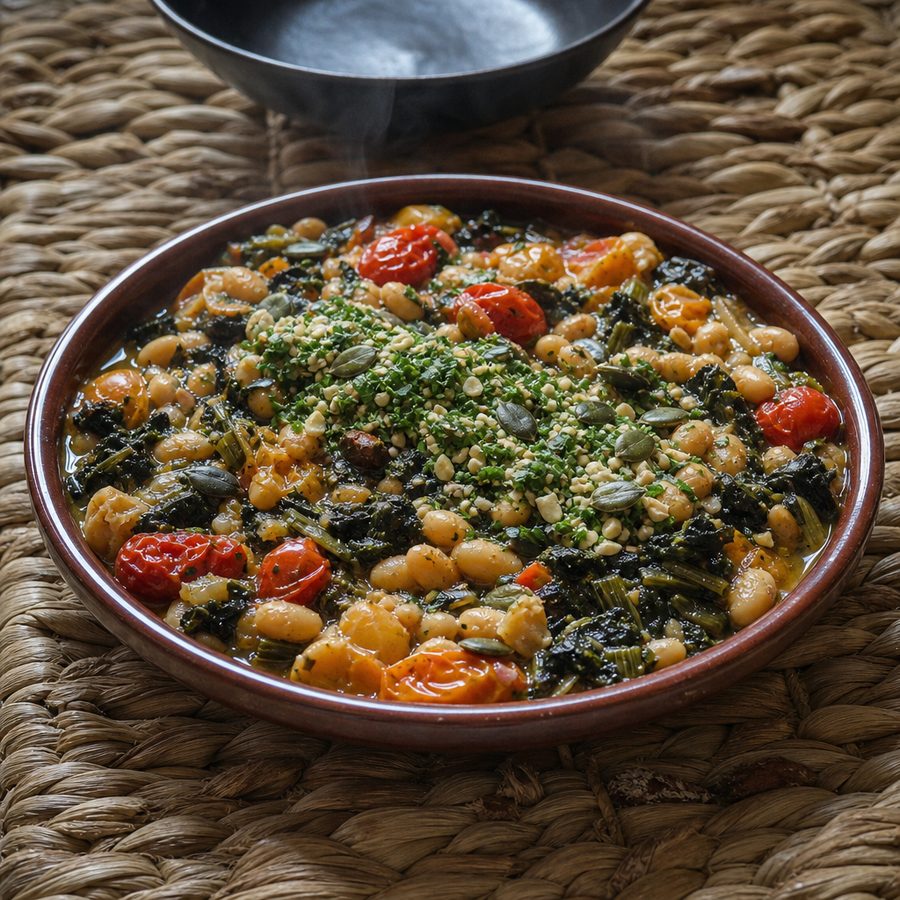
White beans and chard cooked down in olive oil with cherry tomatoes that split in the pan, finished with a coarse picada of toasted almonds, pumpkin seeds, garlic, and parsley pounded in a mortar.
Why You'll Love This Recipe
A picada is the Catalan habit of pounding nuts, garlic, and parsley together and stirring it into a dish at the last minute, and once you have done it a few times you start looking for excuses to make one. It thickens, it seasons, and it adds crunch, all in a single spoonful, which is a lot of work for one small mortar. Here it goes over beans and chard that have cooked down slowly in olive oil with burst tomatoes, which is a soft and comfortable thing on its own and becomes far more interesting the second the pestle comes out and something rough lands on top of it.
This eats like a proper savory breakfast, the kind that expects you to be doing something afterward. The beans go creamy and take on the color of the tomatoes, the chard stems stay slightly firm if you put them in first the way you should, and the almonds and pumpkin seeds keep their bite because the only heat they ever meet is the dry toasting pan. A tablespoon and a half of vinegar at the end sounds like a great deal and is exactly right against all that olive oil, and I would rather you tasted it before deciding to use less.
I make this on cool mornings, and I make a double batch of the picada whenever I do, because it keeps for a week in a jar under a film of oil and improves a plate of almost anything: eggs, roasted vegetables, a piece of fish, another bowl of beans. A mortar and pestle gives you the best texture, coarse and uneven, with some pieces of almond still recognizable. A few pulses in a small food processor is fine so long as you stop while it still looks like gravel rather than paste, which happens faster than you think.
Ingredients
- 1 1/2 cups cooked cannellini beans, drained and rinsed
- 1 large bunch swiss chard (about 12 oz), stems sliced and leaves torn
- 1 1/2 cups cherry tomatoes, left whole
- 3/4 cup whole almonds (about 4 oz)
- 3/4 cup pumpkin seeds
- 4 cloves garlic, 2 sliced and 2 left whole
- 1 cup flat-leaf parsley leaves
- 2 tbsp olive oil
- 1 1/2 tbsp cider vinegar
- 1 tsp fresh rosemary, chopped fine
- 1/2 tsp fine sea salt
- 3/4 tsp coarsely ground black pepper
Instructions
- Toast the almonds and seeds: Put the almonds in a dry skillet over medium heat and toast for four minutes, shaking often, then add the pumpkin seeds and toast for two minutes more, until the seeds begin to pop and swell and the almonds smell warm. Tip everything onto a plate to stop the cooking, since they will keep browning in a hot pan.
- Pound the picada: Crush the two whole garlic cloves with the salt in a mortar until they are a paste. Add the cooled almonds and pumpkin seeds and pound until the mixture looks like coarse gravel, not powder. Add the parsley and pound briefly again, then work in one tablespoon of the olive oil. It should be thick, rough, and green.
- Start the chard stems: Warm the remaining tablespoon of olive oil in a wide skillet over medium heat, add the sliced garlic and the chard stems, and cook for four minutes, stirring, until the stems have lost their squeak and the garlic is pale gold.
- Blister the tomatoes and wilt the leaves: Turn the heat up, add the whole tomatoes, and leave them for three to four minutes without stirring, until the skins blacken in spots and the first ones split. Press them gently with a spoon so they release their juice, then add the chard leaves in handfuls with the rosemary and black pepper and turn them until they collapse, about three minutes.
- Add the beans and finish: Stir in the beans and cook for four minutes, pressing a few of them against the side of the pan to thicken the juices. Take the skillet off the heat, add the cider vinegar, and stir once. Spoon into shallow bowls and put a generous spoonful of picada over each one, roughly, so it stays in clumps.
Variations
- Saffron picada: Crumble a small pinch of saffron into the mortar with the garlic for the deeper, more perfumed version of this finish.
- Smoked paprika: Stir a teaspoon of smoked paprika into the beans off the heat for a darker, smokier pan.
- Hazelnut: Use toasted hazelnuts in place of half the almonds, which is how a lot of Catalan cooks build it.
- Navy beans: Small navy beans in place of the cannellini give a firmer bite and a thicker, starchier sauce.
- Sherry vinegar: Swap the cider vinegar for sherry vinegar, which is rounder and more traditional against the almonds.
Storage & Leftovers
The beans and chard keep four days in a sealed container in the refrigerator and taste rounder on the second day, once the rosemary and the vinegar have worked their way into the beans.
Keep the picada in its own small jar with a film of olive oil over the top, where it holds for a week. Stirred into the warm beans and stored together it goes soft and loses the whole reason it exists, which is the crunch.
The bean and chard base freezes for up to three months in flat portions. Thaw overnight in the refrigerator and reheat gently in a pan with a splash of water, then make the picada fresh, which takes about six minutes from a cold mortar.
Notes & Tips
- Toast the almonds before the seeds: Almonds are dense and need four or five minutes. Pumpkin seeds need two and will scorch if they go in at the same time.
- Stop the picada while it is still coarse: Gravel, not paste. The whole point is that it sits on top of soft beans and gives you something to chew, and thirty extra seconds of pounding takes that away.
- Stems first, leaves later: Chard is really two vegetables. Give the stems four minutes on their own and they turn sweet and tender, while the leaves need barely three.
- Leave the tomatoes alone: They need still contact with a hot pan to blacken and split. Stirring them around gets you warm tomatoes and no char.
- Crush a few beans against the pan: Four or five pressed with the back of a spoon release enough starch to thicken the juices, which is what turns this from beans in liquid into beans in sauce.
- Vinegar off the heat: Added to a hot pan it evaporates and leaves only sourness behind. Off the burner it stays bright and does the job it is there for.
Nutrition & Mindful Eating
- Beans, chard, and the nuts and seeds in the picada carry this plate between them. The cannellini give it body and fiber, the chard gives it bulk and minerals, and the almonds and pumpkin seeds are where a good part of the protein and nearly all of the crunch come from.
- Cannellini beans are large, thin-skinned, and creamy, and a few crushed against the pan thicken the whole dish. Their fiber is the soluble kind, and they bring a steady amount of plant protein along with it.
- Swiss chard cooks in two speeds, and both parts earn their place: the leaves fold in dark and mineral-tasting with vitamin K and magnesium, while the stems stay sweet and crisp.
- Pumpkin seeds swell and pop as they toast, which is the sign they are ready, and those flat green seeds carry a lot of protein, magnesium, and zinc for their size.
- Almonds pounded coarse rather than ground release their oil into the picada and thicken it, and they bring vitamin E and a soft sweetness that keeps the garlic and vinegar in check.
- As you eat, notice how the crunch of the picada changes every third bite, and let the last spoonful of tomato-stained olive oil at the bottom of the bowl be worth slowing down for.
Frequently Asked Questions
What is a picada, exactly?
It is the Catalan finishing paste: nuts, garlic, and herbs pounded together and added at the end of cooking to thicken and season. Bread and saffron often go in too. Think of it as the last twenty percent of the flavor arriving all at once.
Can I make the picada in a food processor?
Yes, with a light hand. Pulse the toasted nuts and seeds four or five times, add the garlic and parsley, and pulse twice more. The moment it turns smooth you have a nut butter, and it will disappear into the beans rather than sitting on top of them.
Can I use spinach or kale instead of chard?
Kale wants an extra four minutes and a splash of water, spinach wants about ninety seconds and no stems at all. Chard is what I reach for here because the stems give you something to bite on among all the soft beans.
Are canned beans all right for this?
They are what I use most mornings. Rinse them well and add them at the end as written, since they are already cooked and only need to warm through and take on the tomato. Beans you cooked yourself will be creamier and will take the liquid faster.