
Cauliflower Crust Margherita Pizza
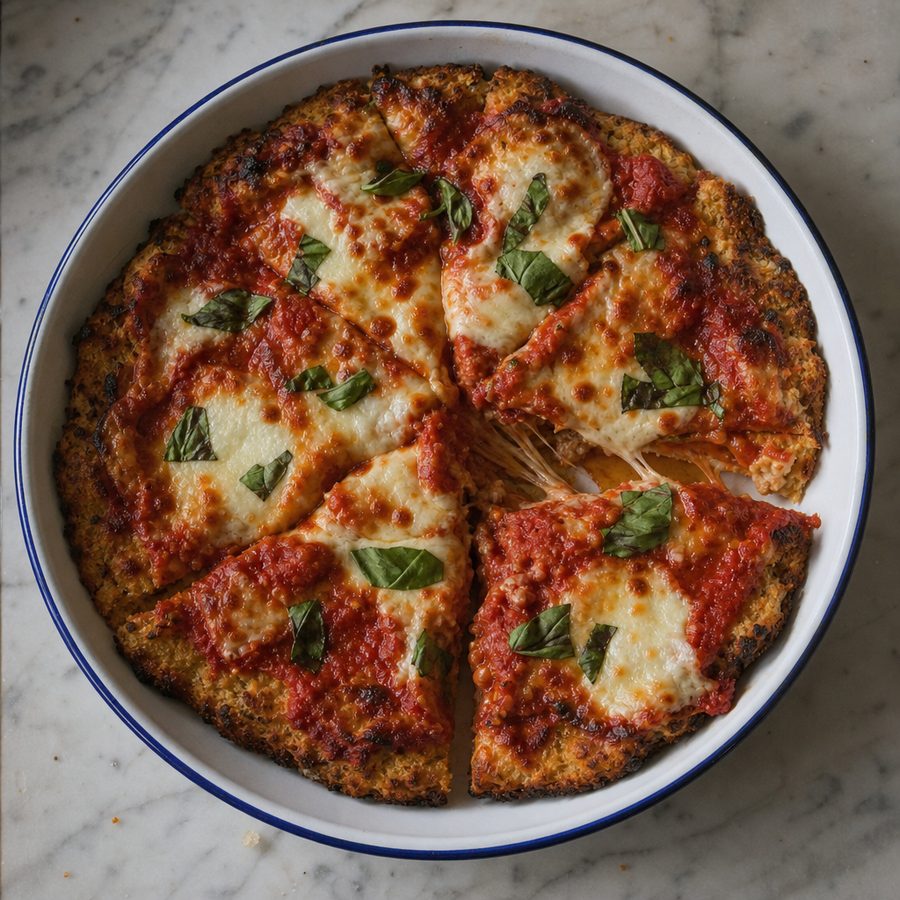
A crisp, cheesy cauliflower-crust pizza topped with tomato, mozzarella, and basil. Pizza night made gluten-free from the crust up.
Why You'll Love This Recipe
A margherita pizza on a crust made of riced cauliflower, egg, and cheese. It slices, it holds together when you pick a piece up, and it browns at the edges, which is more than most vegetable crusts manage. The reason it works is that this crust is not trying to be bread. There is no flour in it doing a thin imitation of the real thing; the egg and the cheese set into a savory base that happens to be the right shape for tomato and mozzarella. Fifty minutes on a Friday night, twenty of them hands off, and nobody has to answer the door to a delivery driver.
Everything depends on how dry you get the cauliflower. Cook it, let it cool, then wring it out in a clean towel until no more water comes. Skip that and the crust steams into a soft mat instead of crisping. Expect to be surprised by how much liquid comes out of a head of cauliflower, and expect to squeeze harder than feels reasonable, because that squeeze is the entire difference between a slice you can pick up and one you eat with a fork.
The cheese and egg in the base carry the protein, and the cauliflower brings fiber that a flour crust does not. It eats like pizza rather than like a substitute for one, which is a low bar that most cauliflower crusts still manage to trip over, and the reason is almost always water left in the crust. Our Baked Eggplant Parmesan puts the same tomato and cheese into a baking dish.
Ingredients
- 1 medium head cauliflower, riced (about 4 cups)
- 1 large egg
- 1/2 cup shredded mozzarella (for the crust)
- 1/4 cup grated parmesan
- 1 tsp dried oregano
- 1/2 tsp fine sea salt
- 1/2 cup crushed tomatoes or marinara (check the label for dairy and added sugar)
- 1 cup shredded mozzarella (for topping)
- 1 tbsp olive oil
- fresh basil leaves
Instructions
- Rice it, cook it, and then wring it out properly: Pulse the florets into rice-sized pieces in a food processor, in two batches, so the bottom does not turn to paste while the top is still in chunks. Microwave the rice for five to six minutes to cook it through, spread it on a plate, and let it cool enough to handle. Then tip it into the middle of a clean thin dish towel, gather the corners, and twist hard over the sink. You are looking for well over half a cup of water, and it takes longer and more force than you would think.
- Mix the base and press it thin and even: Heat the oven to 425°F (220°C). Mix the wrung-out cauliflower with the egg, the half cup of mozzarella, the parmesan, the oregano, and the salt until it holds together like a soft dough. Press it onto a parchment-lined sheet in a round about a quarter of an inch thick, working from the center outward, and build the edge up slightly into a rim. Even thickness matters far more than a neat circle, since a thin patch scorches while a thick one is still setting.
- Bake the bare crust until it is golden and firm: Bake the crust on its own for eighteen to twenty minutes, until the top is dry to the touch, the surface has gone golden, and the edges have browned and pulled slightly away from the parchment. This is the stretch where a mixture becomes a crust, and cutting it short is the single most common reason cauliflower pizza turns out soft. Slide a spatula underneath before you top it: the whole round should move as one piece rather than bending in the middle.
- Top it lightly and finish it hot: Spread the crushed tomatoes thinly and leave the rim bare, and be sparing, because a wet sauce layer is the other thing that softens this base. Scatter the cup of mozzarella over the top and bake for another eight to ten minutes, until the cheese is bubbling and browned in patches. Drizzle the olive oil over the pizza and tear the basil on after it comes out of the oven, since basil under direct heat turns black and bitter inside a minute.
- Let it set five minutes before you cut it: Slide the pizza onto a board and leave it five minutes before the knife goes anywhere near it. Melted cheese is a liquid until it cools slightly, and cutting straight out of the oven drags the entire topping layer sideways and lifts it off the base. In those five minutes the cheese sets, the last of the steam leaves the crust and firms it up, and the slices come out looking like slices instead of a rescue operation.
Variations
- Make it dairy-free: A firm dairy-free mozzarella-style shred works in the crust and on top. The crust binds less tightly, so press it thinner and give it a few extra minutes of pre-bake.
- Add more protein: Sliced grilled chicken, or a scatter of prosciutto after it comes out of the oven; either one adds meat, so that version is no longer vegetarian. Nothing raw and wet, or the crust gives way.
- Add more vegetables: Scatter thin mushrooms, spinach, or olives over the sauce. Keep the wet ones sparse or the crust softens underneath them.
- Make it spicy: Dust red pepper flakes over the sauce before the cheese goes on, so the heat bakes in rather than sitting on top.
- Change the sauce: Pesto in place of the tomato, or skip the sauce entirely and go white with garlic, olive oil, and a spoonful of ricotta.
Storage & Leftovers
Refrigerate leftover slices in an airtight container for up to four days, with a piece of parchment between any slices you stack. This crust holds more moisture than a wheat one does, so slices left face to face sweat, stick together, and leave half their topping behind when you pull them apart. Flat and separated is worth the extra container.
Reheat slices on a rack or straight on the oven shelf at 400°F (200°C) for six to eight minutes rather than in the microwave. The entire point of the pre-bake was driving water out of the cauliflower, and a microwave puts it straight back in and turns a crisp base into a damp mat. A dry skillet with a lid on over medium heat for three minutes does the same job on the stovetop.
The crust freezes well on its own and that is the part worth making ahead. Pre-bake it, cool it completely, wrap it flat, and freeze for up to two months; it goes into a hot oven straight from frozen and takes its sauce and cheese at that point. A finished pizza freezes far less happily, because the tomato has already soaked into the base and thawing releases it again.
Notes & Tips
- Wring it out, then wring it again: Squeeze the cooked cauliflower in a clean towel until it stops dripping. Whatever water you leave in becomes a soggy crust.
- Do not skip the pre-bake: The bare crust has to set and brown on its own before anything wet touches it. This is the step people rush, and it is the step that decides the texture.
- Press it thin and even: A thick middle stays damp while the edges crisp. Aim for the same depth all the way across, with a slightly raised rim.
- Use parchment, not grease: Cauliflower crust sticks to bare metal and tears when you try to lift it. Parchment lets you slide the whole thing free.
- Go light on the sauce: A thin layer is plenty. Too much sauce is the second most common reason a crust goes soft.
- Flexible swap: No parmesan? You can leave it off, or use a spoonful of nutritional yeast.
Nutrition & Mindful Eating
- The cauliflower, the egg and the cheese in the base work as one thing. The cauliflower gives the crust its body and a faint sweetness, the egg sets it, and the mozzarella and parmesan melt through it so it browns and holds a slice.
- Riced cauliflower toasts in the oven into fine pale grains that turn gently nutty once their water has cooked away, and it brings fiber and vitamin C into the base of the pizza.
- The egg is the reason a slice lifts cleanly rather than folding apart in your hand, and it works complete protein and choline into the crust while it does that structural job.
- Crushed tomatoes cooked down under the cheese go deeper and rounder in flavor, and the heat makes the lycopene in them easier for your body to take up, especially with olive oil sitting right there.
- Mozzarella and parmesan do different things here. The mozzarella stretches and blisters into brown spots, the parmesan brings the salty, savory backbone, and together they give the pizza its calcium along with its pull.
- As you eat, listen for the crackle at the crust edge and notice how the tomato tastes sweeter under the cheese, and take a slice at a time so you can tell when you are comfortably full.
Frequently Asked Questions
Is the whole pizza gluten-free?
Yes, the crust is riced cauliflower bound with egg and cheese, so there's no wheat anywhere. If you're celiac, double-check your marinara and cheese labels.
How do I get the crust crispy?
Squeeze every bit of moisture out of the cooked cauliflower and pre-bake the crust bare before adding toppings.
Can I make it dairy-free?
The cheese is doing structural work in the crust, so dairy-free versions are trickier. A dairy-free mozzarella can work but may bind less.
How long does it keep?
Four days, with parchment between any stacked slices so they do not fuse. Reheat at 400°F (200°C) for six to eight minutes on a rack or directly on the shelf, which drives moisture back out of the crust. A microwave does precisely the opposite and hands you a damp base.