
Charred Cabbage and Rice Noodles with Coconut-Lime Dressing and Thai Basil
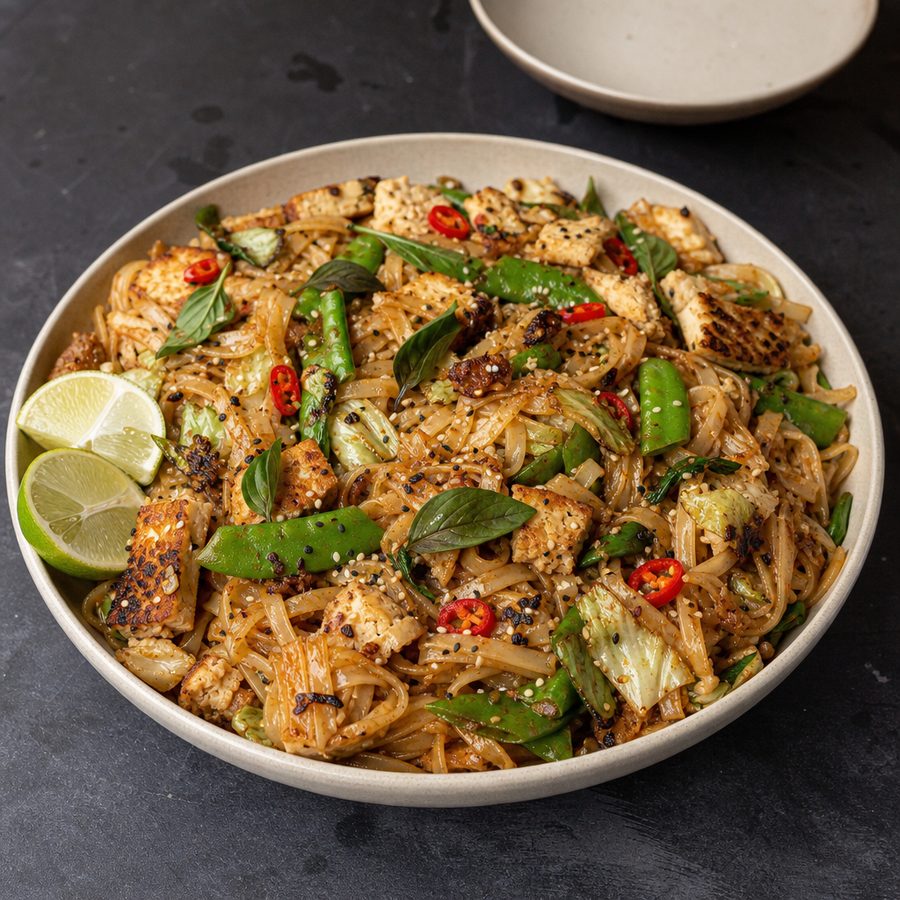
Cabbage wedges blackened in a dry pan and sliced into ribbons, tossed warm through rice noodles with snap peas, torn tofu, Thai basil, and a loose coconut-lime dressing.
Why You'll Love This Recipe
Cabbage cooked properly is one of the great cheap pleasures, and charring is what unlocks it. Left facedown in a hot dry pan without being poked, a wedge goes black in patches on the outside while the leaves inside steam in their own moisture and turn sweet, floppy, and faintly nutty. Sliced across into ribbons afterward, it tangles into flat rice noodles as though it belonged there, which is how this lunch started: I had half a head of cabbage, a bag of noodles, and no intention of going to the store. It has been a standing weekday lunch ever since, and cabbage is now something I buy on purpose rather than to fill a gap.
The dressing is where the Thai flavors live, and it is deliberately loose rather than thick. Lime juice does most of the work, a small amount of coconut milk rounds off the sourness and gives the noodles something to cling to, and garlic, ginger, chile, and a little soy fill in underneath. It should pool slightly at the bottom of the pan rather than coating everything in a heavy sauce, because these noodles taste best when you can still identify the cabbage, the peas, and the tofu separately on the fork. Taste it in the bowl before it goes in, and push it further toward sour than feels comfortable.
The whole thing lands on the table inside half an hour, and most of that is the cabbage sitting undisturbed in the pan. Thai basil is the finishing move and it is worth seeking out, since it has an anise note that sweet basil does not, and a big handful thrown in off the heat perfumes the entire skillet in about ten seconds. Leftovers reheat well the next day, which is not true of most noodle dishes, because the charred cabbage keeps its character. I usually char a whole head while the pan is hot and keep the second half of the ribbons in the refrigerator, which turns the following day's lunch into a ten minute job.
Ingredients
- 7 oz wide flat rice noodles
- 1/2 small head green cabbage (about 14 oz), cut through the core into 1-inch wedges
- 2 cups sugar snap peas, strings pulled
- 6 oz firm tofu, pressed dry and torn into rough bite-size pieces
- 4 scallions, cut into 2-inch lengths
- 1 1/2 packed cups Thai basil leaves, left whole
- 3/4 packed cup cilantro leaves and tender stems
- 1 jalapeno or 2 Thai bird chiles, sliced into thin rings
- 5 garlic cloves, thinly sliced
- 1 tbsp finely grated fresh ginger
- 3 tbsp lime juice, from 2 limes, plus wedges for the table
- 1/4 cup full-fat coconut milk, stirred smooth
- 1 tbsp soy sauce
- 2 tsp maple syrup
- 4 tsp avocado oil
- 2 1/2 tbsp sesame seeds, toasted in a dry pan
Instructions
- Soften the noodles: Pour boiling water over the flat rice noodles in a wide heatproof dish and let them stand for six to eight minutes, separating them once with chopsticks, until they are pliable and tender but still slightly firm at the center. Drain, rinse briefly under cold water, and toss with a teaspoon of the avocado oil so they do not weld together.
- Char the cabbage: Set a 12-inch skillet over medium-high with no fat in it and lay the cabbage wedges in cut side down. Leave them completely alone for five to six minutes, until the cut faces are blackened in patches and smell toasted, since the char only happens where the cabbage is touching hot metal and lifting a wedge early ends that contact. Turn onto the second cut face for three minutes more, then move them to a board and slice across the wedges into ribbons about the width of the noodles.
- Brown the tofu and the aromatics: Add two teaspoons of the avocado oil to the same pan and lay in the torn tofu. Leave it for three minutes, until the undersides are golden and release easily, because tofu lets go of a pan on its own once the crust has formed, then toss and add the sliced garlic, ginger, and scallion lengths. Cook for one minute more, until the garlic is pale gold and fragrant but nowhere near brown.
- Whisk the dressing and add the peas: Stir the lime juice, coconut milk, soy sauce, and maple syrup together in a small bowl with half the chile rings. Add the snap peas and the remaining oil to the skillet and toss over high heat for two minutes, until they turn bright green and blister in a few spots but still squeak against your teeth.
- Bring it together: Add the noodles and the cabbage ribbons to the pan, pour the dressing over, and toss with tongs for a minute until everything is hot and glossy and the liquid has pooled slightly at the bottom. Take the pan off the heat, throw in the Thai basil and cilantro, and toss twice more as the leaves wilt. Finish with the sesame seeds, the rest of the chile, and lime wedges.
Variations
- Red curry note: Whisk a teaspoon of Thai red curry paste into the coconut milk before it goes in, which deepens the color and the heat.
- Napa and bok choy: Swap the green cabbage for a charred head of napa and a few halved bok choy, both of which cook faster and stay juicier.
- Mushroom: Add eight ounces of torn oyster mushrooms with the tofu for another layer of chew and savor.
- Lemongrass: Add a tablespoon of finely minced lemongrass with the garlic for a sharper, more perfumed version.
- Cold noodle salad: Let everything cool, add extra lime, and eat it at room temperature as a salad on a hot day.
Storage & Leftovers
This keeps three days sealed in the refrigerator and reheats better than most noodle dishes, because the charred cabbage holds its texture rather than turning to water. The noodles firm up and clump when cold, so break them apart with your fingers before they go into the pan.
Reheat in a skillet over medium-high with a tablespoon of water and a lid for the first minute, then uncovered for another minute while you toss. The steam loosens the noodles and the open pan drives off the extra moisture. A microwave will heat it through but leaves the whole thing soft and a little flat.
Freezing is not worth it here. Rice noodles turn mushy on thawing and snap peas lose every bit of their snap. If you want to work ahead, char the cabbage up to two days early and keep the ribbons in a container, since that is the step that takes the longest.
Notes & Tips
- Char the cabbage in a dry pan: Oil in the pan at this stage smokes and burns before the cabbage has taken any color. The wedges have enough moisture of their own to keep from sticking while the cut face blackens.
- Cut the wedges through the core: The core is what holds a wedge together while it sits in the pan. Cut it out first and you get a pile of loose leaves that scorch in seconds.
- Undercook the noodles: They finish in the skillet with the dressing. Soaked all the way to soft, they turn to paste the moment they meet the heat again.
- Slice the cabbage to match the noodles: Ribbons the same width as the noodles tangle together and you get both in every mouthful. Big pieces sit separately on the plate.
- Basil goes in with the burner off: The residual heat is enough to wilt it and release the anise smell. Cooked even thirty seconds, it turns dark and loses everything that made it worth buying.
- Taste the dressing before it hits the pan: It should be sour first, then salty, then just barely sweet. If it tastes balanced in the bowl, the noodles will flatten it out to nothing.
Nutrition & Mindful Eating
- Charred cabbage, rice noodles, snap peas, and torn tofu each keep their own texture in this pan. The noodles give the plate its body, the cabbage brings sweetness and smoke, the peas stay crisp, and the tofu is where most of the protein and the calcium sit.
- Cabbage charred over high heat goes sweet and silky in a way it never does boiled, and it keeps its vitamin C and its fiber through a cook this short and this dry.
- Firm tofu is set with calcium salts, which is why a modest amount of it carries so much calcium, and torn rather than cubed it browns on more surfaces and picks up more of the dressing.
- Snap peas eaten pod and all bring vitamin C, a little plant protein, and the loudest crunch on the plate, and two minutes over high heat is all they want.
- Thai basil, lime, and a spoonful of coconut milk are the flavor of this dish, anise against sour against a soft richness, and stirring the coconut in off the boil keeps the dressing loose rather than heavy.
- As you eat, look for the darkest cabbage ribbons and notice how much sweeter they are than the pale ones beside them, and let the basil and the lime pull your attention back to the plate between forkfuls.
Frequently Asked Questions
Can I use regular sweet basil?
You can, and it will still taste good, though it will taste like a different dish. Thai basil has an anise edge and sturdier leaves that hold up to the heat, while sweet basil goes soft and turns the flavor Italian. Many grocery stores carry Thai basil now, and it is worth the detour.
My cabbage steamed instead of charring. What happened?
Almost always a pan that was not hot enough, or wedges that were moved too soon. Get the dry skillet properly hot before anything goes in, lay the wedges down, and then walk away for a full five minutes. Wet cabbage is the other cause, so pat the cut faces dry.
How do I keep the rice noodles from breaking up?
Undercook them at the soaking stage, since they will finish in the pan. Pull them while there is still a hint of firmness in the middle, rinse them, and oil them lightly. Then toss with tongs rather than stirring with a spoon, which is what tears wide noodles.
Can I make it without tofu?
Yes. Double the snap peas and add a cup of shelled edamame at the same stage, or leave it out altogether and let the cabbage and noodles carry the plate. The tofu is there for substance and browned edges, not for the flavor of the dish.