
Charred Eggplant and Bulgur with Pomegranate and Mint
Cubes of eggplant browned hard in a wide skillet with onion, garlic, cumin, and paprika, spooned over warm bulgur with blistered cherry tomatoes, a cold tahini yogurt, pomegranate seeds, and a great deal of mint.
Why You'll Love This Recipe
I make this on nights when I want dinner to taste like it took longer than it did. Eggplant is the whole point, and it asks for heat and patience in equal measure: a wide pan, enough oil to matter, and the discipline to leave the cubes alone until they go bronze on one face. Cooked that way it stops being spongy and turns into something close to custard. Everything else on the plate exists to set that off, which is why the yogurt goes on cold and the pomegranate goes on at the very last second. One skillet, half an hour, and a bowl of cooked bulgur waiting in the refrigerator.
The eating of it is all contrast. The eggplant is soft and smoky and faintly sweet, the bulgur underneath stays chewy and nutty and holds on to the spiced oil, and the yogurt arrives cold against warm vegetables. Pomegranate seeds burst between your teeth in small sour pops, and the mint and parsley go in off the heat so they stay green and loud rather than wilting into the background. I squeeze extra lemon over my own bowl on top of all of that. It is a dinner you end up eating slowly, because no two forkfuls are quite the same combination.
This belongs to late summer, when eggplant is heavy for its size and cheap, and tomatoes are actually worth buying. I cook a pot of bulgur on Sunday and this becomes a Tuesday, since the grain is already done and the skillet work is fifteen minutes. It also feeds a table well, because the components can go out in separate bowls and people build their own, which is forgiving when one person skips the yogurt and another wants twice the chile. The leftovers hold their texture better than most vegetable dinners, and I have eaten it cold out of the container standing at the counter more than once.
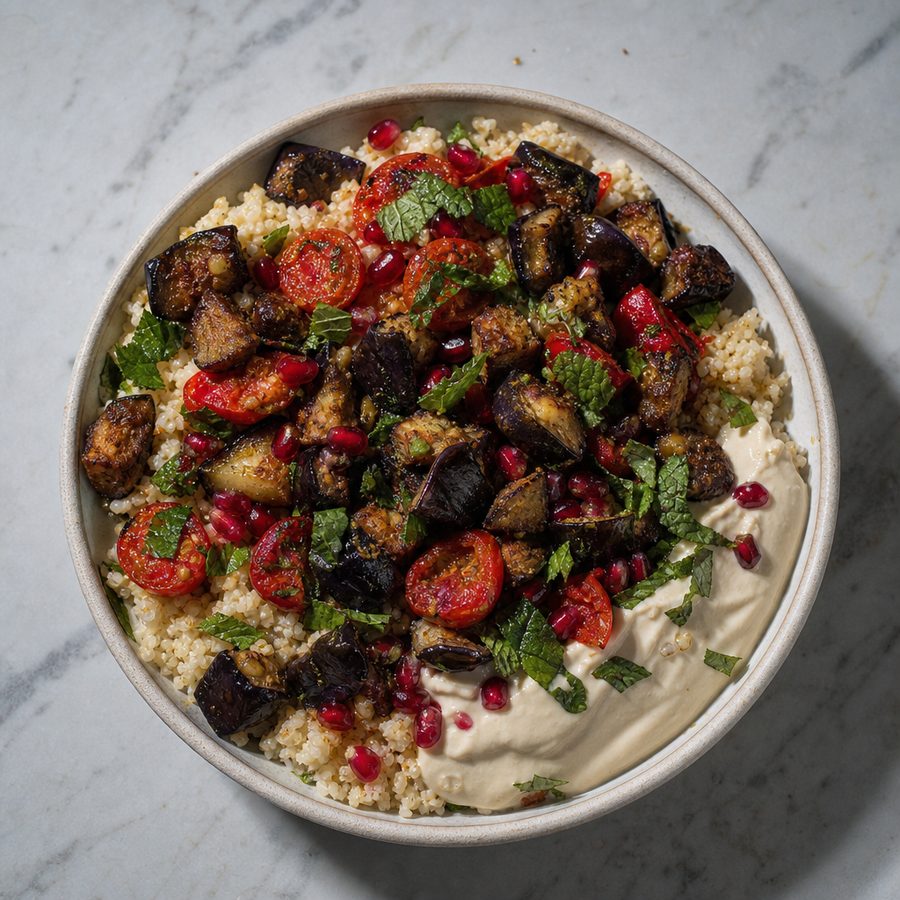
Ingredients
- 2 medium globe eggplant, about 1 3/4 lb total, cut into 1-inch cubes
- 3 cups cooked coarse bulgur, from about 1 cup dry, warm or left from another night
- 1 1/4 cups cherry tomatoes, halved
- 1 medium onion, halved and sliced into thin half-moons
- 4 cloves garlic, thinly sliced
- 2 1/2 tbsp olive oil, divided
- 2 tsp ground cumin
- 1 tsp sweet paprika, or Aleppo-style pepper flakes if you have them
- 3/4 cup plain Greek yogurt
- 2 tbsp tahini, well stirred
- 2 tbsp lemon juice, from 1 lemon
- 1/3 cup fresh mint leaves, torn
- 1/2 cup flat-leaf parsley, roughly chopped
- 1/2 cup pomegranate seeds
- 1 1/2 tbsp sesame seeds
- 1/2 tsp fine sea salt
Instructions
- Get everything cut before the pan goes on: Cut the eggplant into 1-inch cubes, keeping them roughly even so they finish together, and leave the skin on for structure. Slice the onion and garlic, halve the tomatoes, and stir the tahini in its jar until it is smooth and pourable. Once the skillet is hot this recipe moves quickly and there is no time to chop.
- Brown the eggplant hard: Heat 2 tbsp of the olive oil in your widest skillet over medium-high until it shimmers. Add the eggplant in one layer with the salt and leave it completely alone for four minutes, until the undersides are deep brown. Toss and repeat twice more, six to eight minutes in total. The cubes will look thirsty at first and then release the oil back as they soften.
- Add the onion, garlic, and spice: Push the eggplant to one side, add the last 1/2 tbsp of oil and the onion, and cook for three minutes until the edges go translucent and start to color. Stir in the garlic, cumin, and paprika and keep everything moving for forty five seconds, until the spices smell toasted and the pan turns rust-colored. Do not let the garlic go past pale gold.
- Blister the tomatoes and warm the bulgur: Add the cherry tomatoes cut side down and leave them for two minutes, until the cut faces brown and the skins begin to loosen. Fold in the warm bulgur, turning it through the spiced oil until every grain is coated and the whole pan is heated through, about two minutes. Take it off the burner and stir in half the lemon juice.
- Thin the yogurt and finish the bowls: Whisk the yogurt, tahini, and remaining lemon juice with a tablespoon or two of water until it pours in a thick ribbon off the spoon. Spoon the skillet into shallow bowls, drag the yogurt across one side rather than mixing it in, and scatter the mint, parsley, pomegranate seeds, and sesame seeds over the top.
Variations
- Charred pepper: Add a red bell pepper cut into wide strips along with the onion, letting it blacken in places before the spices go in.
- Walnut crunch: Scatter a small handful of toasted, roughly chopped walnuts over the finished bowls in place of the sesame seeds.
- Warmer and rounder: Stir a quarter teaspoon of cinnamon in with the cumin, which pushes the whole skillet toward the spice of a slow-cooked stew.
- Green and sharp: Fold two big handfuls of arugula through the hot bulgur at the end so it half wilts and adds a peppery edge.
- More citrus: Grate the zest of the lemon into the yogurt along with the juice for a brighter, more perfumed sauce.
Storage & Leftovers
The skillet portion keeps four days in a sealed container in the refrigerator, and I would argue day two is better than day one. The eggplant goes on absorbing the cumin and garlic overnight, and the bulgur firms up a little, which makes it easier to eat cold. Keep the tahini yogurt in its own jar and the herbs and pomegranate seeds separate, because all three lose their point once they sit in a warm pan.
Reheat it in a dry skillet over medium heat for three or four minutes, spread out flat and left alone for the first two so the eggplant picks up a little color again. A splash of water helps the bulgur loosen. The microwave works and is honest about what it is, but the eggplant comes out uniformly soft rather than browned in patches.
I do not freeze this one. Eggplant that has been frozen and thawed weeps and goes stringy, and the bulgur turns pasty. If you want to get ahead, freeze nothing and instead cook a double batch of bulgur, which keeps five days in the refrigerator and turns this into a fifteen minute dinner the second time around.
Notes & Tips
- Use the widest pan you own: Two pounds of eggplant needs a twelve-inch skillet to sit in a single layer. Crowded cubes steam in their own moisture and go gray and slack, so brown them in two batches if your pan is smaller.
- Leave the cubes alone: Browning happens where food touches metal and stays there. Every stir resets the clock, so give each side a full four minutes of contact before you move anything.
- Keep the skin on: The skin holds each cube together through all that tossing. Peeled eggplant turns to purée in a hot pan, which tastes fine but gives you nothing to chew.
- Toast the spices in the oil, not the water: Cumin and paprika need a few seconds in hot fat to open up. Add them to a wet pan and they stay dusty and flat no matter how long the dish cooks.
- Stir the tahini before you measure it: The oil separates and sits on top in the jar, so a spoonful off the surface is mostly oil and a spoonful from the bottom is mostly paste. Stir it right down to the base first.
- Seed the pomegranate under water: Halve it, submerge it in a bowl of cold water, and work the seeds out with your thumbs. They sink, the white pith floats, and your shirt survives.
Nutrition & Mindful Eating
- Eggplant, bulgur, and the tahini yogurt each do a different job here. The eggplant gives the bowl its silky body, the bulgur brings the chew and most of the fiber, and the yogurt and sesame paste together add the creaminess and the calcium that make it eat like a full plate.
- Eggplant has a spongy structure that drinks up oil and then softens into something custardy, and its skin is where the deep purple color and its anthocyanins sit, so leaving it on is worth doing for more than texture.
- Coarse bulgur is cracked wheat that has been parboiled, which is why it cooks so fast and still keeps a distinct grain. It carries fiber and a steady kind of carbohydrate that suits a bowl built mostly of vegetables.
- Tahini is ground sesame, and a couple of tablespoons stirred into yogurt turns it pourable while bringing a real amount of calcium along with its bitter, toasted flavor.
- Cumin and paprika bloomed in hot oil are what make the pan smell like dinner, and the mint, parsley, lemon, and pomegranate all arrive cold at the end so the bowl finishes bright rather than heavy.
- As you eat, notice how the cold yogurt and the hot spiced eggplant meet on the same forkful, and let the small sour bursts of pomegranate slow you down enough to feel when the bowl has been enough.
Frequently Asked Questions
Do I need to salt and drain the eggplant first?
Not for this. Salting draws out water and some bitterness, and it costs you thirty minutes you do not have on a weeknight. Modern globe eggplant is bred to be mild, and browning the cubes hard in a wide pan drives off the water anyway. Salt them as they hit the oil, the way the recipe says, and you will not miss the wait.
My eggplant soaked up all the oil and then went dry. What happened?
That is eggplant behaving normally, and the fix is nerve rather than more oil. The cut cells act like a sponge for the first two minutes and then collapse and give most of it back as they soften. Keep the heat at medium-high, resist adding oil in the middle, and by minute six the pan will look glossy again.
Can I make it without the yogurt?
Yes. Whisk the tahini with the lemon juice and about three tablespoons of cold water instead, adding the water slowly so it seizes and then loosens into a pale, pourable sauce. It is sharper and more sesame-forward than the yogurt version, and the pomegranate seeds do even more work against it.
What if I only have fine bulgur?
Fine bulgur works, though the texture goes softer and more like a pilaf than a grain salad. It also needs no real cooking, just an equal volume of boiling water poured over it and ten minutes under a plate. Coarse bulgur is what I reach for here because it stays distinct under all that soft eggplant.