
Charred Eggplant and Lentil Breakfast Skillet with Mint
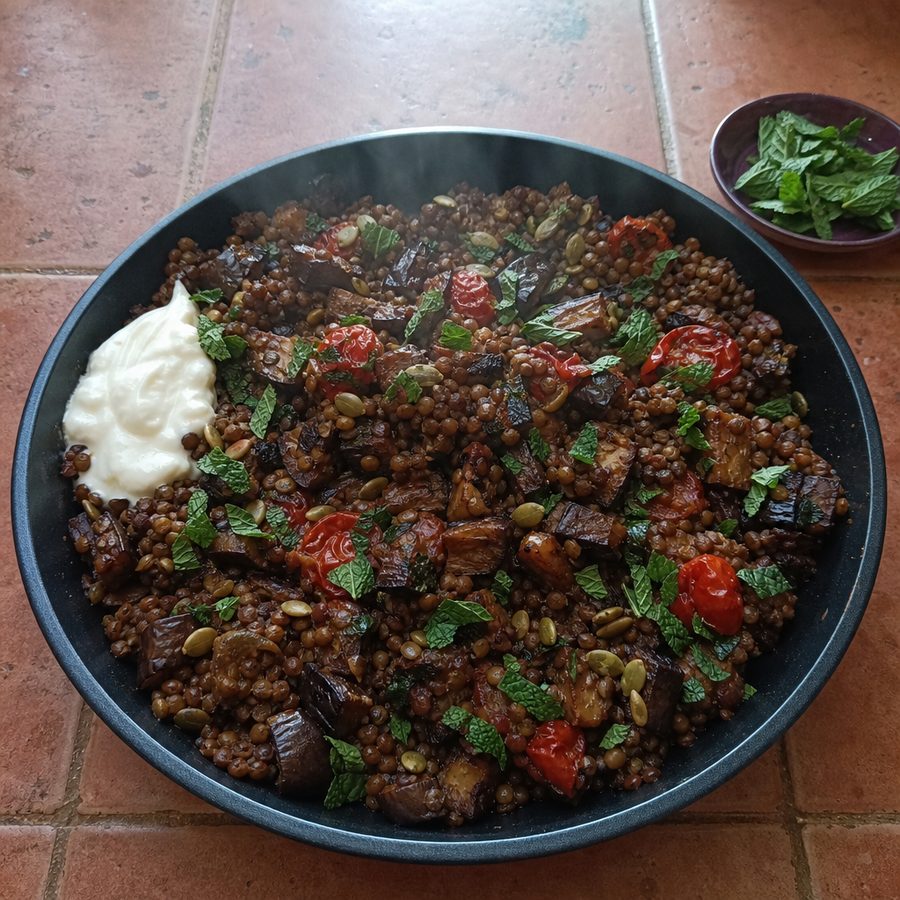
Cubed eggplant cooked dark in olive oil with cumin and smoked paprika, folded through brown lentils and burst cherry tomatoes, finished with cold yogurt, torn mint, and toasted pumpkin seeds.
Why You'll Love This Recipe
I started making this on mornings when I wanted something savory and had no interest in eggs. Eggplant behaves differently at breakfast than it does at dinner, softer and rounder somehow, and the trick is to give it enough oil and enough stillness to actually brown rather than steam. That takes about twelve minutes of mostly leaving it alone. Once the cubes are dark and collapsing, everything else is a five-minute assembly. It has become the pan I reach for on a slow Sunday when I want the kitchen to smell like cumin before anybody else is up.
The eating is the point. Hot eggplant against cold yogurt is one of the great contrasts, and the lentils give the spoon something to hold onto so the whole thing does not slide around. Cherry tomatoes go in whole and split under the heat, and that little rush of tart juice keeps a rich pan from settling into one note. Lemon goes on off the heat, mint goes on after that, and the pumpkin seeds stay crisp for a good ten minutes on top. Every forkful gets soft, chewy, juicy, and crunchy at once.
Cooking ahead is what this one is for. It reheats beautifully, holds four days, and tastes at least as good on day three as it did the morning you made it, which is not true of most breakfasts. I make a double batch on Sunday and eat it Monday and Wednesday, adding the yogurt and herbs fresh each time so it never tastes like leftovers. It also works cold, straight from the container, spooned over greens if you are heading out the door.
Ingredients
- 2 medium eggplants (about 1 lb 5 oz), cut into 3/4-inch cubes
- 1 1/4 cups cooked brown lentils, drained well
- 2 tbsp plus 1 tsp olive oil, divided
- 1/2 medium yellow onion, finely diced
- 3 cloves garlic, thinly sliced
- 1 cup cherry tomatoes, halved
- 1 1/2 tsp ground cumin
- 1 tsp smoked paprika
- 1/2 tsp fine sea salt
- 2 tbsp fresh lemon juice
- 2/3 cup plain Greek yogurt
- 1/4 cup fresh mint leaves, torn
- 1/4 cup chopped fresh flat-leaf parsley
- 3 tbsp raw pumpkin seeds
Instructions
- Cut and salt the eggplant: Cut the eggplants into 3/4-inch cubes, aiming for even pieces so they finish together. Toss them in a colander with half the salt and leave them fifteen minutes while you prep everything else. Beads of moisture will come to the surface. Blot them dry with a towel, which is what lets the cubes brown rather than steam.
- Brown the eggplant hard: Heat 2 tbsp of the olive oil in a 12-inch skillet over medium-high until it shimmers. Add the eggplant in one layer and leave it undisturbed for four full minutes, until the undersides are deep brown. Toss and repeat twice more, ten to twelve minutes total, until the cubes are dark, glossy, and collapsing when you press one.
- Build the spice base: Push the eggplant to one side, add the remaining teaspoon of oil, and drop in the onion and garlic. Cook two minutes, until the garlic smells sweet rather than sharp. Scatter in the cumin and smoked paprika and stir everything together for thirty seconds, just long enough for the spices to bloom and go fragrant without catching.
- Add lentils and tomatoes: Stir in the lentils and the halved cherry tomatoes with the rest of the salt. Cook three to four minutes over medium, pressing lightly on the tomatoes so they release their juice into the pan. The lentils should heat through and take on color from the paprika. Pull the skillet off the burner and stir in the lemon juice.
- Toast the seeds and finish: Toast the pumpkin seeds in a small dry pan over medium heat for two to three minutes, shaking often, until they puff and start to pop. Spoon the yogurt over the skillet in wide dollops rather than stirring it in, then scatter the mint, parsley, and hot seeds across the top and bring the pan to the table.
Variations
- Runny egg on top: Slide a fried or soft-poached egg onto each portion and break the yolk into the eggplant. It turns the skillet into a heavier plate for a cold morning.
- Green and peppery: Fold two big handfuls of arugula or watercress in off the heat so the leaves half wilt against the hot eggplant.
- Warmer spicing: Swap the smoked paprika for chipotle powder and add a pinch of cinnamon with the cumin for a rounder, smokier pan.
- Tomato-forward: Use a cup of crushed tomatoes in place of the cherry tomatoes and simmer three minutes longer for something closer to a stew.
Storage & Leftovers
The skillet itself keeps four days in a sealed container in the refrigerator, and it improves for the first two. The eggplant goes on absorbing the cumin and paprika overnight, and the lentils firm up slightly so the texture holds better than you expect. Store the yogurt, herbs, and seeds separately and add them fresh each morning.
Reheat a portion in a skillet over medium heat for three or four minutes, spread flat and left alone at first so the eggplant picks up a little color again. A splash of water loosens it if the pan looks dry. The microwave works if you are moving fast, though everything softens and you lose the browned edges.
It freezes for up to three months in flat, sealed portions. Thaw overnight in the refrigerator, since eggplant thawed quickly turns watery, then reheat in a pan so the moisture cooks off. Fresh lemon juice at the end brings it right back to where it started. Do not freeze it with the yogurt on.
Notes & Tips
- Leave the eggplant alone: Stirring is the enemy of browning here. Four still minutes on one face beats twelve minutes of tossing, and the dark cubes are where the flavor of this pan lives.
- Use the widest skillet you own: Two pounds of cubed eggplant needs contact with metal. In a 10-inch pan it will steam into a gray heap, so brown it in two batches if that is what you have.
- Bloom the spices in oil, not in liquid: Cumin and paprika need thirty seconds in fat to open up. Added after the tomatoes go in, they taste dusty and stay that way.
- Dry the lentils: A minute in the strainer, then a quick press with a towel. Dry lentils crisp slightly at the edges in the hot pan; wet ones just warm through.
- Yogurt in dollops, not stirred: Stirred in, it disappears and the pan turns pink and uniform. Spooned on in wide pools, you get cool and hot in the same bite.
- Tear the mint, do not chop it: A knife bruises mint and turns the cut edges dark within minutes. Torn leaves stay green and smell far stronger when the hot pan hits them.
Nutrition & Mindful Eating
- Eggplant, lentils, and yogurt each do a different job in the pan. The eggplant gives the dish its silky body and most of its fiber, the lentils bring the plant protein and something for the spoon to catch, and the cold yogurt sets all that warm spice against something creamy and tart.
- Eggplant is mostly water held in a spongy structure, which is why it drinks oil and then gives it back, and its skin carries the purple pigment anthocyanin along with a good share of the fiber. Leaving the peel on is worth doing for texture as much as anything.
- Brown lentils cook down soft on the outside while staying whole, and they carry both protein and folate in a form that sits easily at breakfast. They are also unusually rich in soluble fiber, which is part of why a bowl of this settles the way it does.
- Cumin and smoked paprika are doing the heavy flavor work, and thirty seconds in hot oil is what separates warm and fragrant from dusty. Smoked paprika in particular carries the impression of something cooked over wood, which is a lot of character for one teaspoon.
- Pumpkin seeds toasted until they pop stay crisp on top for a good while, and they bring magnesium and zinc along with that snap. They are the reason each spoonful has something crunchy in it rather than being soft all the way through.
- As you eat, notice how the cold yogurt keeps moving into the hot eggplant and changing every bite, and let yourself sit with the pan for a few minutes rather than eating it standing over the stove.
Frequently Asked Questions
Do I really need to salt the eggplant first?
It makes a real difference here. Salting pulls water out of the cells, and drier eggplant browns instead of steaming, which is the whole character of this pan. Fifteen minutes is enough. If you are short on time, skip it and cook the cubes in two batches so the skillet never crowds.
Can I use canned lentils?
Yes, and I often do. Drain and rinse them well, then let them sit in the strainer a few minutes so the surface dries. Wet lentils dropped into a hot pan will cool it down and loosen the browning you worked for. Brown or green lentils hold their shape best; red ones dissolve.
My eggplant soaked up all the oil in the first minute.
That is what eggplant does, and it gives it back as it cooks. Resist adding more oil at that stage. Once the cells collapse, the oil releases and the pan goes glossy again, usually around minute six. Adding oil to fix the dry stage is how eggplant ends up heavy.
Can I make this without the yogurt?
You can, and the pan still works, though the cold and hot contrast is a good part of why it eats well at breakfast. Whipped ricotta or a squeeze more lemon and a drizzle of olive oil will both fill the same role if yogurt is not something you keep.